Karatu, Tanzania
It's our final safari today, before we head on to the exotic beaches of Zanzibar, and ahead of us lies a journey into the birthplace of humankind. When we arrive at the entrance to the Ngorongoro Conservation Area we find it houses a small exhibition detailing how the oldest known fossils of our distant ancestors, some five million years ago, came from this area.
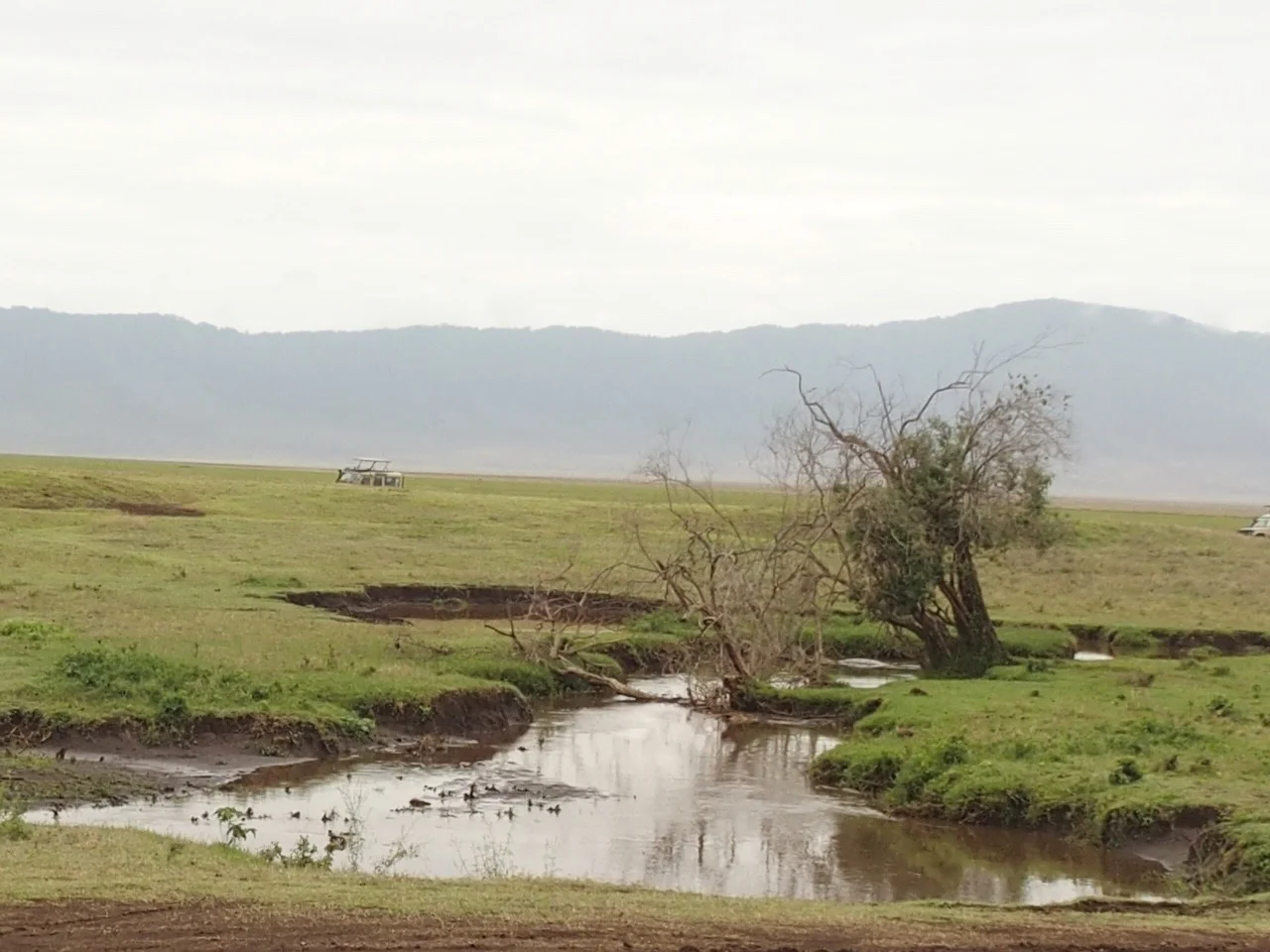
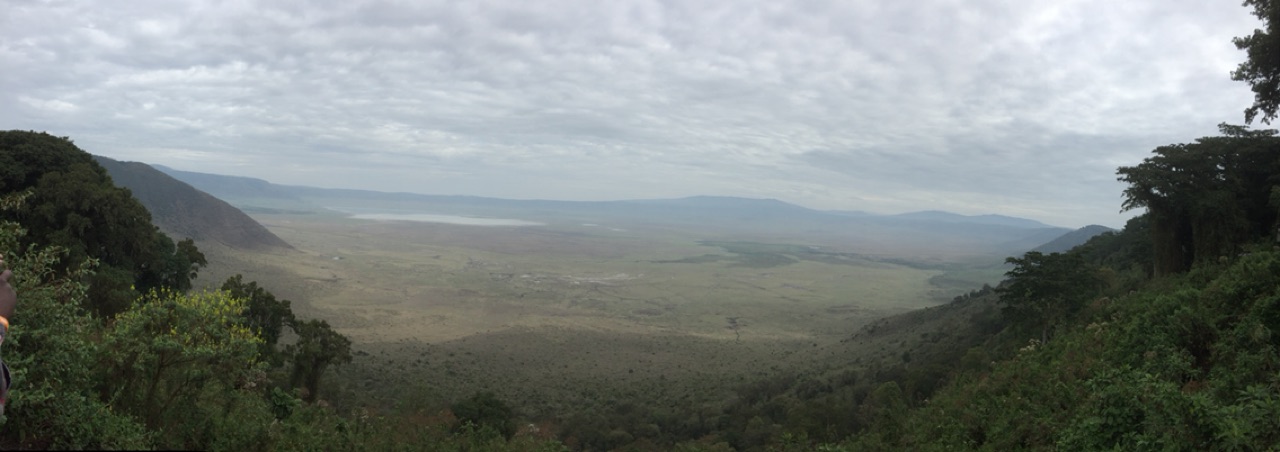
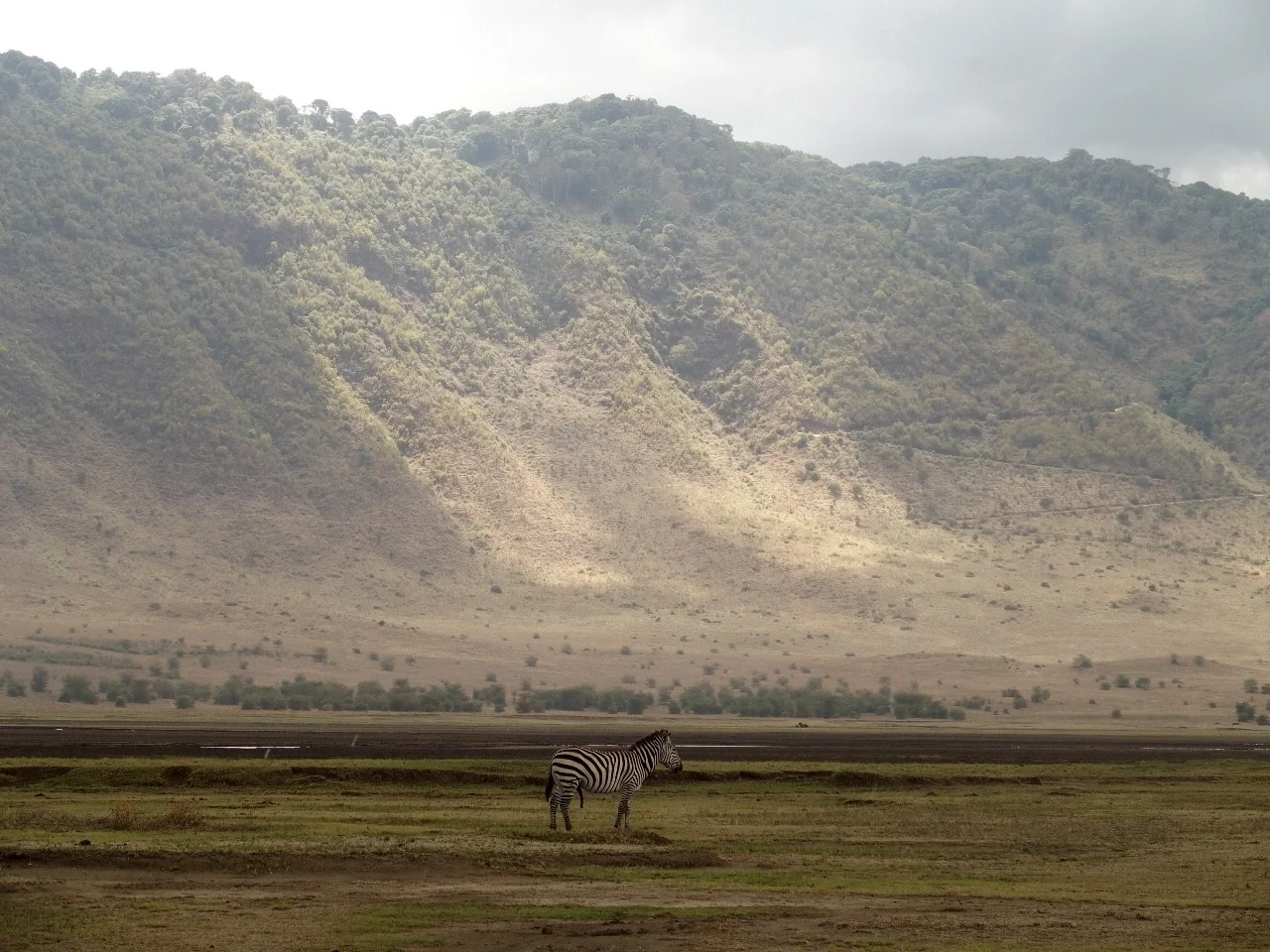
However our main destination is into the Ngorongoro Crater itself, a remarkable wonder of the natural world. Formed when a massive volcano, bigger than Kilimanjaro, exploded three million years ago, it's the sixth biggest crater on the planet but boasts the largest unbroken caldera, or rim, in the world. As such it has a unique ecosystem and a spectacular setting, despite the overcast day.
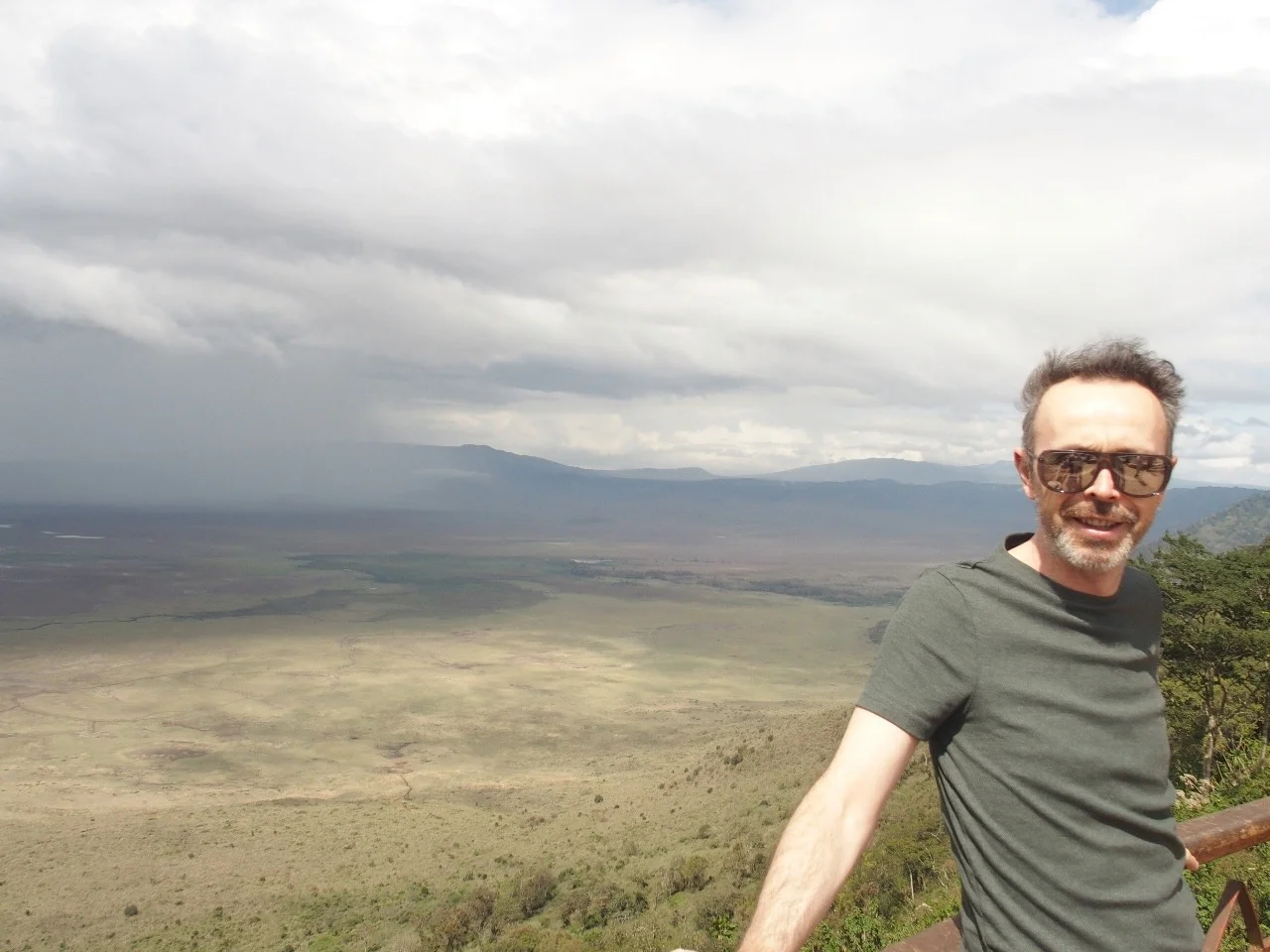
We stop first at a panoramic viewpoint where the structure of the crater is most visible. The name Ngorongoro has a number of meanings the most common being that the rim shares the name of a type of Maasai bowl, but Asgar tells us that he believes it's more likely to be from the onomatopoeic Maasai word meaning 'sound of the cowbell'. Either way, the view is pretty special whatever it means.
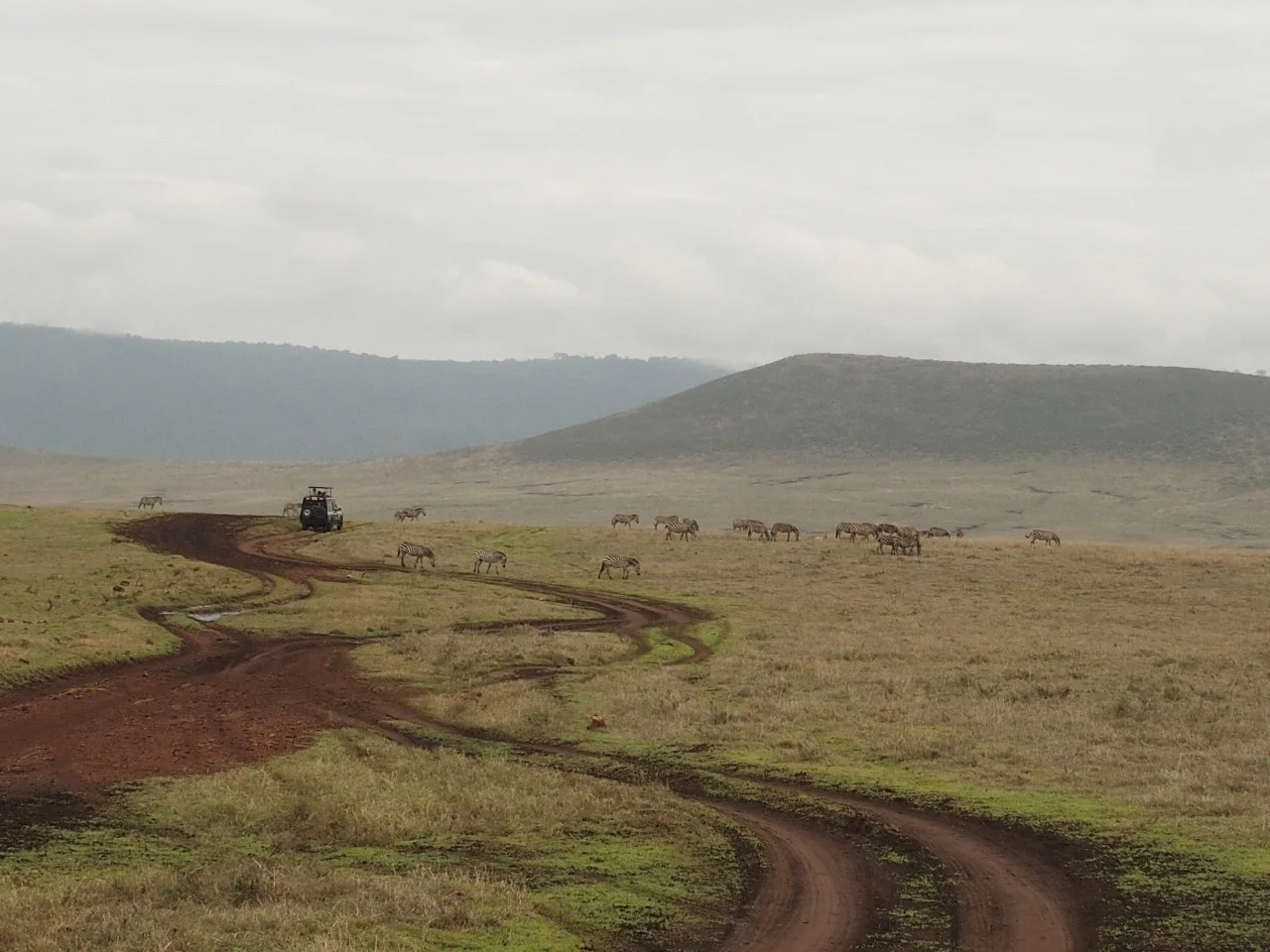
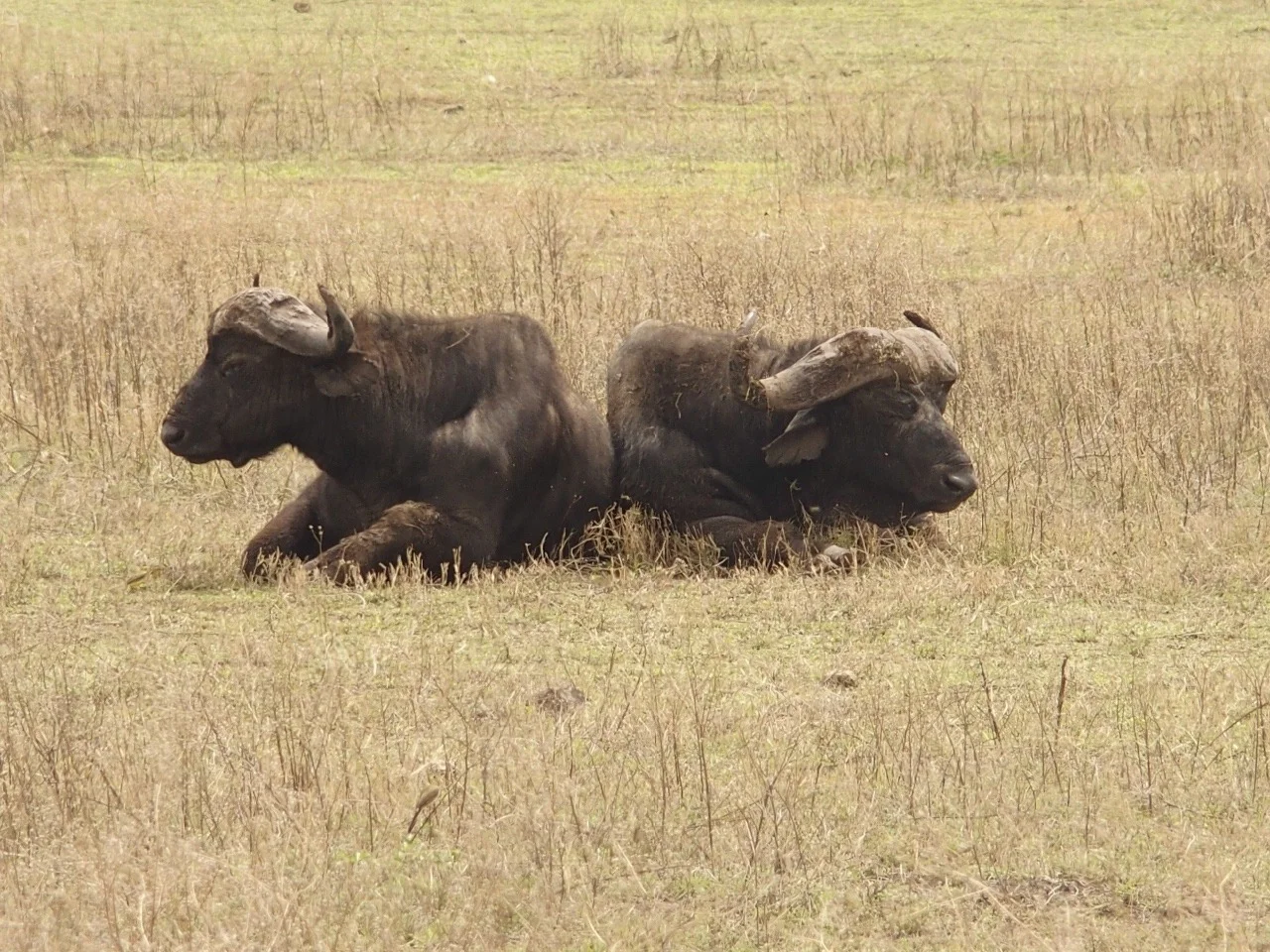
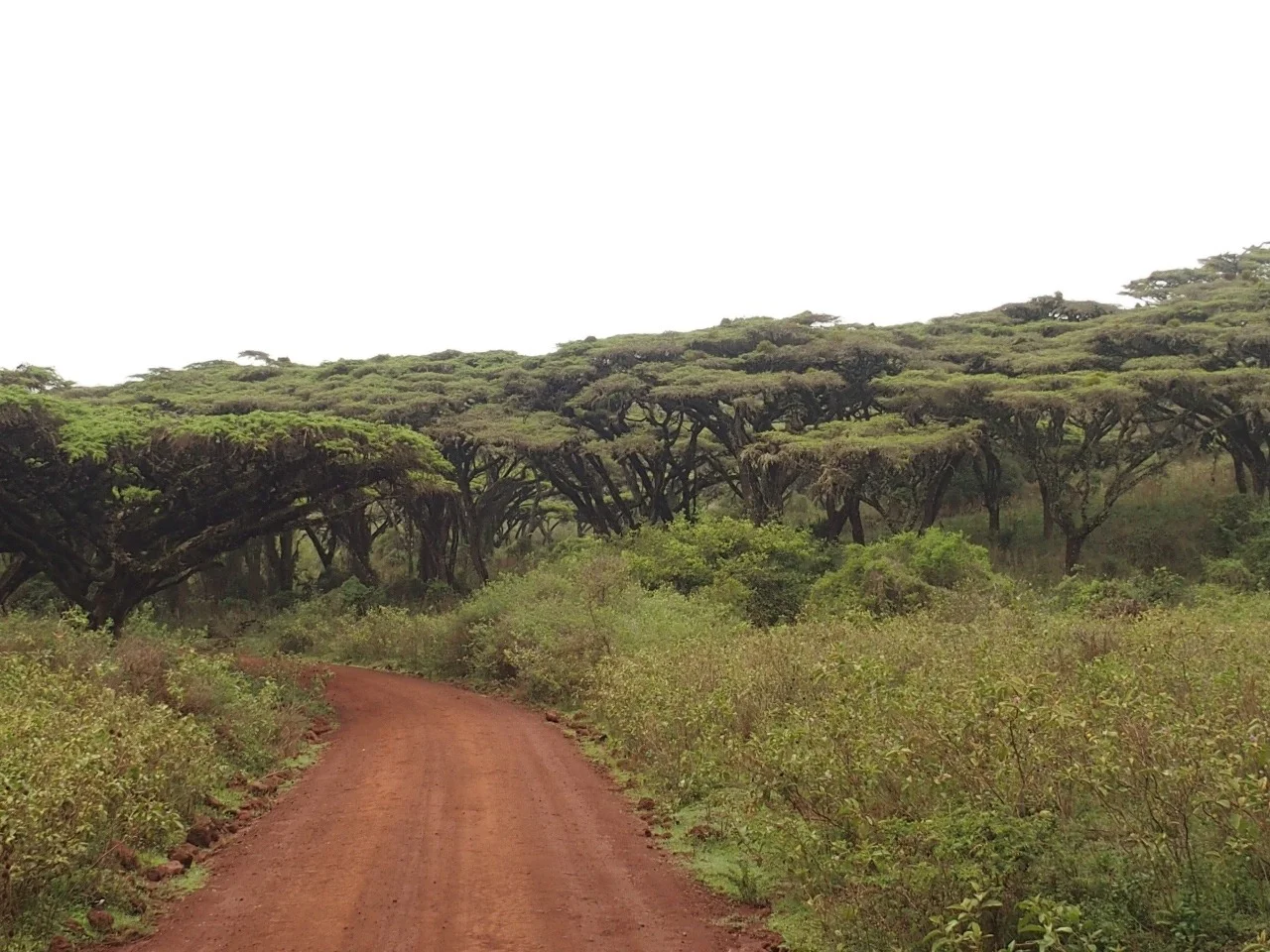
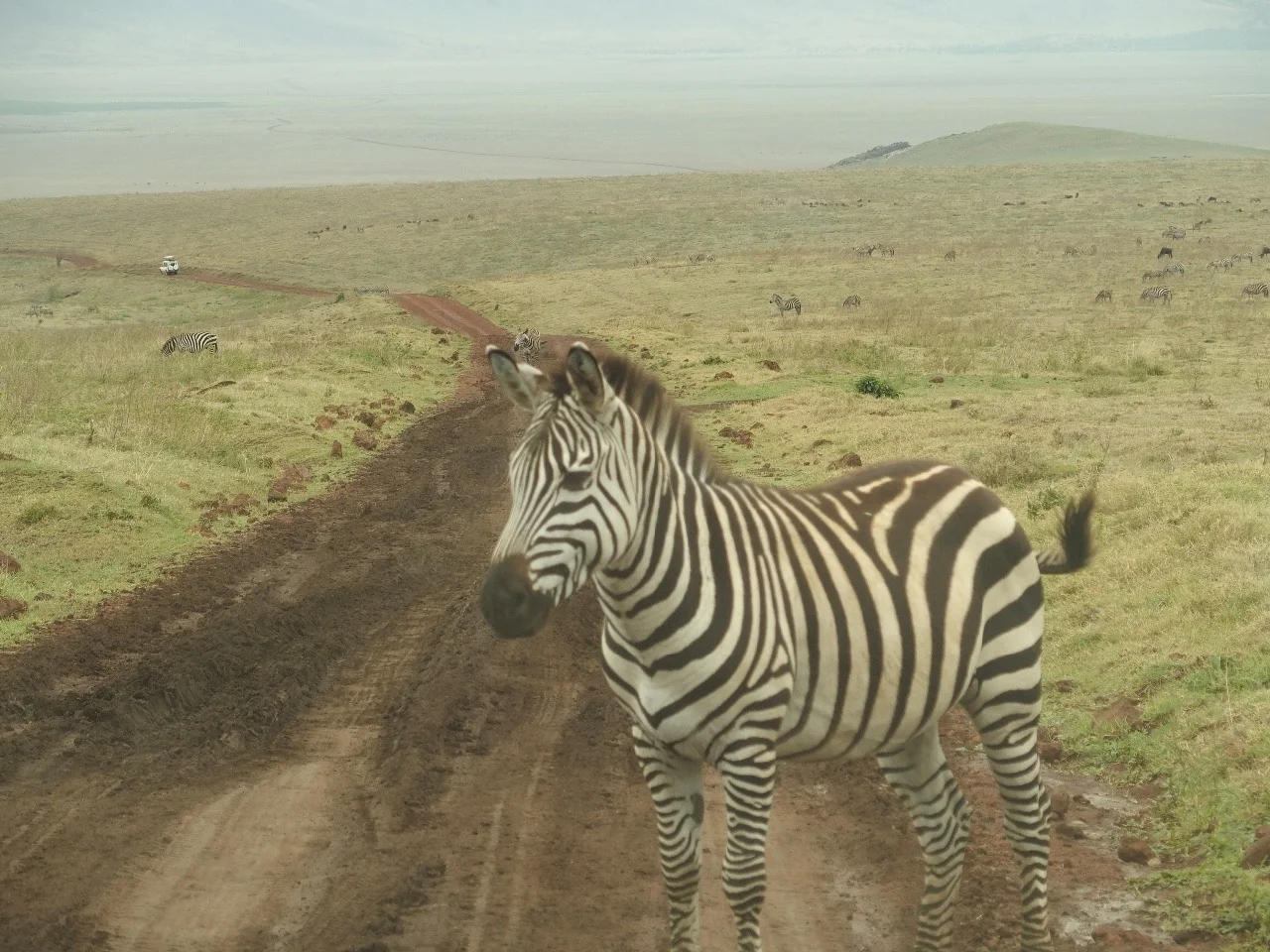
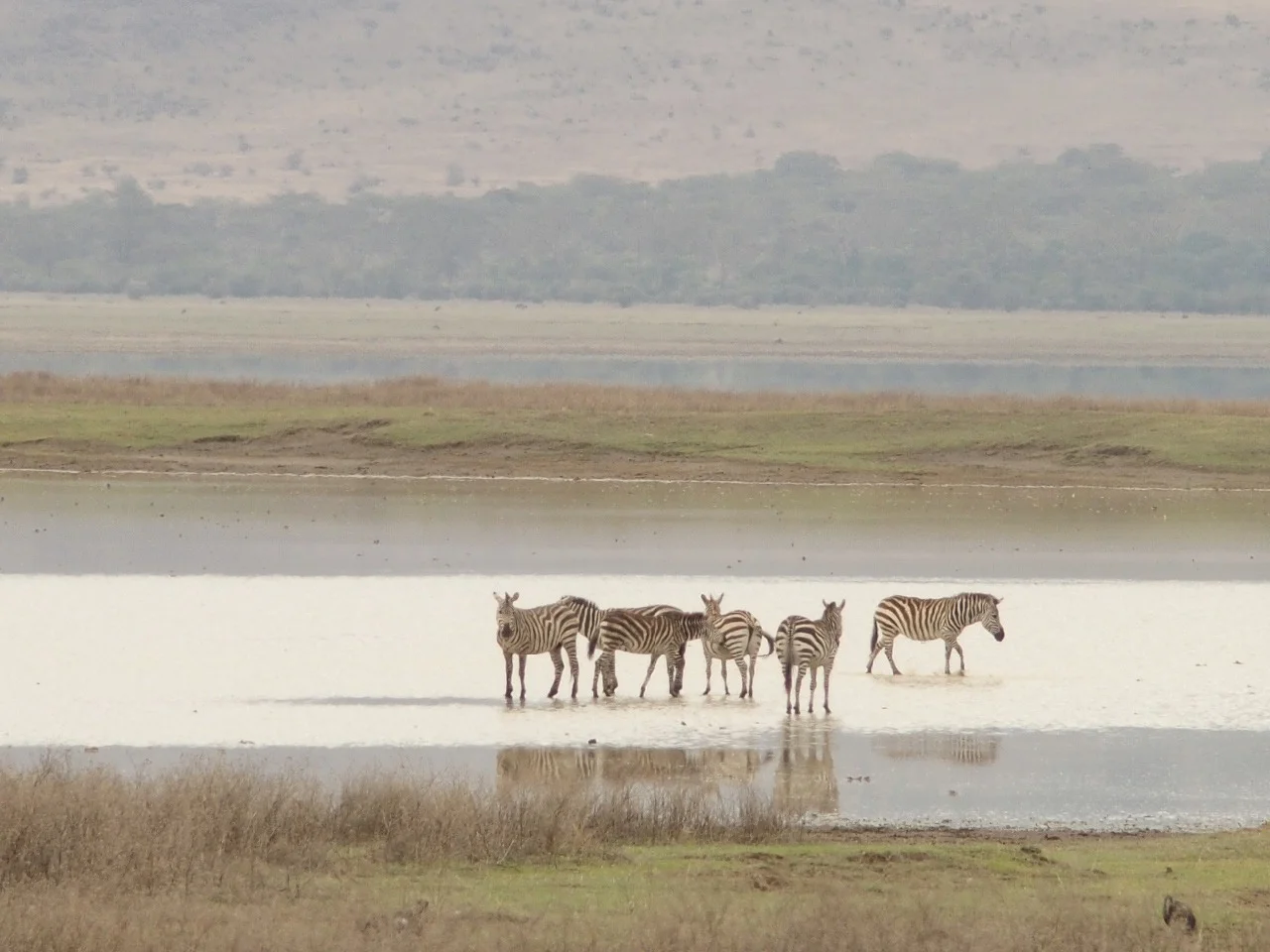
The crater is 25 miles in diameter and effectively has one road in and one out on either side, meaning we have to drive the full circumference to visit, a chilly and cloudy journey. The perimeter road is a bumpy dirt track through rainforest and flat-top acacias, taking us an hour before we reach the start of the descent. Eventually we start travelling down the escarpment and the countryside becomes strangely reminiscent of Dartmoor except populated by zebras and buffalo rather than sheep and ponies.
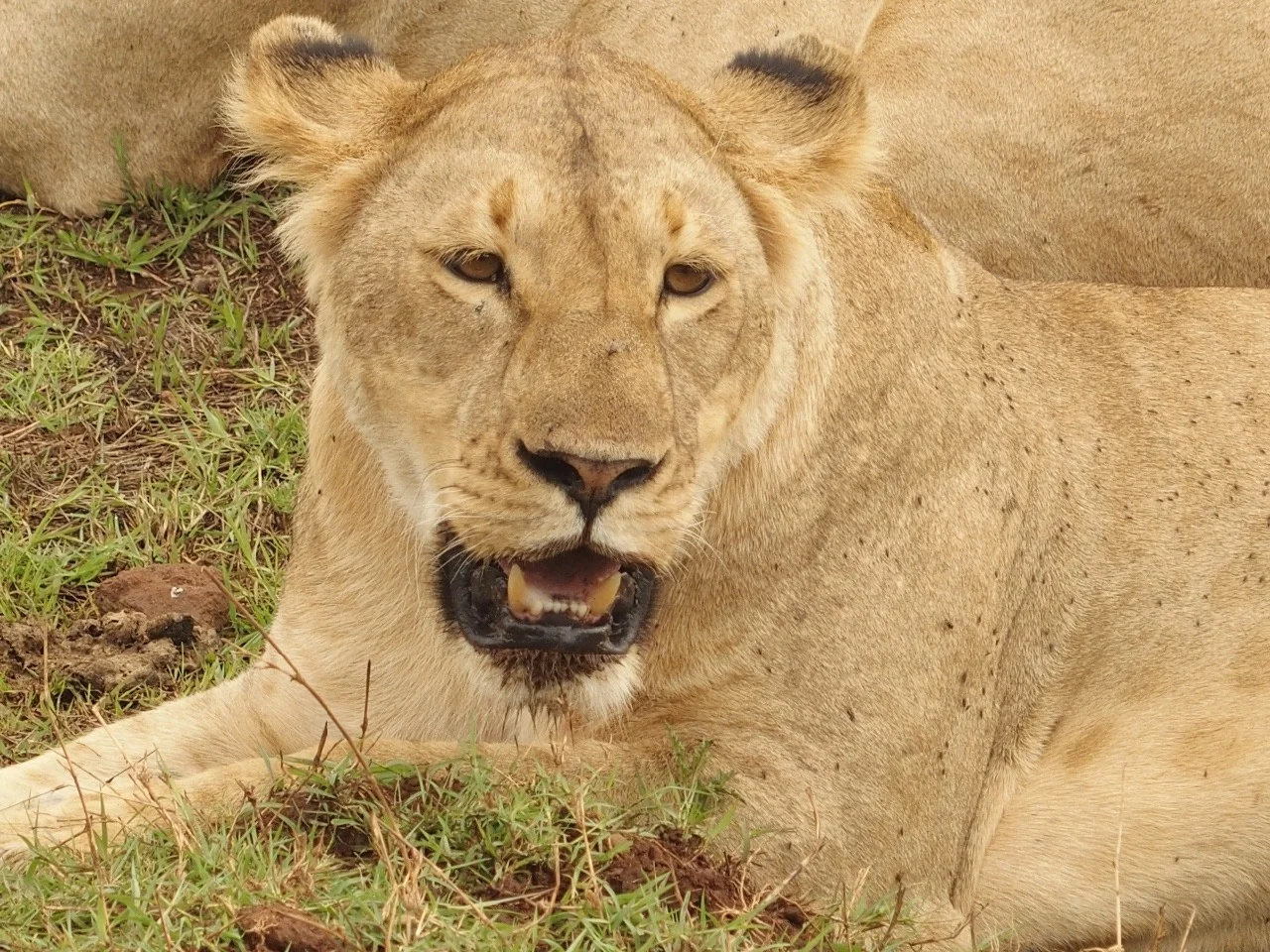
Once we reach the crater floor, 600 metres below, the flat plains stretch out before us and it's not long before we come upon two groups of lionesses and cubs sleeping in grass by some trees. They're so far away we need zooms and binoculars to watch them, and even then all we can see are distant bodies, ears and paws.
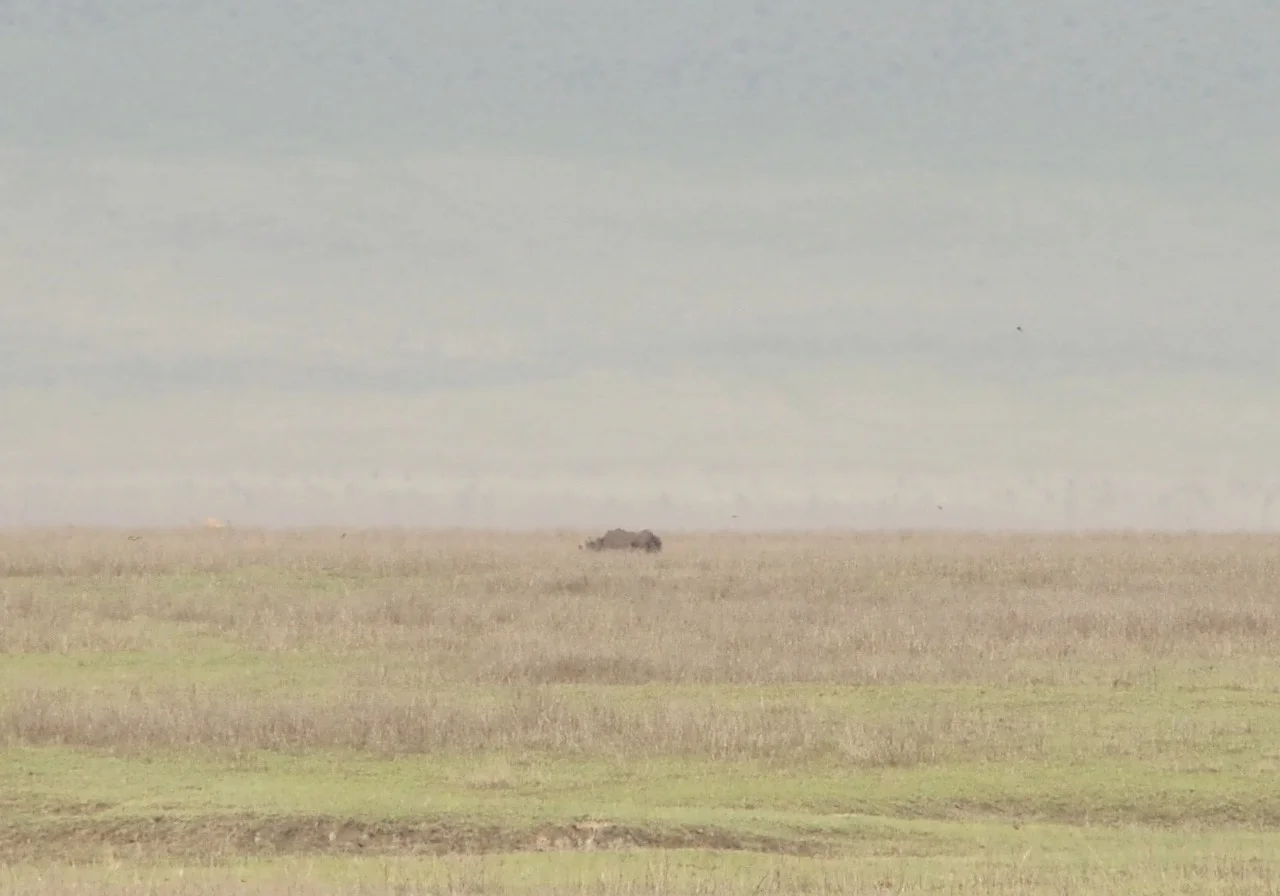
Another very distant sighting comes in the form of the incredibly rare black rhino which is on the very verge of extinction. Way, way out on the plains, and a long way from the designated tracks the vehicles can travel down,
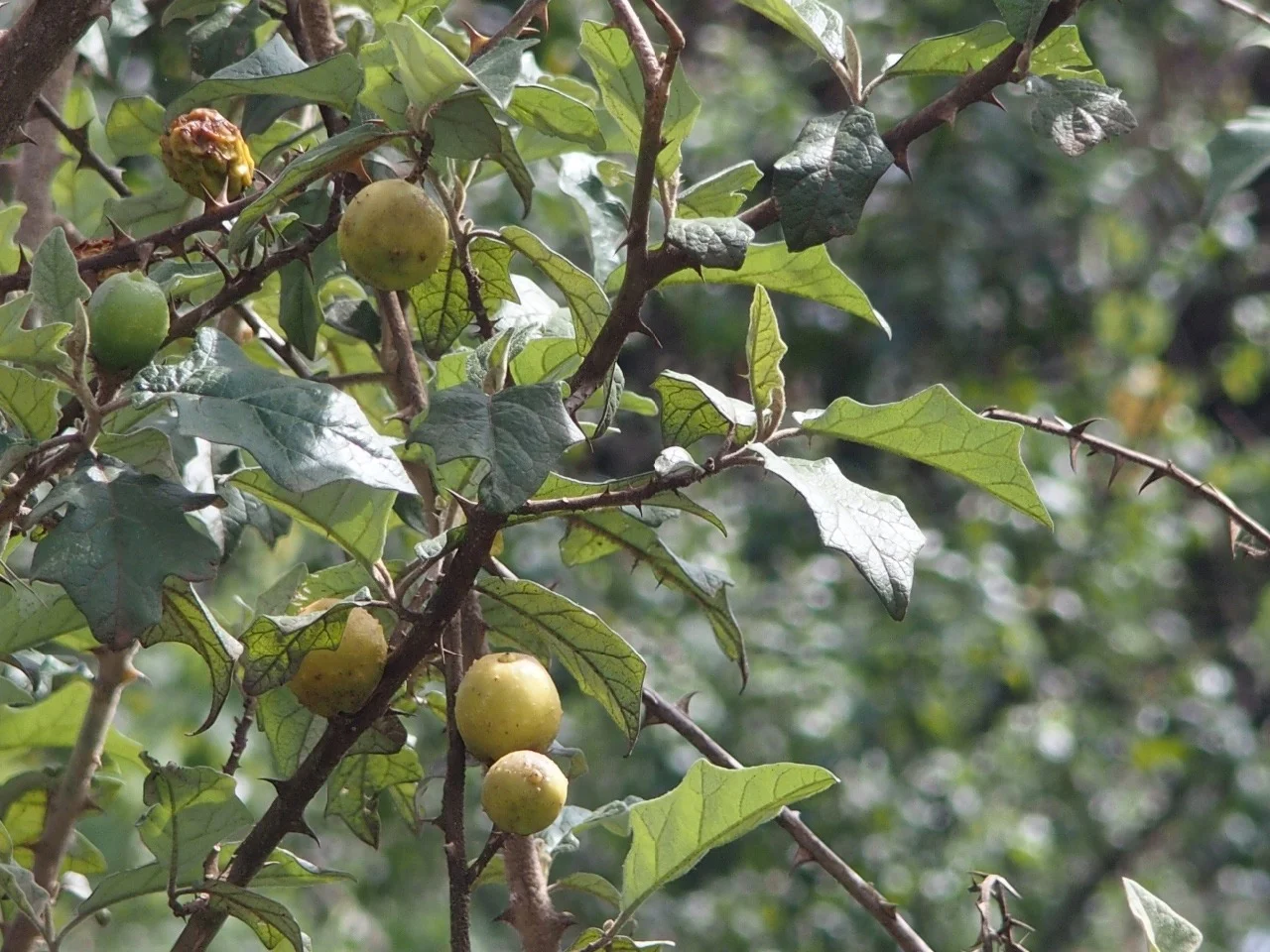
Asgar spots one lying down in the long grass. Because the rhino relies on its acute hearing rather than its poor eyesight, it is hampered in its navigation today by the sound of the wind blowing across the plains, so is lying down until the breeze lessens. Asgar is certain, however, that it will move at some point soon as it needs to consume a lot of food each day, its diet mostly made up of the Sodom berry, so named because it dates back to the days of the Old Testament, and a favourite of the Maasai who use it to treat toothache.
We watch what essentially appears to be just a black rock for a good fifteen minutes to see if it will stir, occasionally discerning through binoculars the flick of an ear, before heading on our way. We return a little later when reports of its progress reach us but even then it remains an almost indiscernible spot on the horizon, slowly lumbering forwards until descending out of sight altogether.
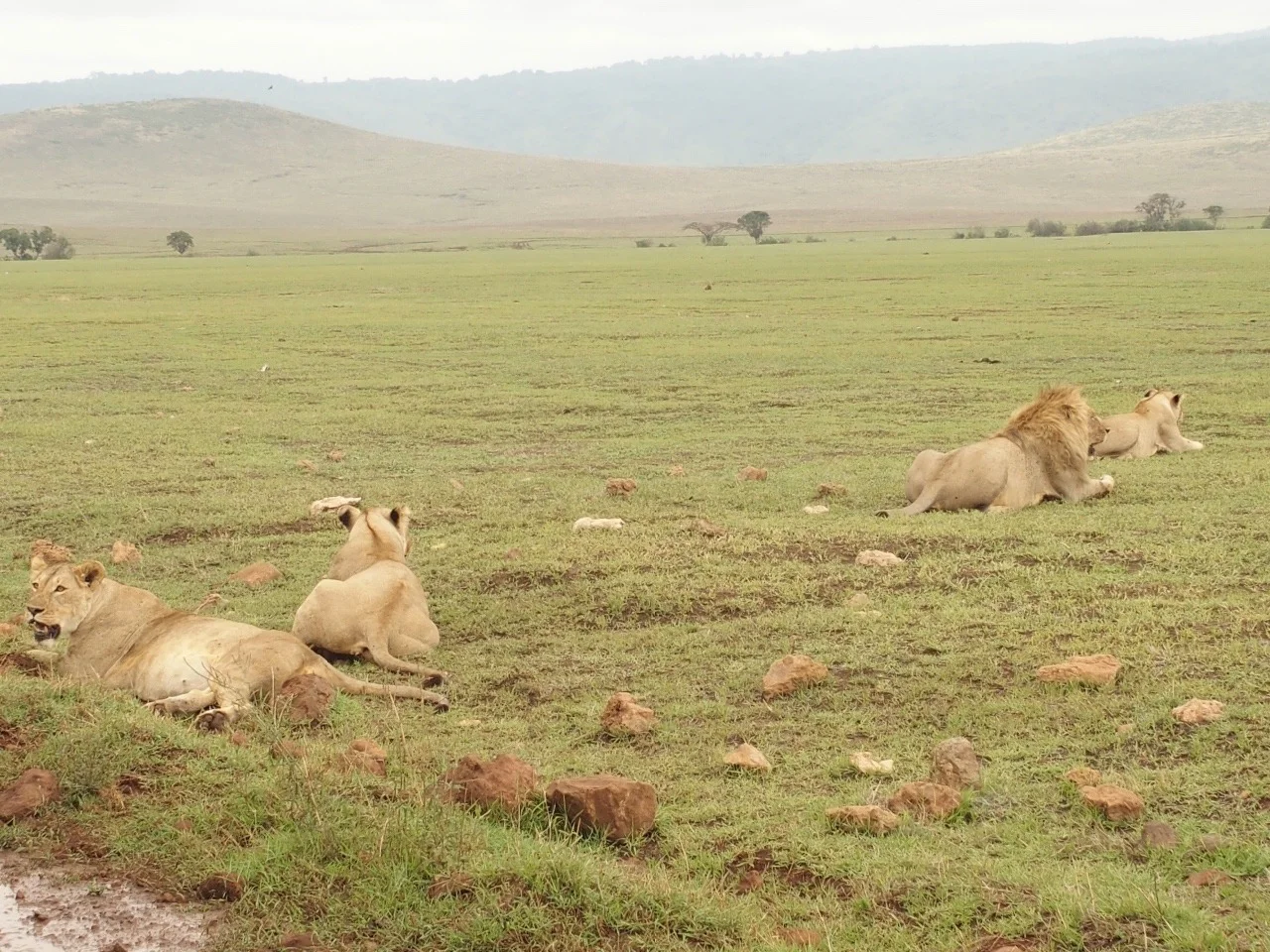
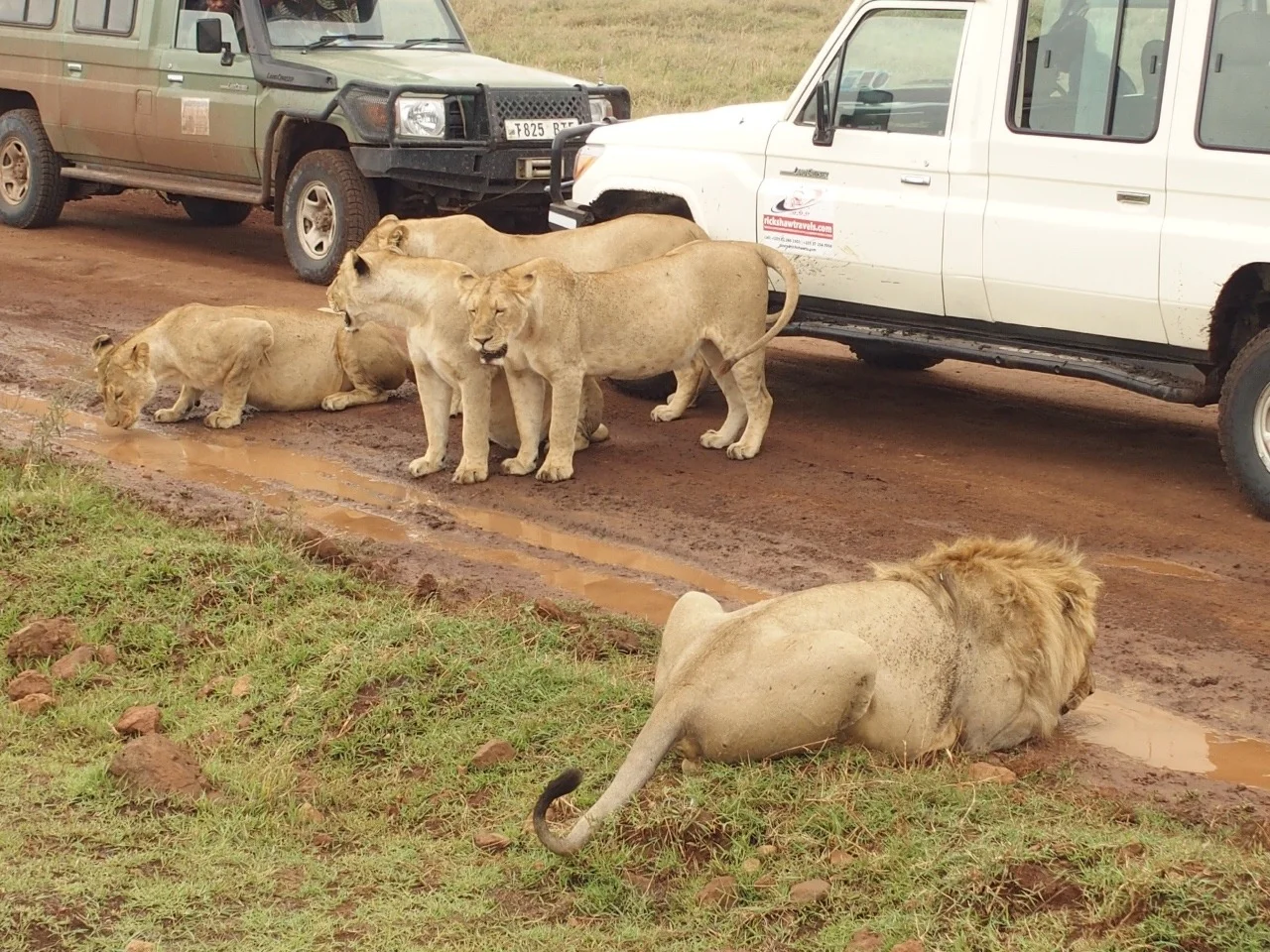
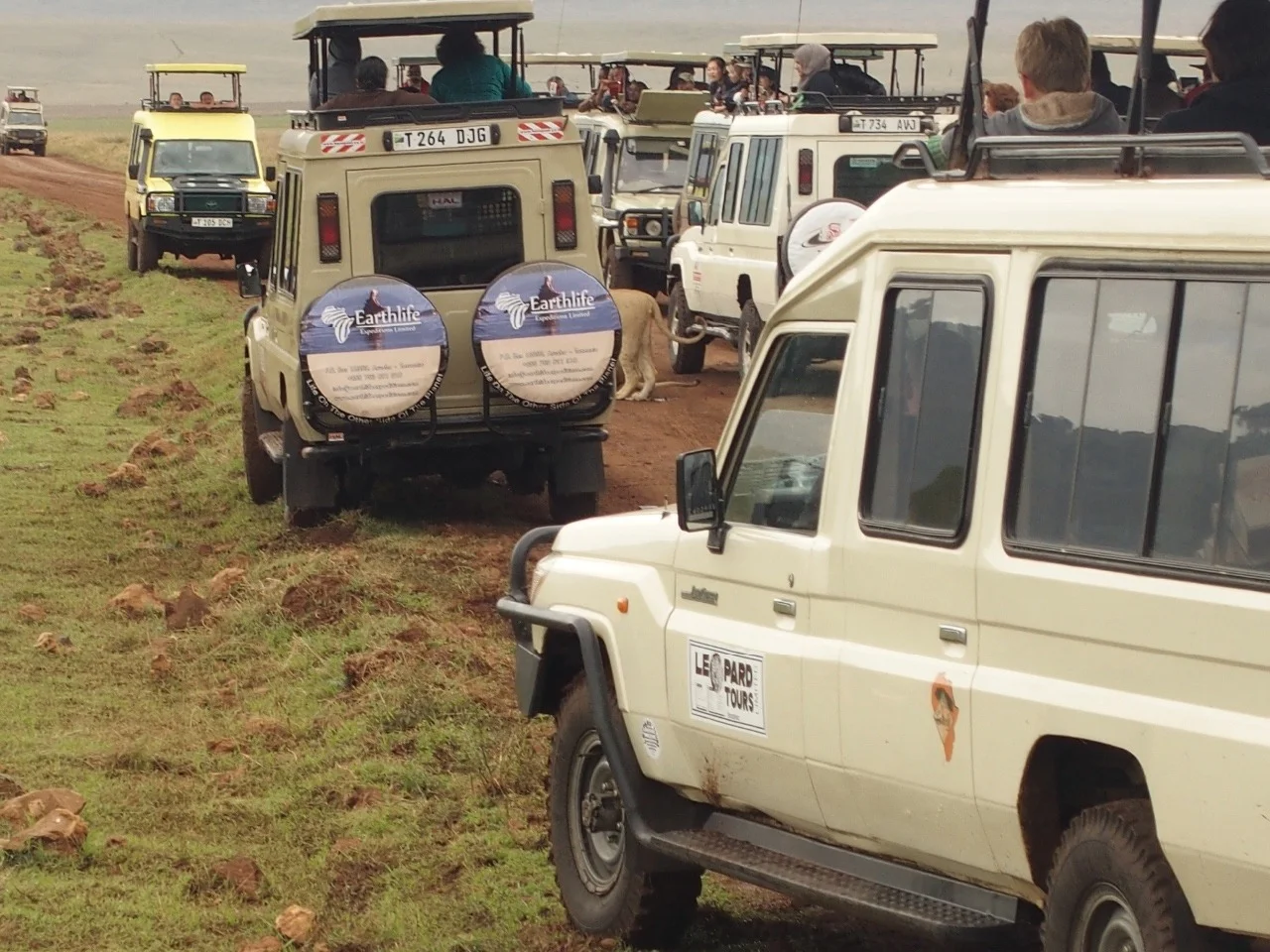
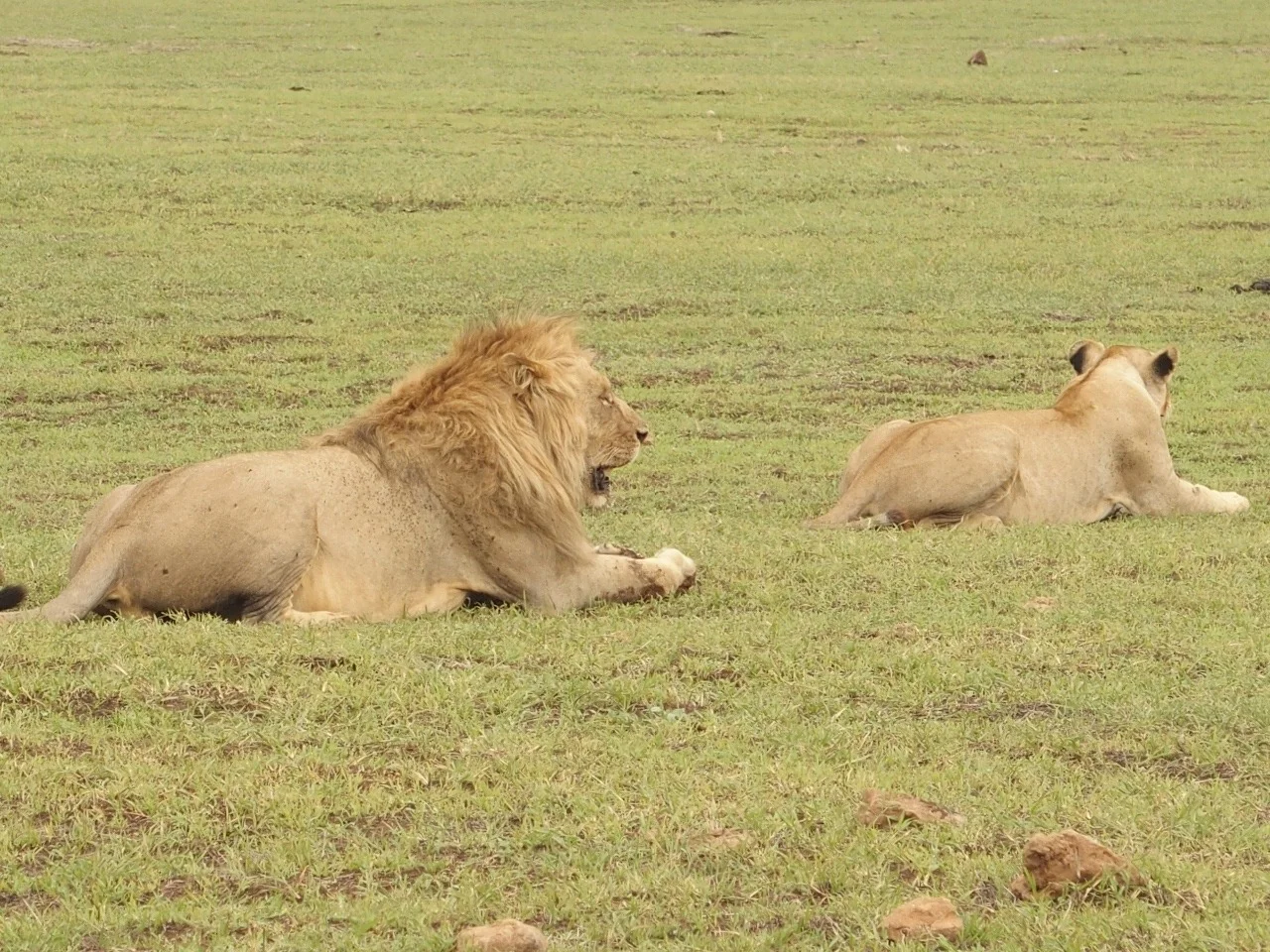
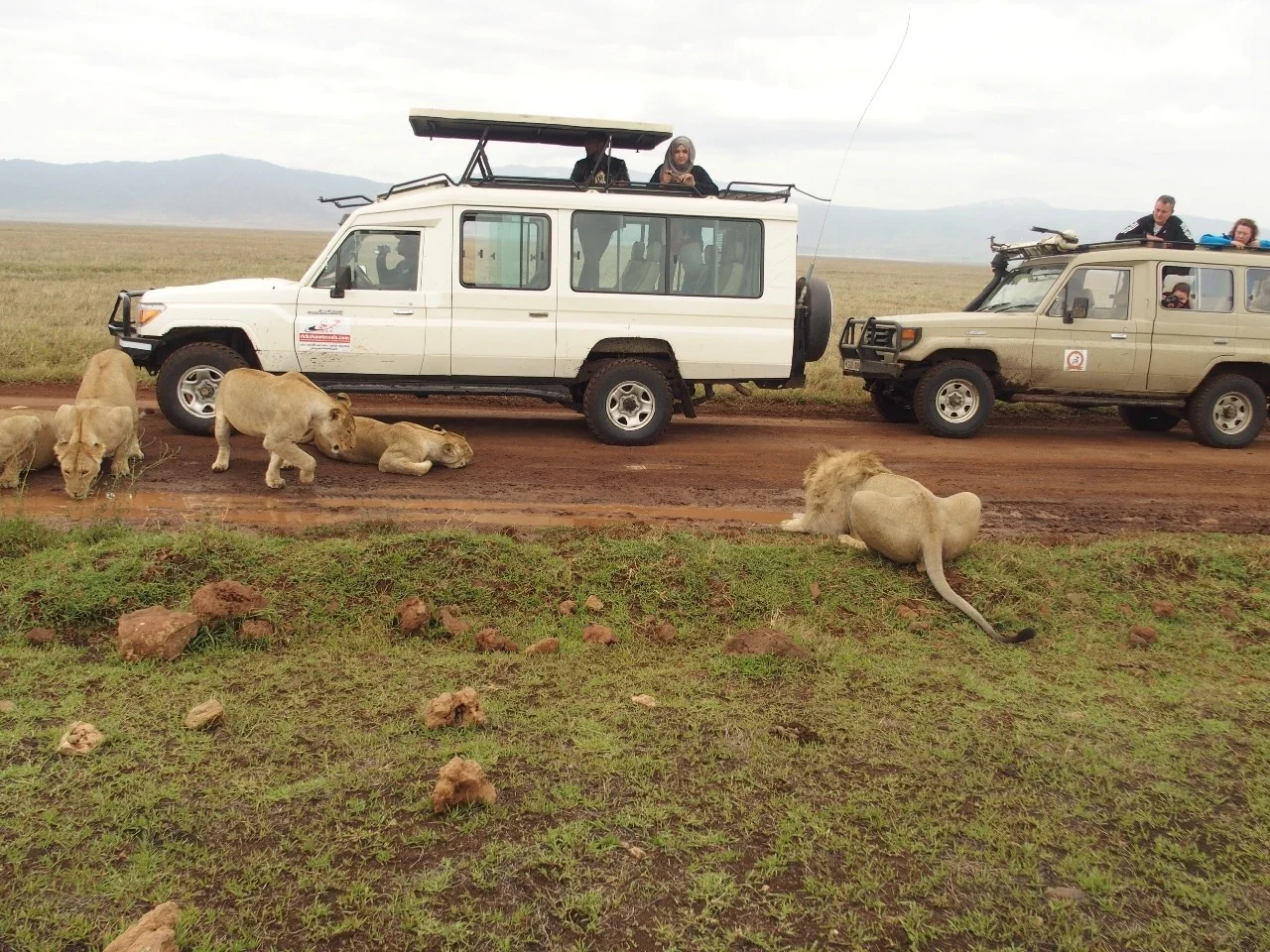
Far more successful is our second encounter with a pride of lions. The word goes out across the radio that a group is wandering through grass about to cross a road and from all over the crater jeeps start converging on the same spot. Sure enough a magnificently-maned lion and four lionesses do indeed appear, but the viewing is a total bunfight. Up to 300 jeeps a day enter the crater and it's no exaggeration to say 100 of them are crammed onto the same stretch of road, each manoeuvring through an unseemly traffic jam to get its excited tourists a better glimpse, a better shot.
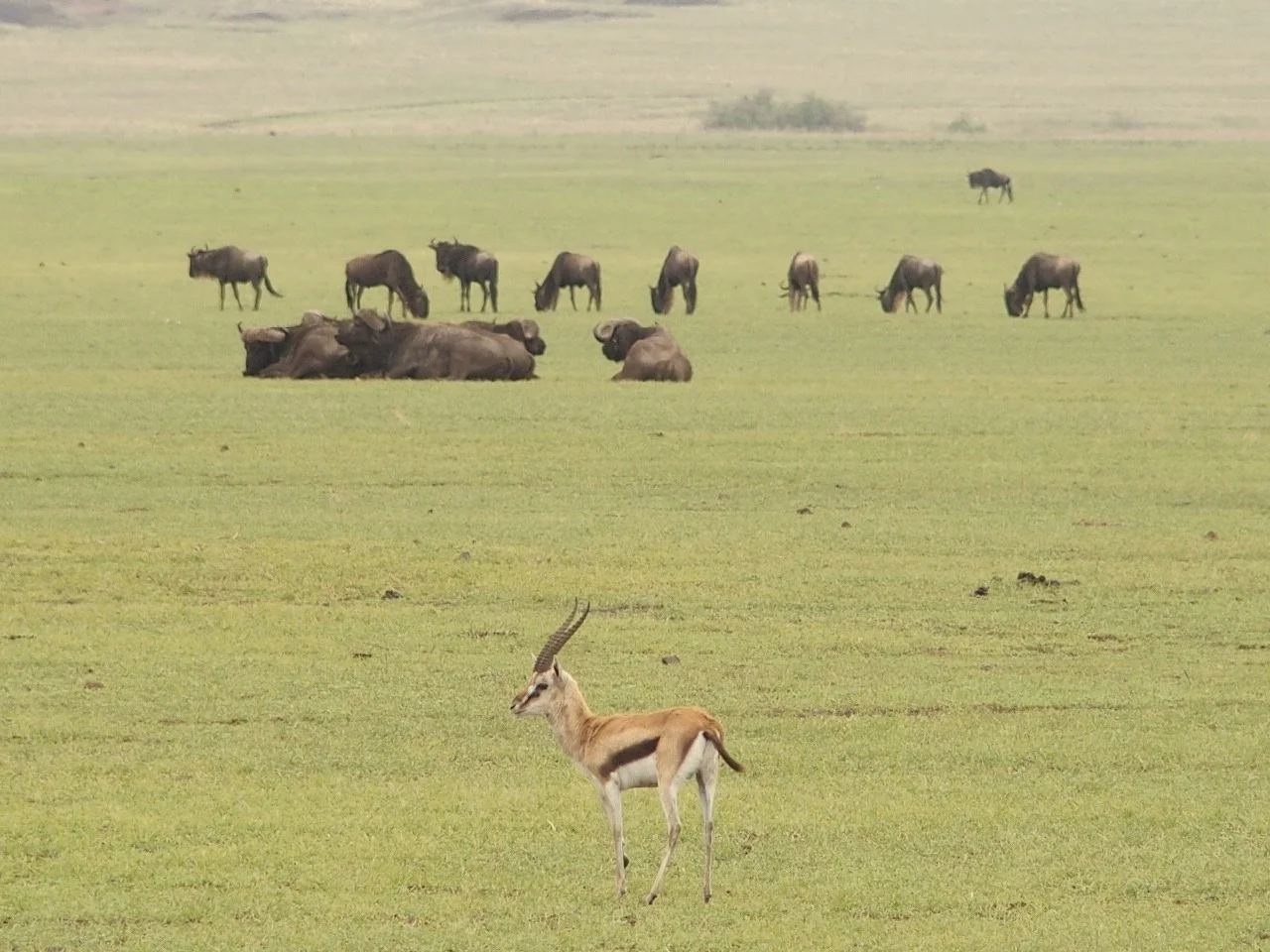
The lions are totally unfazed, nonchalantly weaving between the vehicles, drinking from puddles at the side of the road and lying down before us to lazily observe the nervous gazelles twitching nearby and gaze at the watchful but less bothered buffalo.
The park rangers pulling up alongside us however are very concerned by the sheer volume of vehicles vying for the best view and race up and down, marshalling us all into single file and then moving us on. Seeing the lions up so close is fantastic, but having been silently alone in the peaceful wilderness just a few minutes before watching the distant rhino it's a stark reminder that this is a major industry, and one that the parks rely on to keep the habitats maintained and wildlife protected.
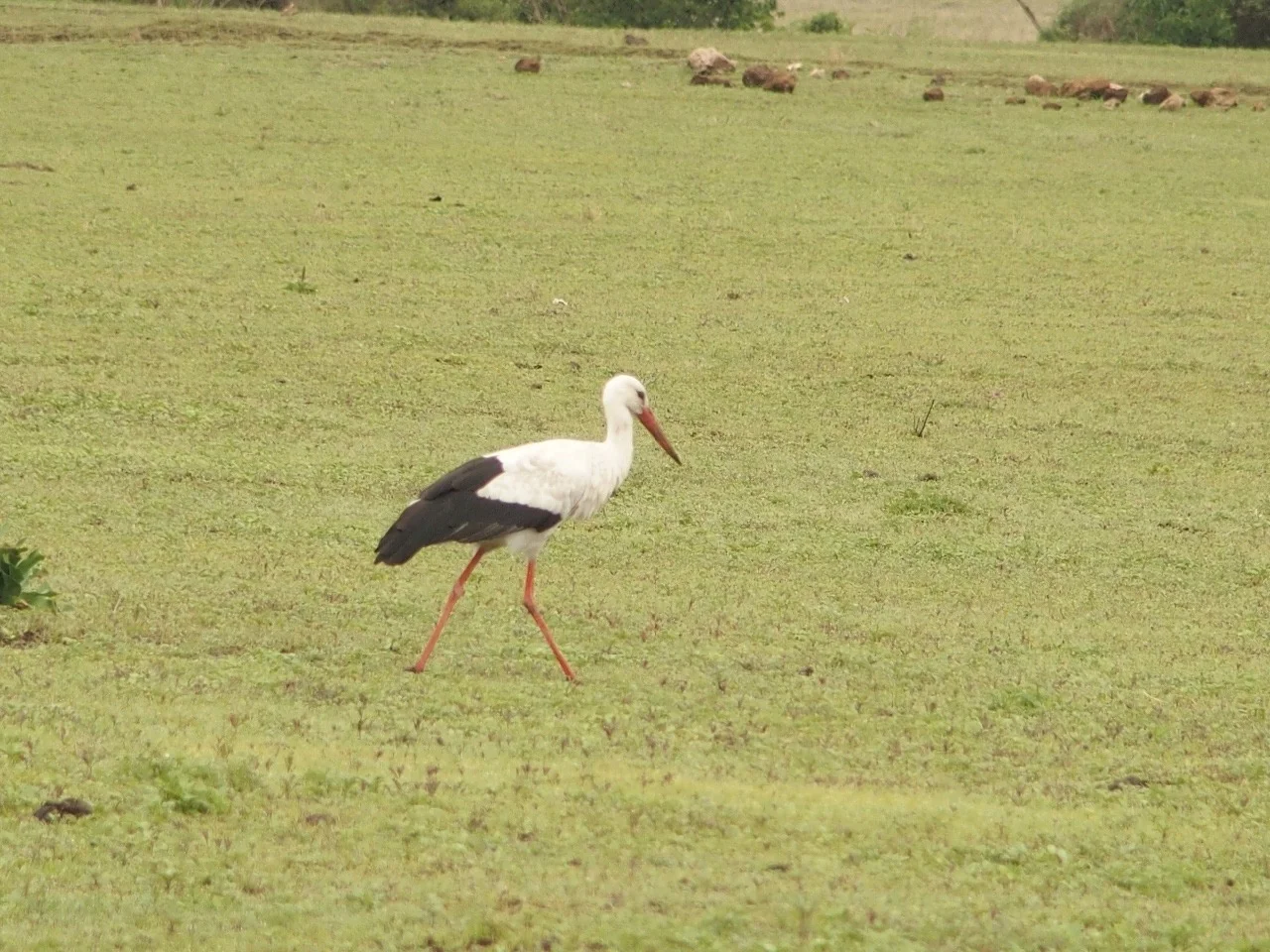
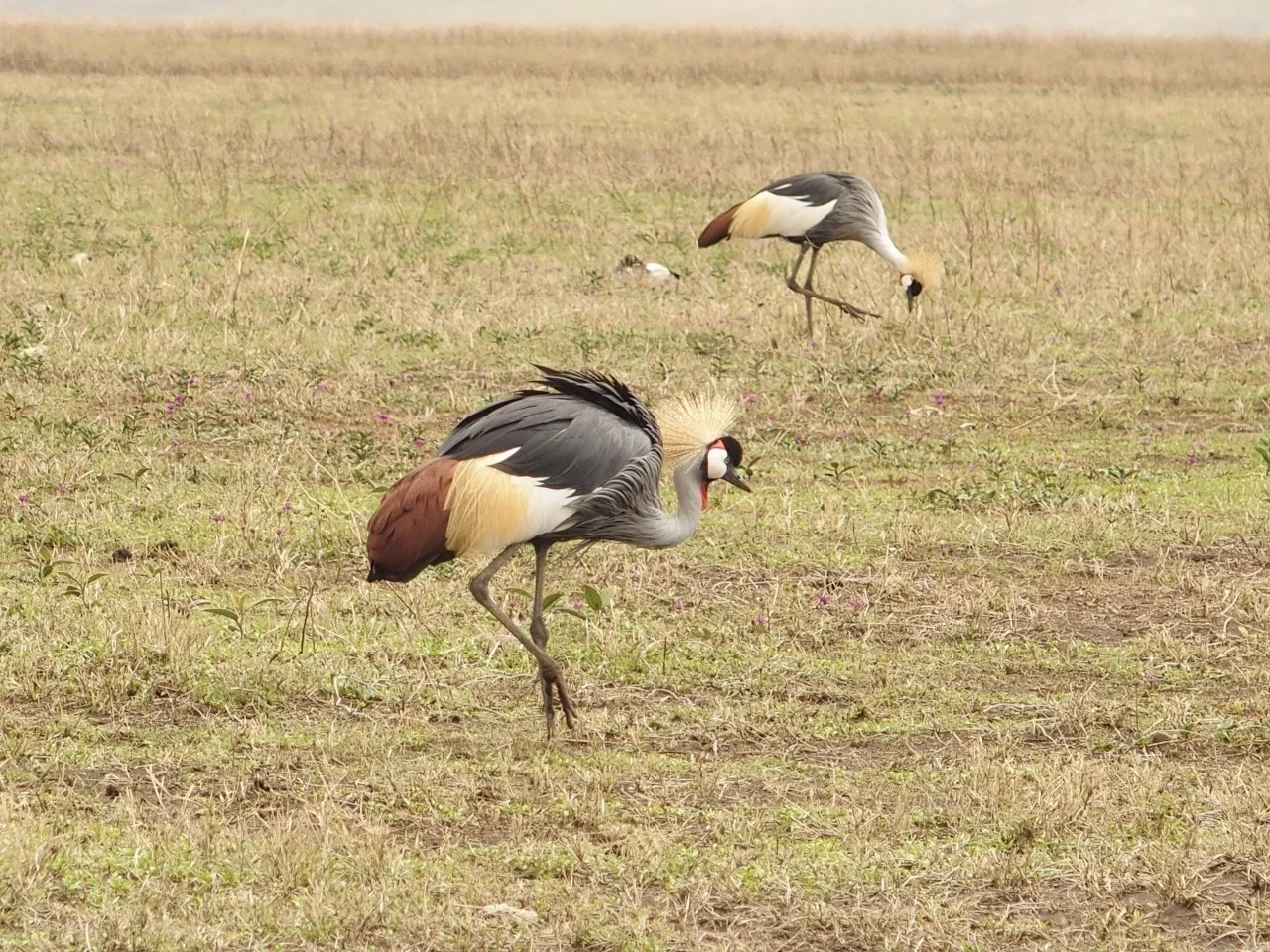
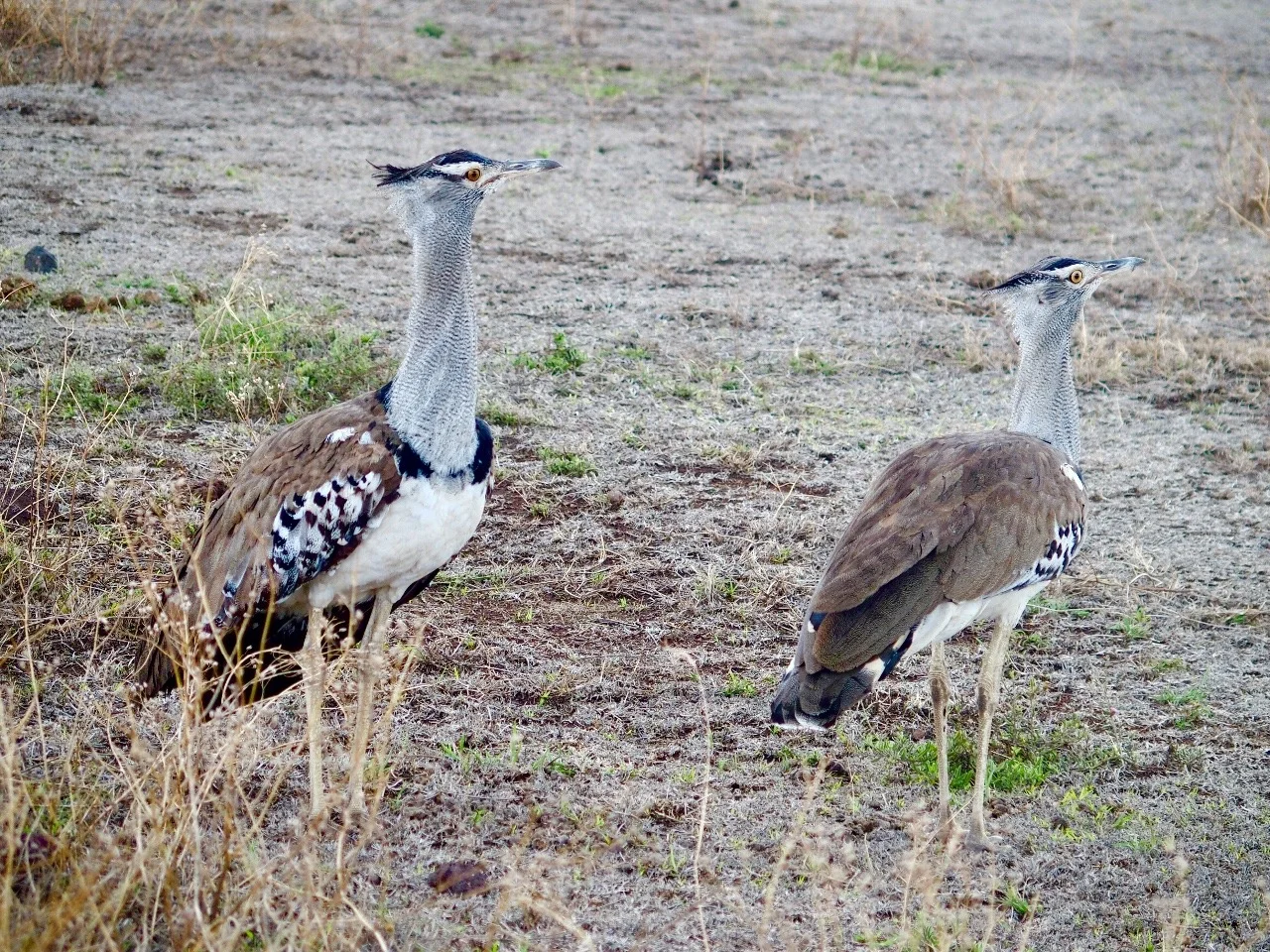
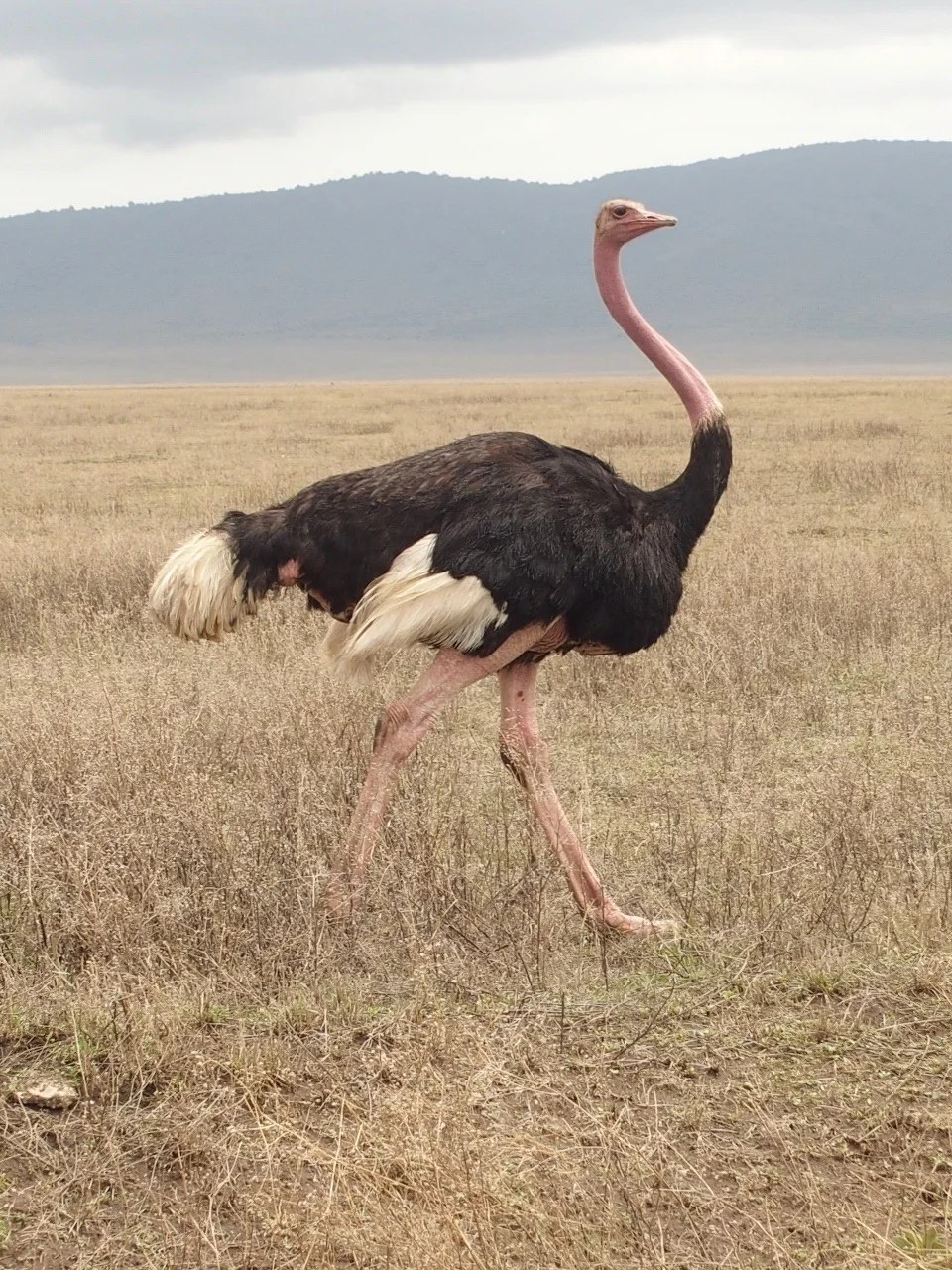
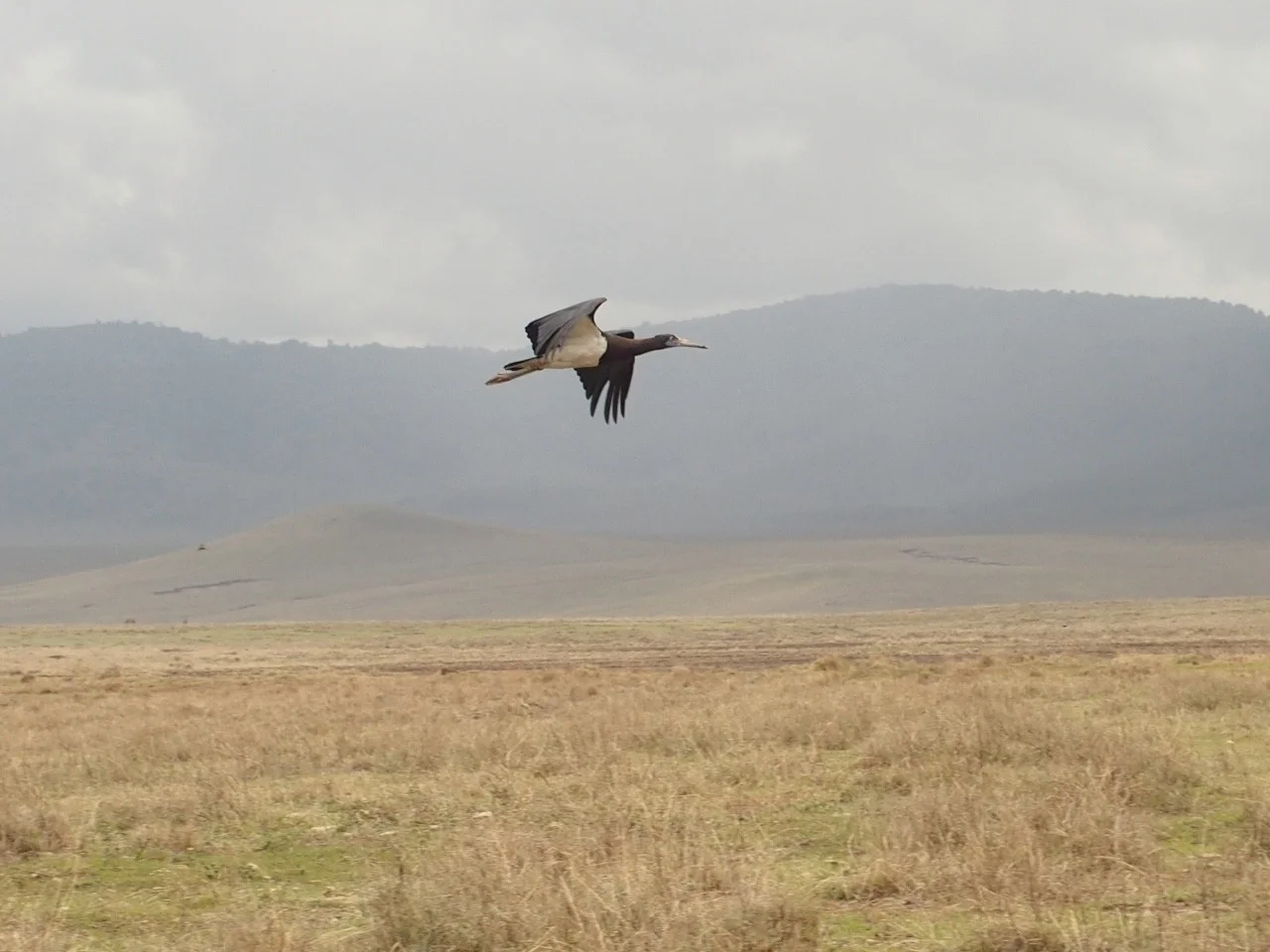
As the day progresses we see a spread of birds and animals including wooded vultures, grey crested cranes, Aberdeen storks, black kites, the sizeable kibo bustard and a few even more sizeable ostriches, one of whom elects to do a full mating ritual right in front of our car. Asgar also points out the European white stork that flies south to these plains to feed on wildebeest placentas during birthing season. It puts us right off our mid-morning snack!
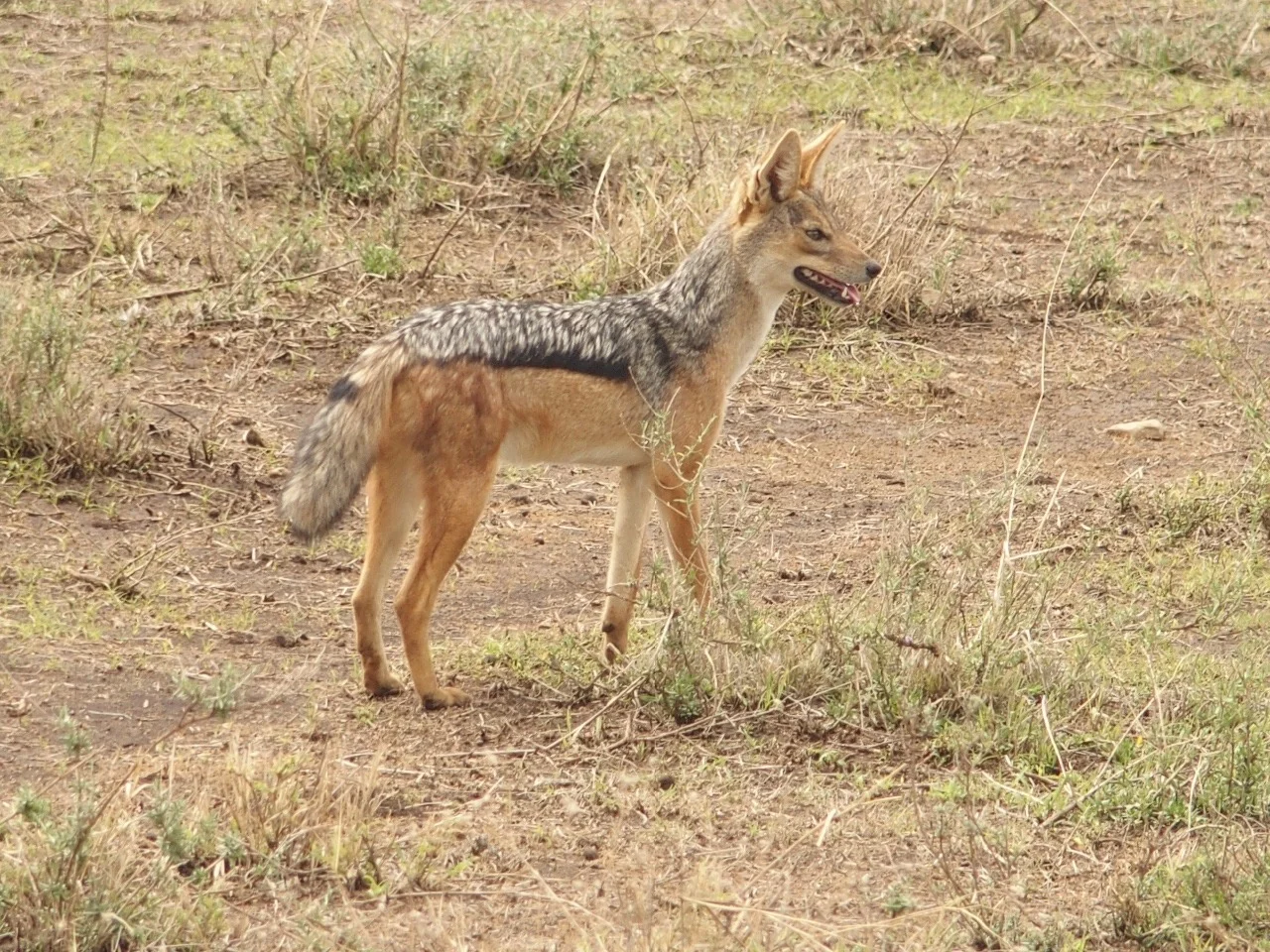
Yet it's our two encounters with jackals that prove most dramatic. Our first comes with a pair of silver-backed jackals trying to snatch a newborn Thomson gazelle from its mother, who fights back and manages to escape with her tiny, only minutes-old offspring running beside her.
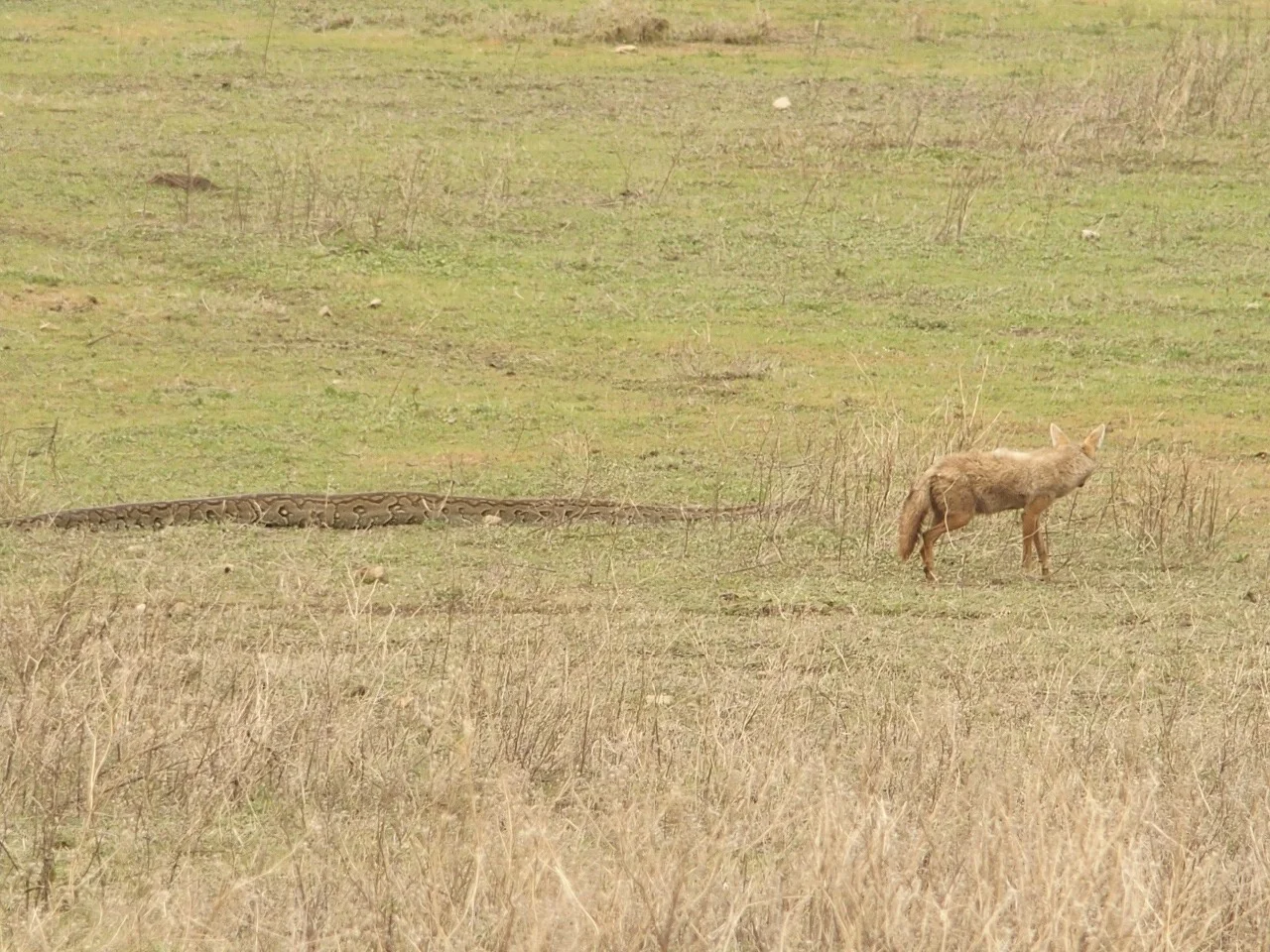
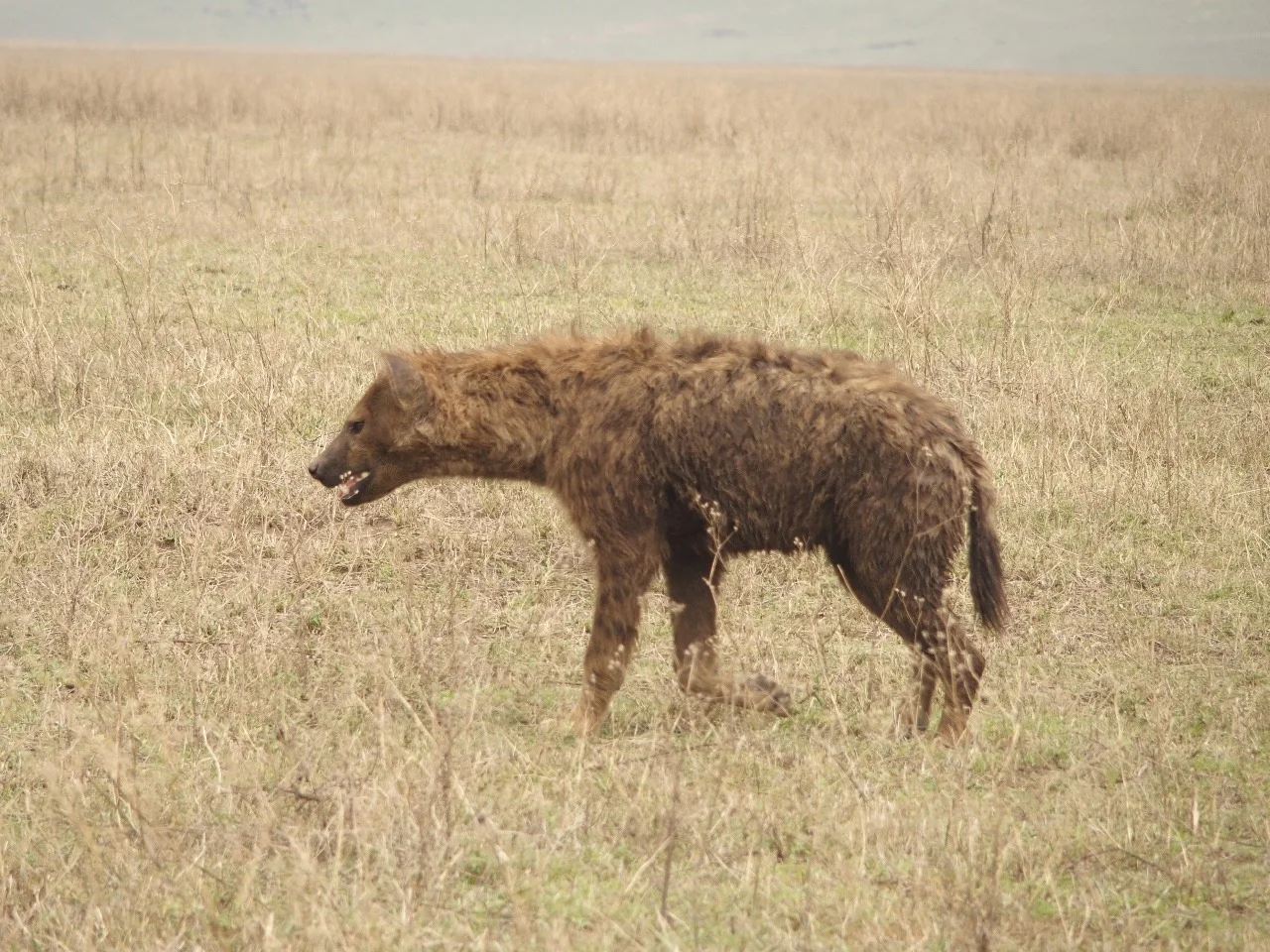
And the second is when a pair of golden jackals start yelping furiously and running around in wary circles, warning other animals including a passing hyaena, of a nearby threat. We wonder what can be the matter until Asgar spots it slithering through the grass; a huge African rock python at least five metres long by his estimation. It sends shivers down our spines!
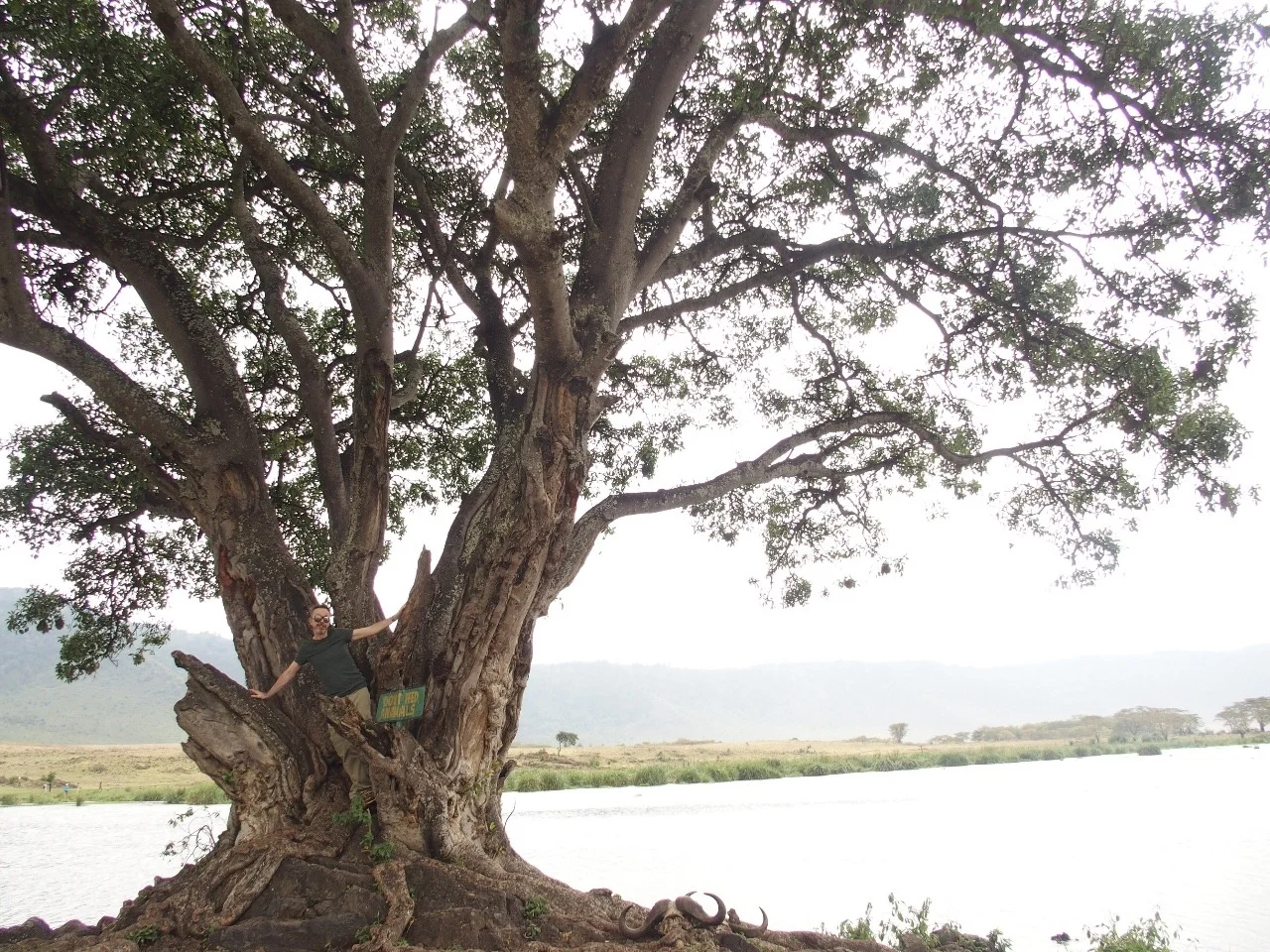
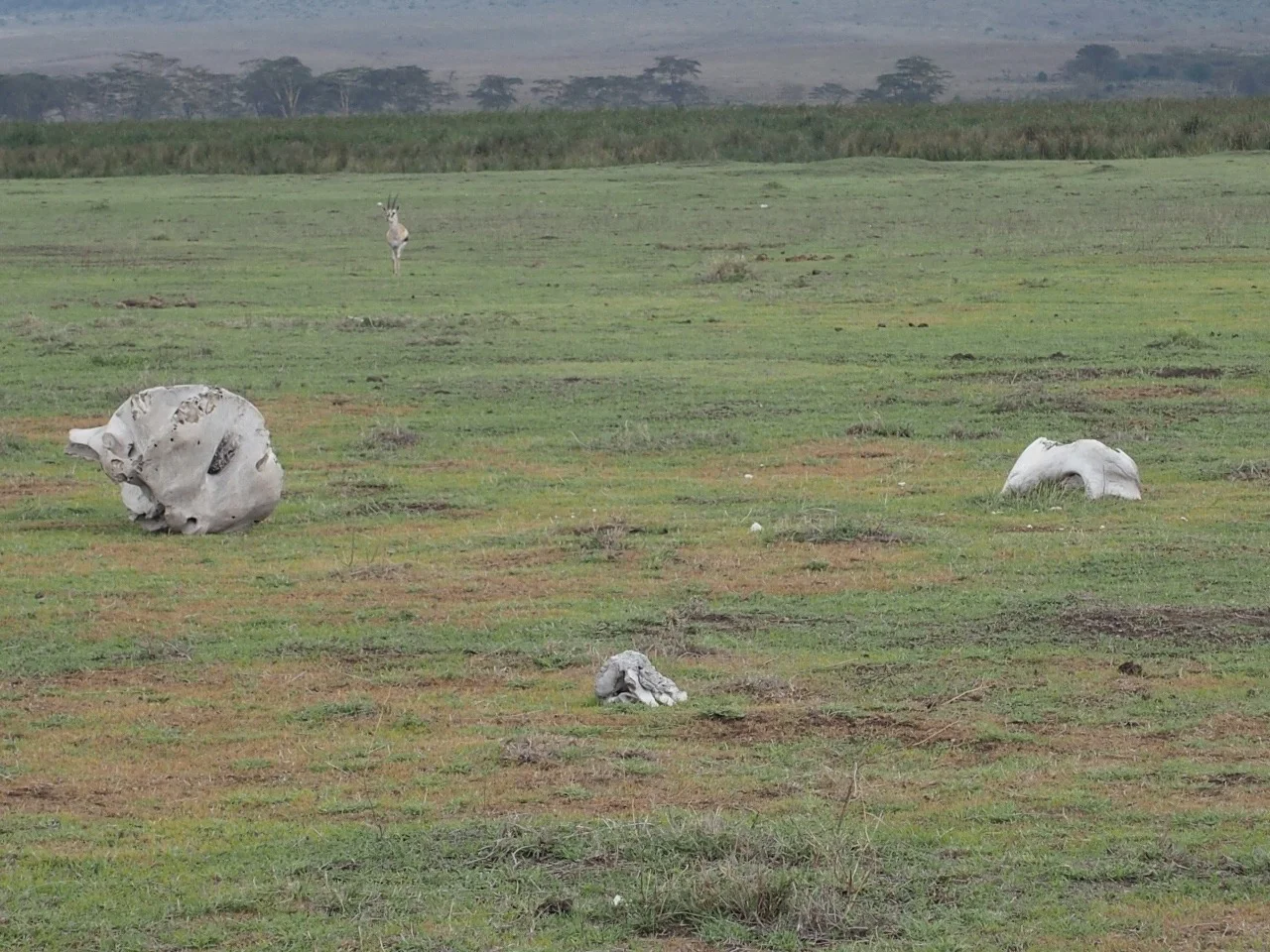
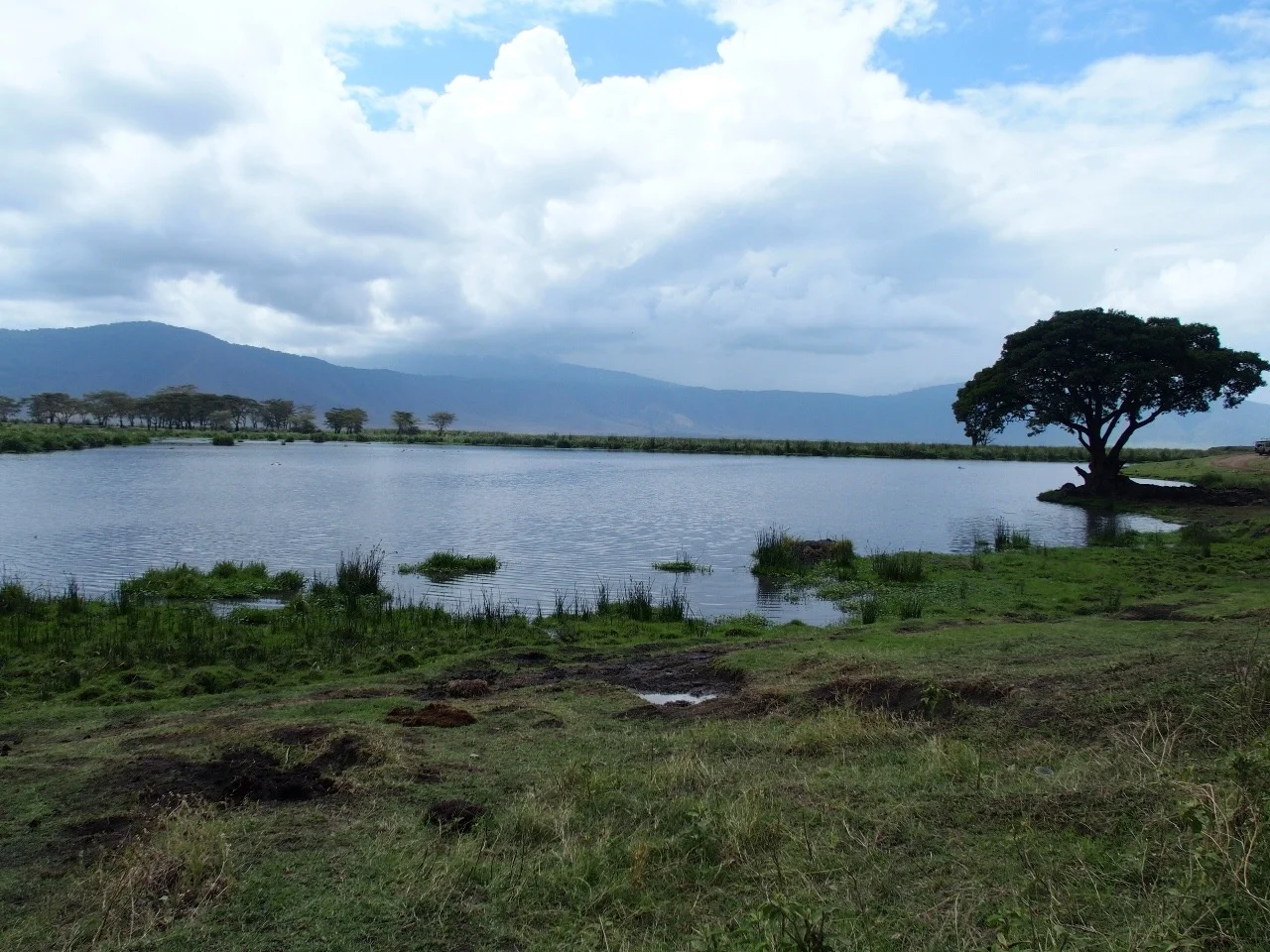
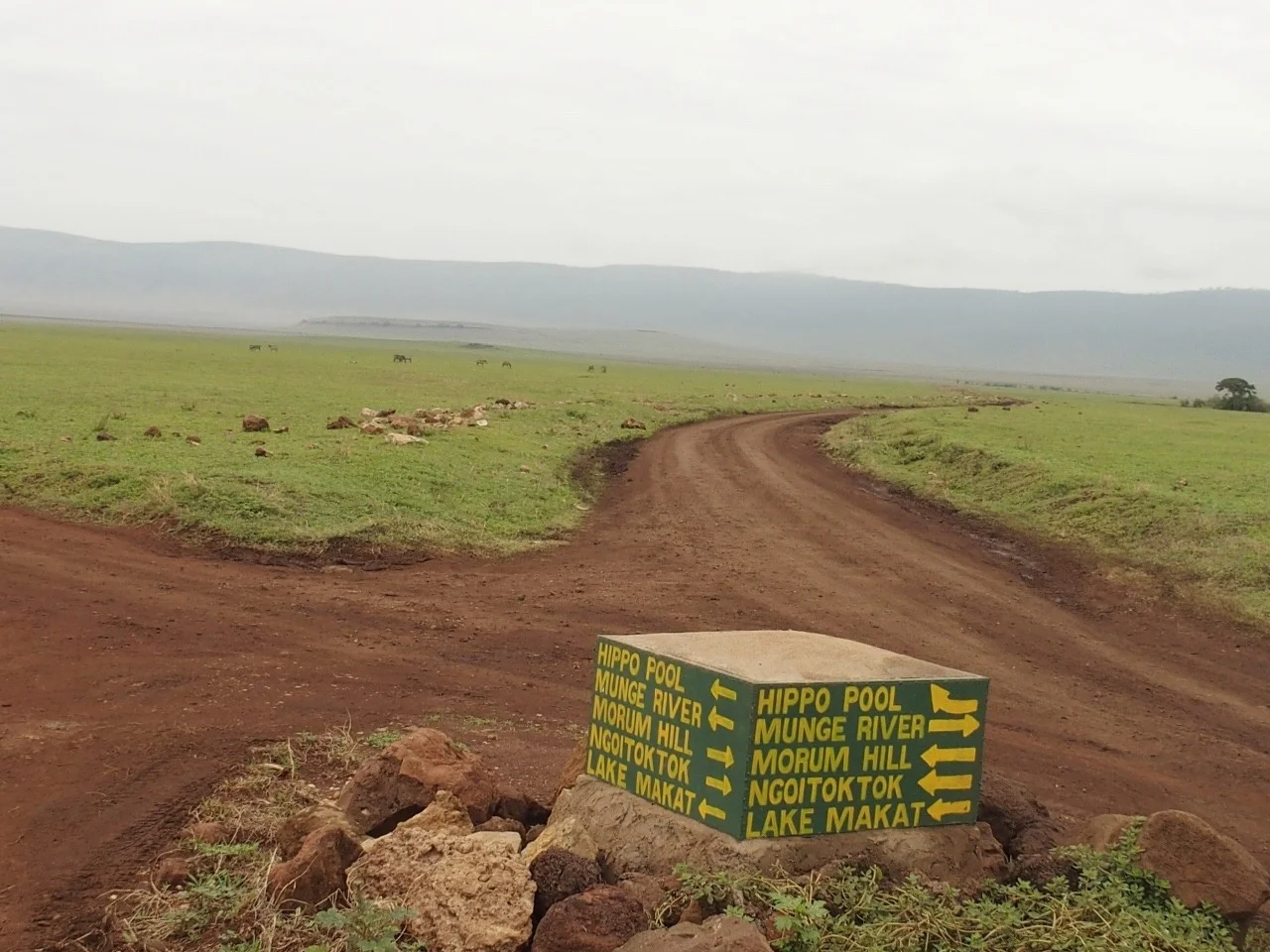
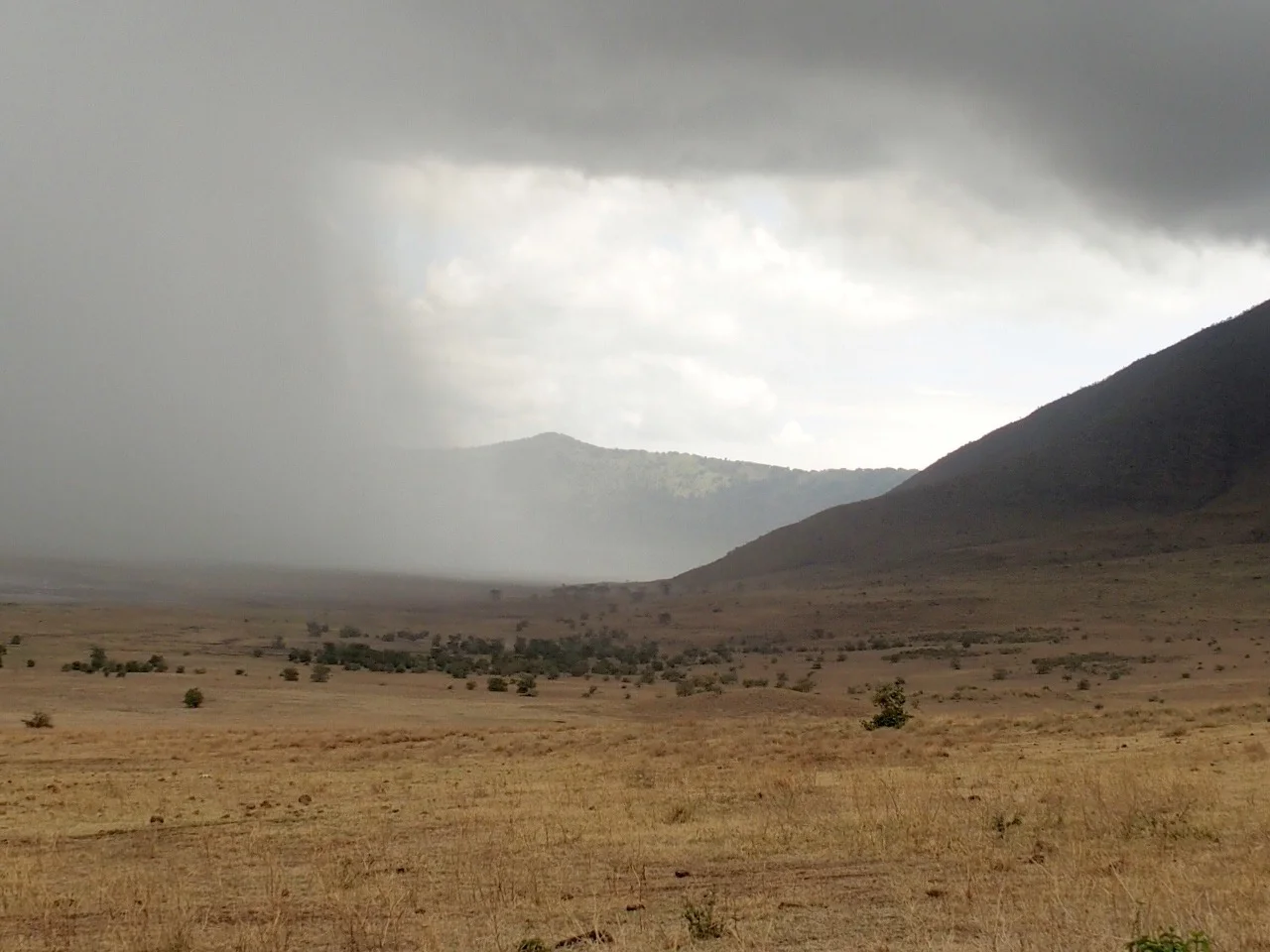
After lunch by Lake Ngoitoktok the overcast weather starts looking more threatening and Asgar suggests it's time to leave before the wall of rain we can see advancing makes the journey out difficult. We drive past a stretch of ground littered with big bones, which we're told is an elephant graveyard where the oldest animals come to graze until they expire, but before we clear the forest there's a clap of thunder and the first wave of rain hits us, pelting down.
Our speed is faster than the rain though and we soon emerge from it, ascending above the clouds on the zig-zag hairpin road out of the crater, and driving around the remainder of the rim to exit the Conservation Area.
Back at the hotel we pack our safari clothes away, sad that this part of our African adventure is now at an end, but excited to be heading to Zanzibar tomorrow, and the treasures that await there.
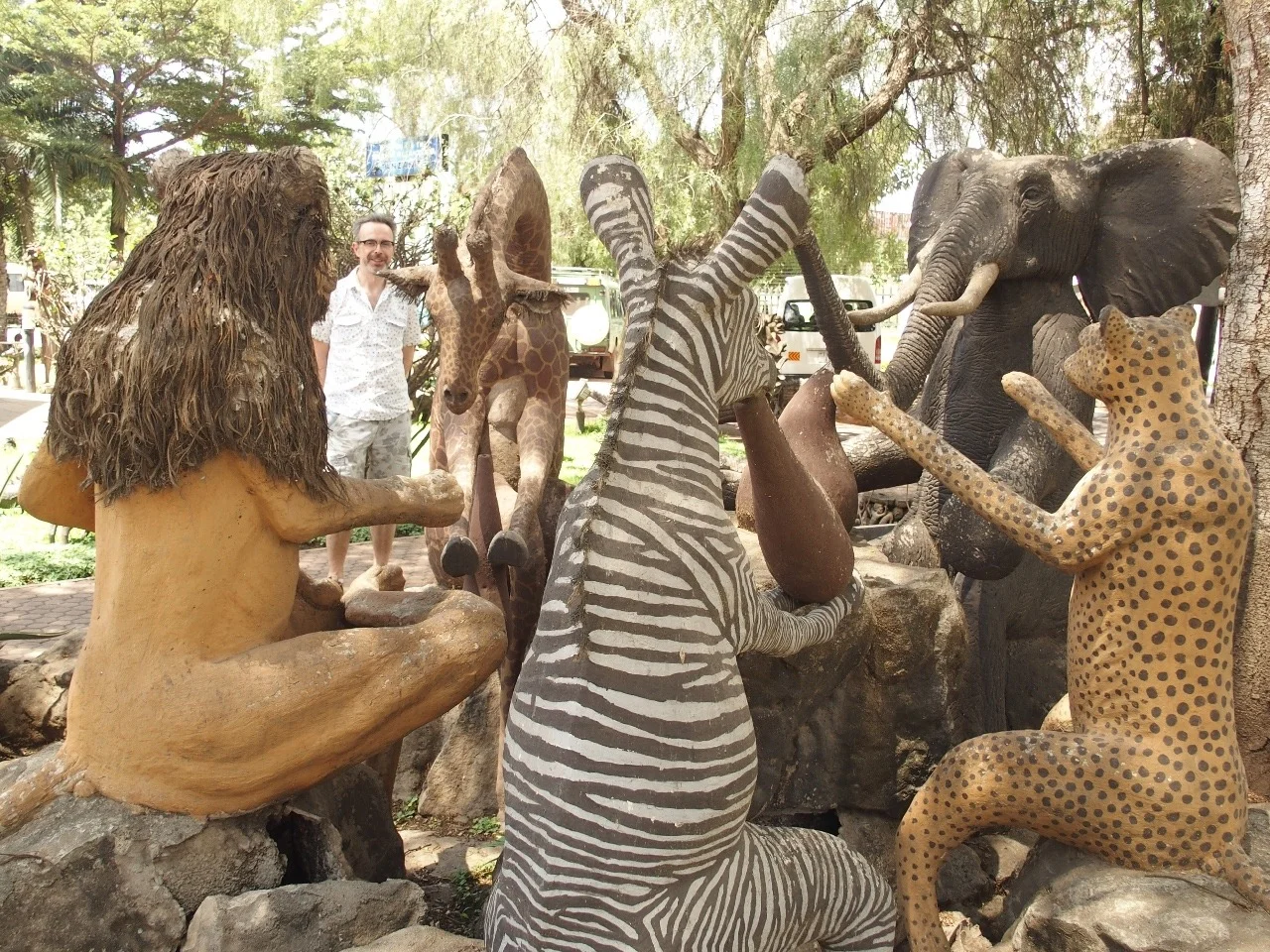
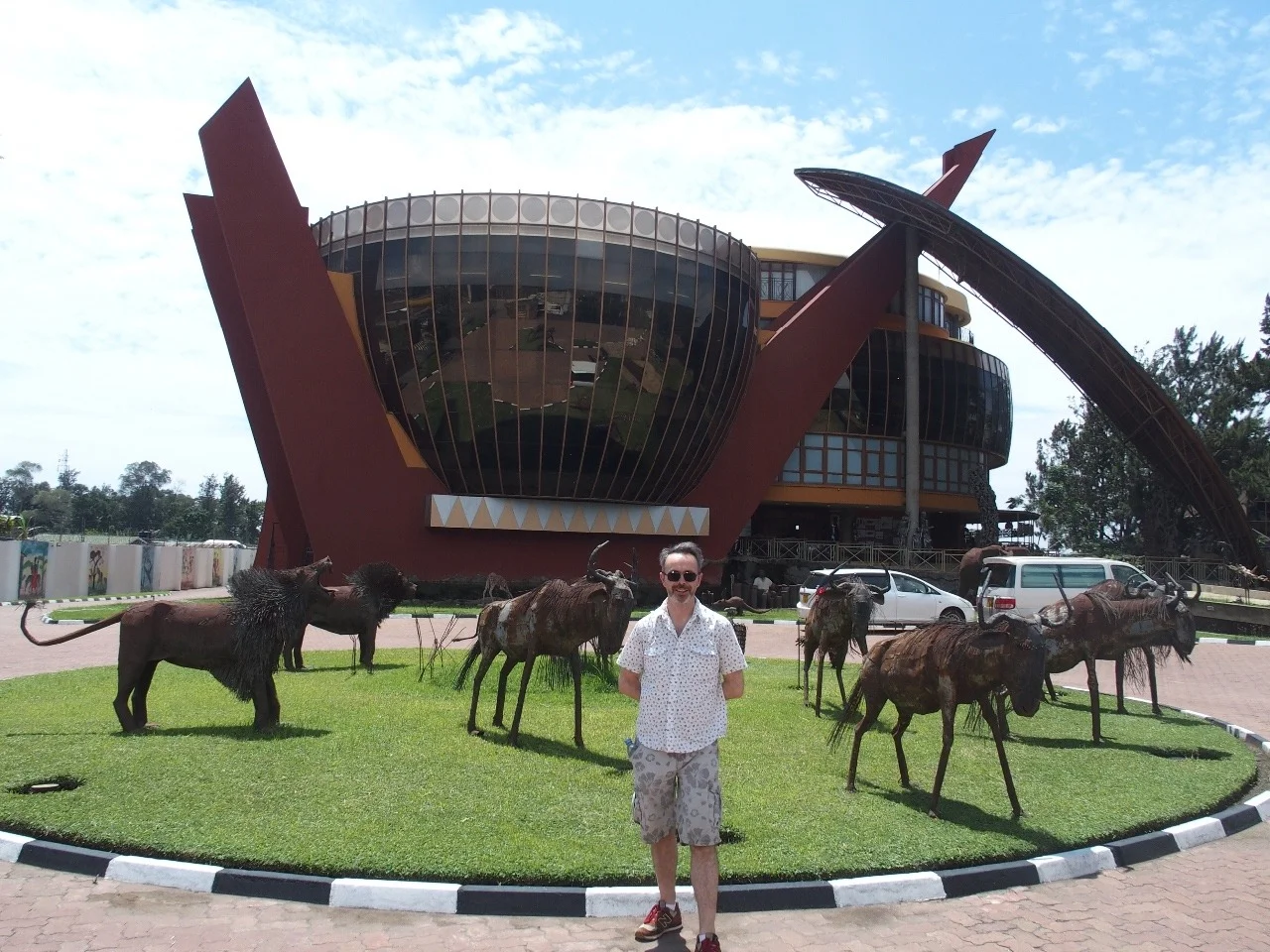
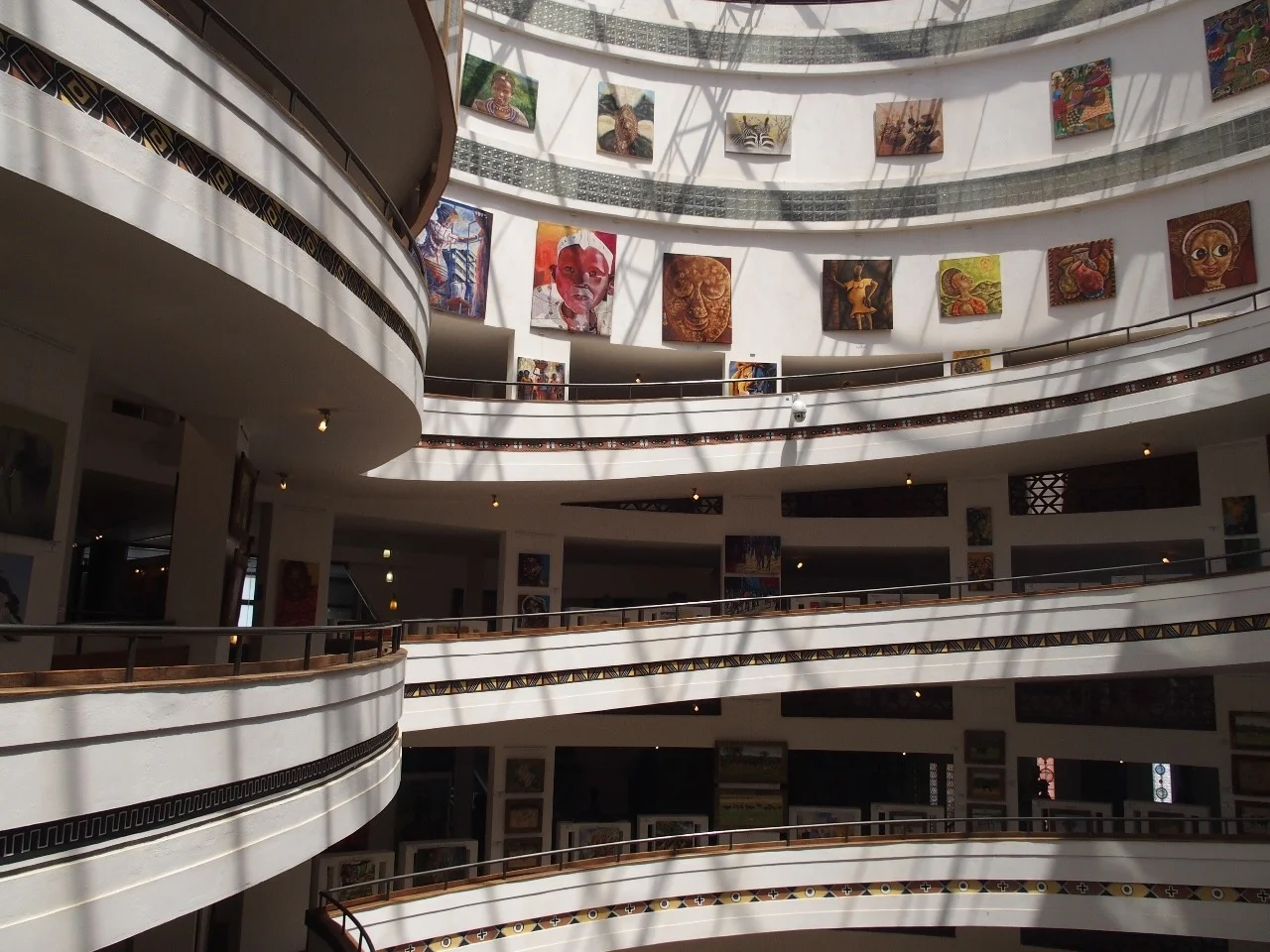
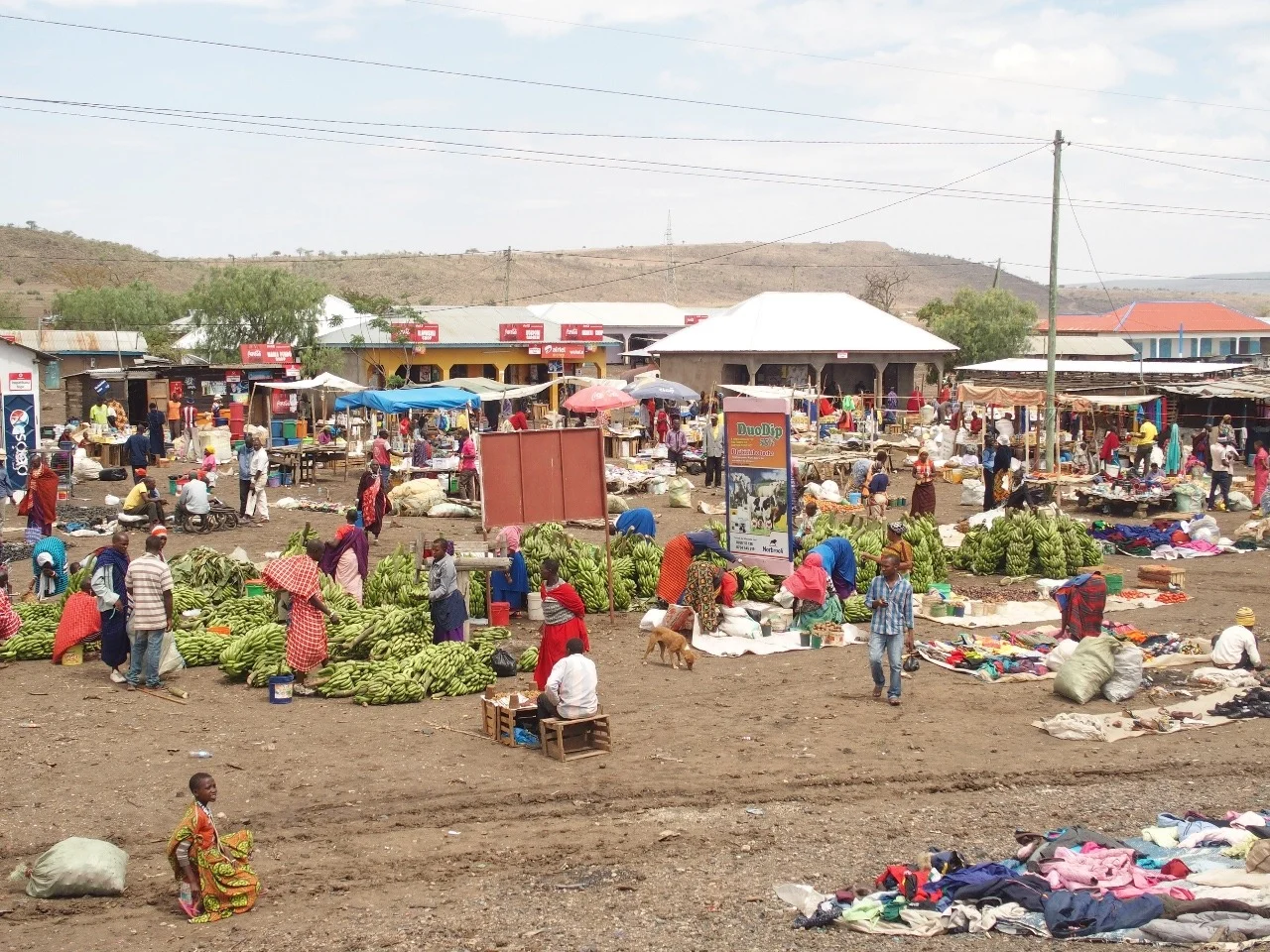
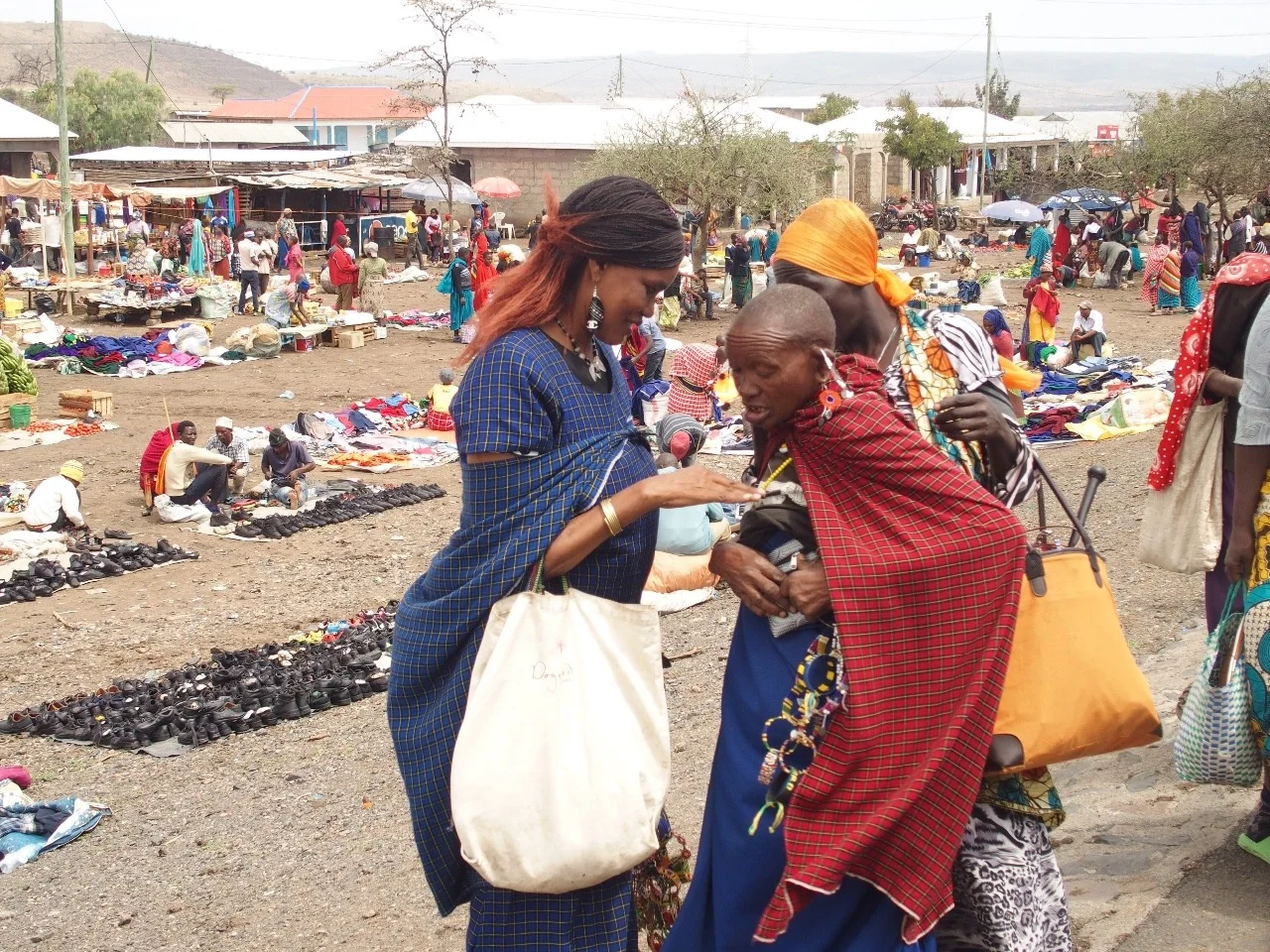
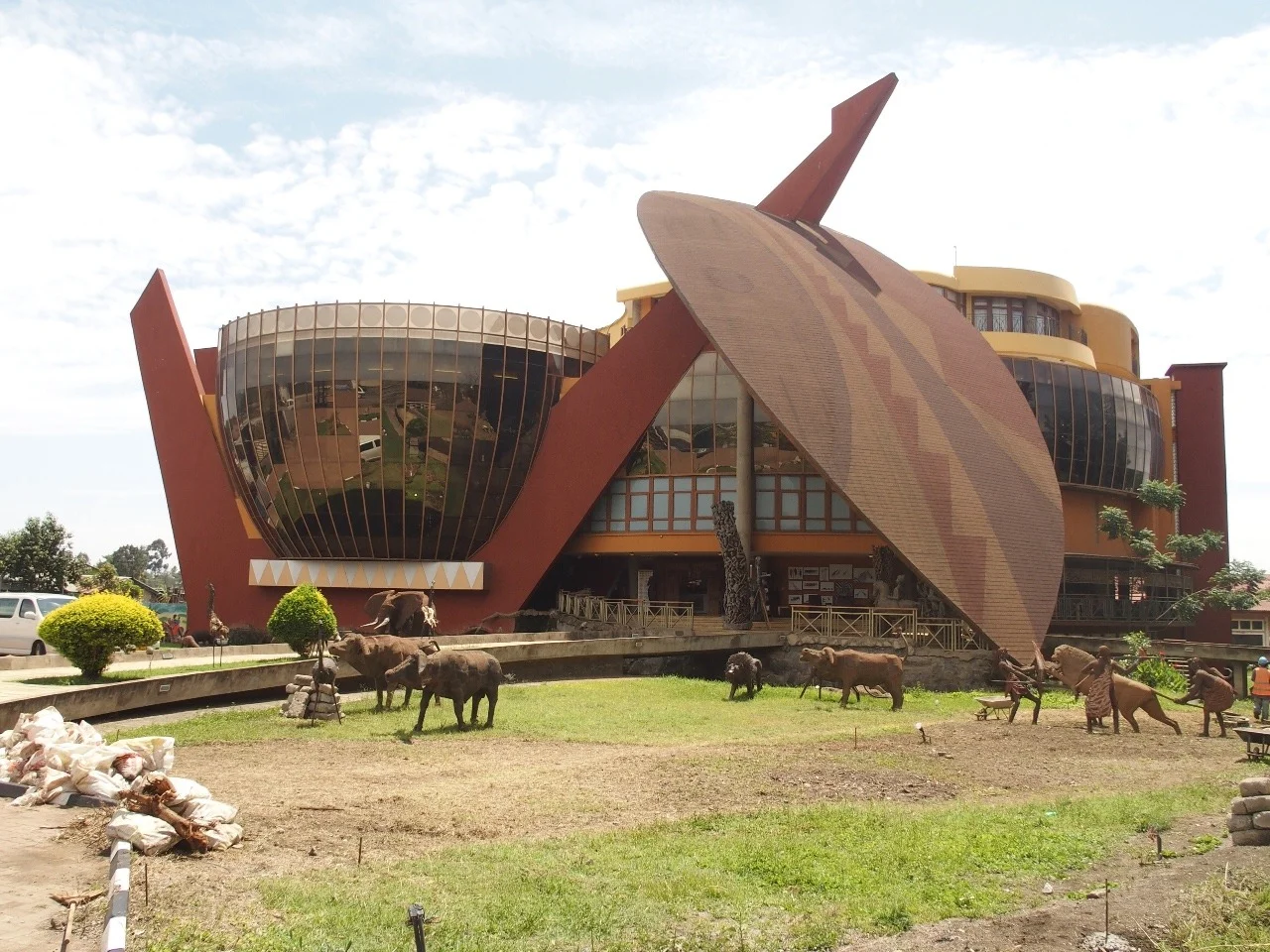
However, there is a last treat to be had on our way to the airport, the following morning. After a couple of hours drive, passing a colourful Maasai market on the way, we arrive into Arusha ahead of schedule. To save us killing time sat at a hotel waiting for our airport transfer, Asgar stops at the Tanzanian Cultural Heritage Centre we had seen a few days ago, giving us a brief chance to explore. The building is quite remarkable, its interior architecture seemingly modelled on the Guggenheim in NYC, and its exterior reflecting Tanzanian art, including an enormous shield design descending from the roof to the ground
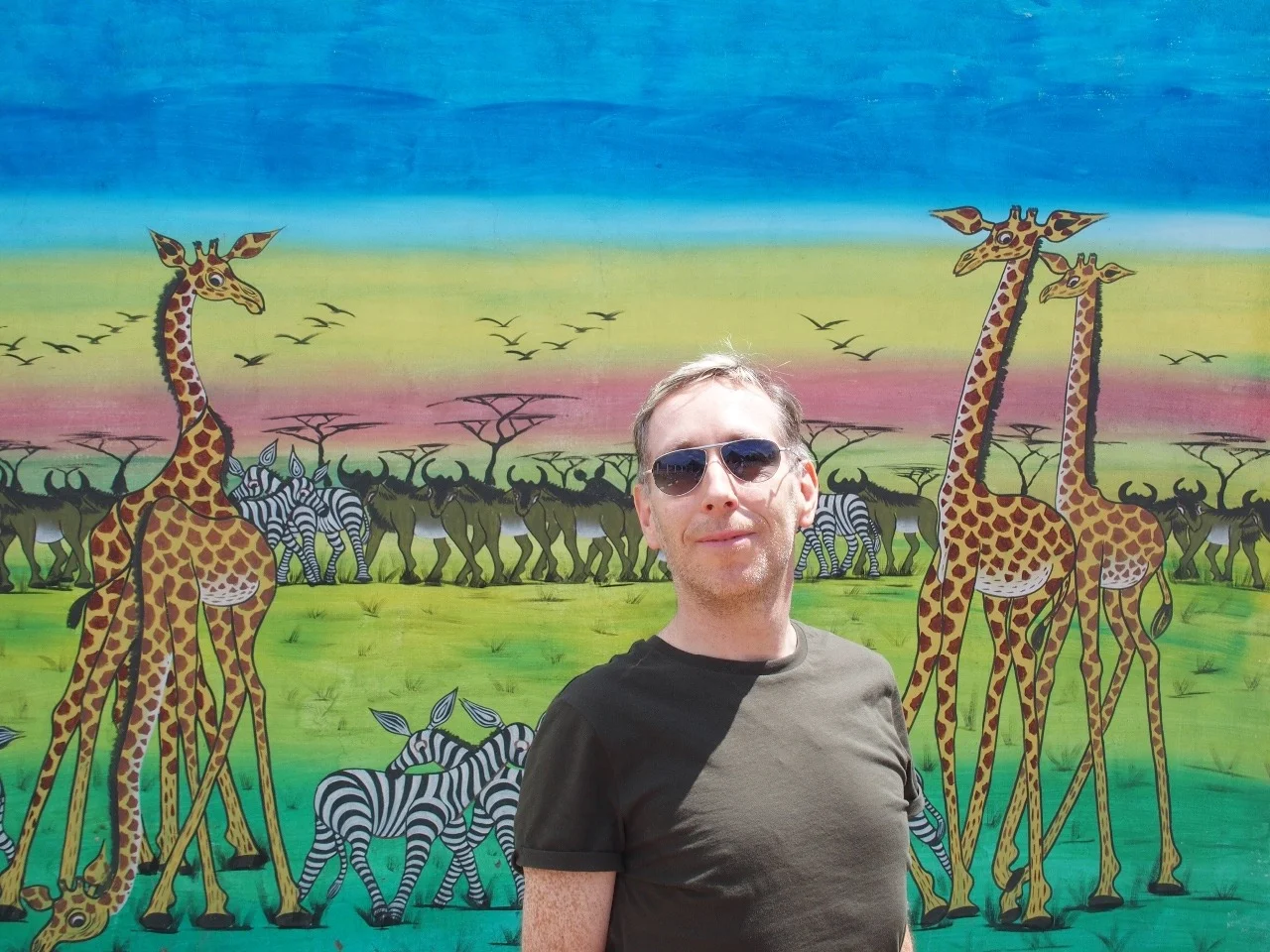
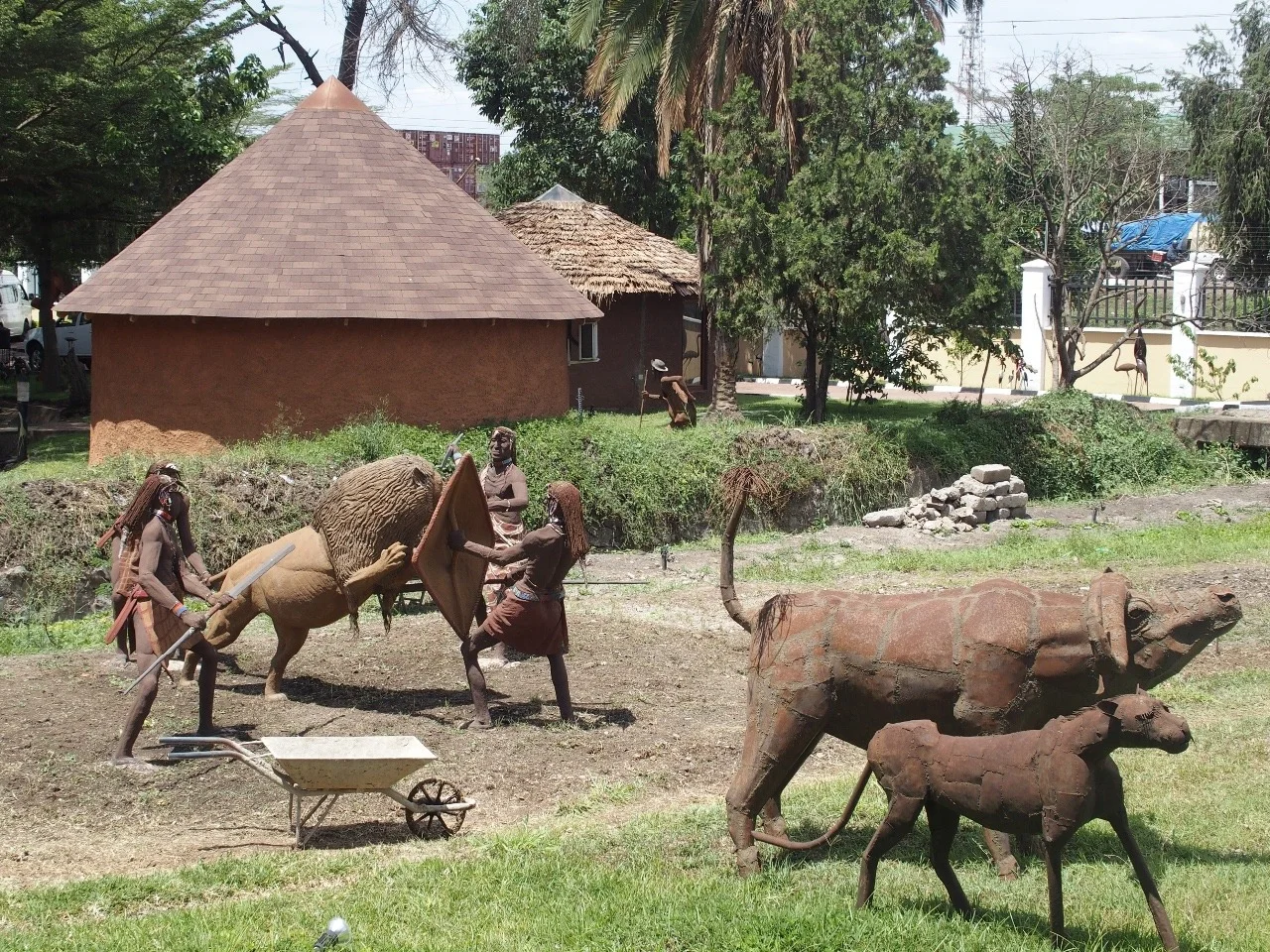
Outside the building are scores of sculptures and murals reflecting indigenous wildlife and tribal history while inside houses a dazzling array of art and artefacts. It's an incredible exhibition space showcasing contemporary East African art and we could spend a good couple of hours taking it all in.
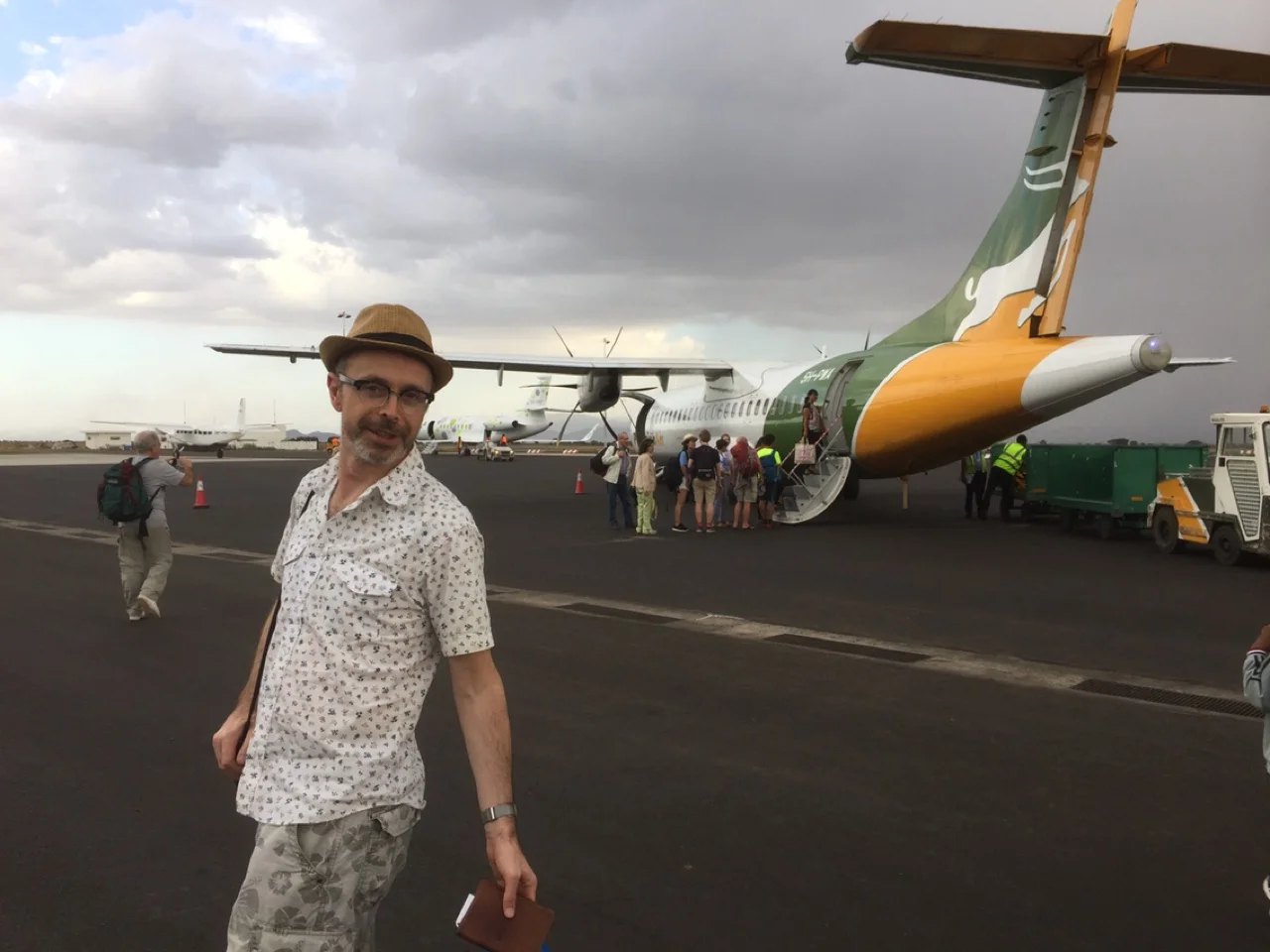
Sadly, a swift picnic lunch is followed by saying goodbye to Asgar at the Mount Meru hotel, where a new driver Raymond picks us up and takes us the final hour to Kilimanjaro airport. This time Precision Air don't let us down and at 5.20pm, as planned, we leave mainland Tanzania and take to the skies, touching down on the Spice Island sixty minutes later.
Our visit to Zanzibar is about to begin.