One of the virtues of a group tour when travelling overland is the assistance provided with border crossings, and it’s the main reason that we decided to join an organised trip to explore this part of Central America. And it proves invaluable with the complexities of leaving Mexico and entering Belize.
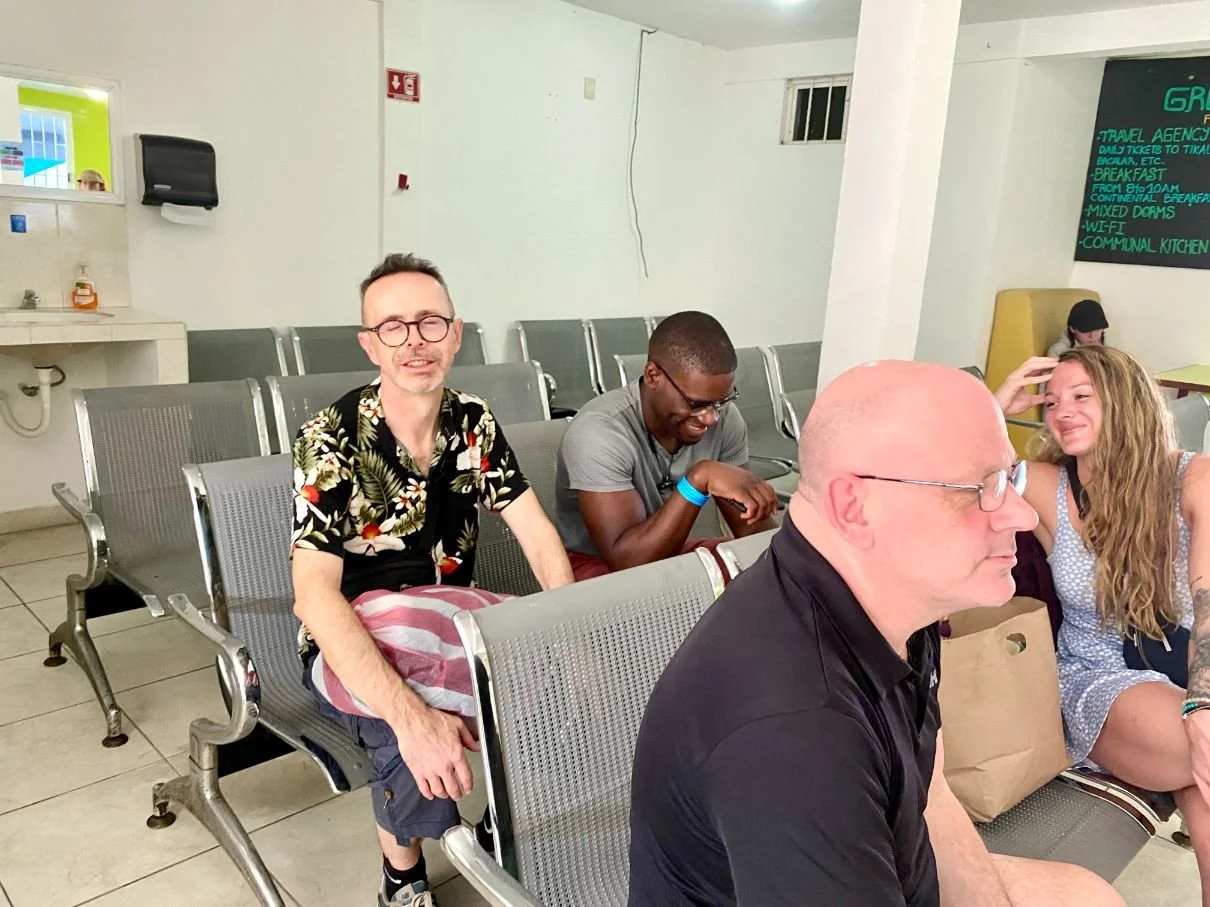
We’re all ferried by minibus to to a small office in the south of Chetumal where we fill in our Belize entry forms in advance. There’s various other tourists there doing the same, all much younger independent backpackers, so our Intrepid group are instructed by Aquilino that when we get to the border we must all stick together and he’ll smooth out any issues. Once our forms are filled in everyone, including the independent travellers, are put onto a larger coach and we are driven to the Mexican border, where we each have to hand over 680 pesos to leave the country, seemingly an arbitrary figure which fluctuates with whatever guard is on duty.
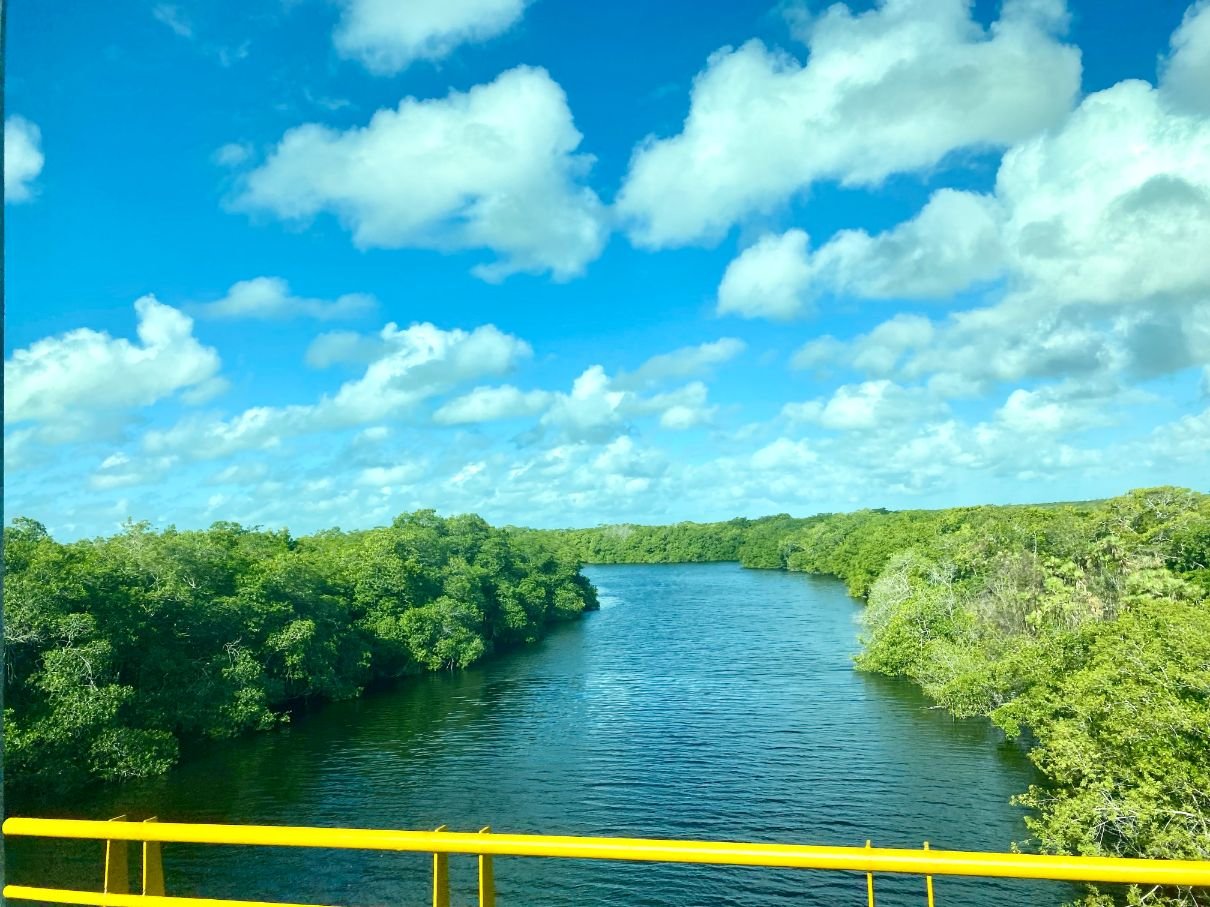
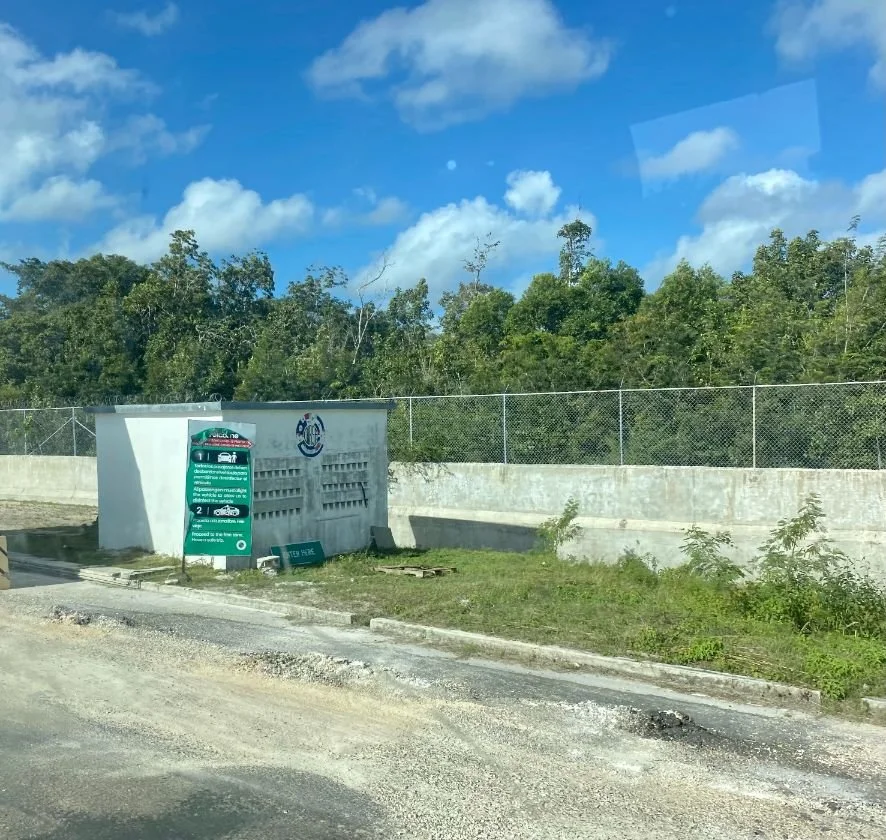
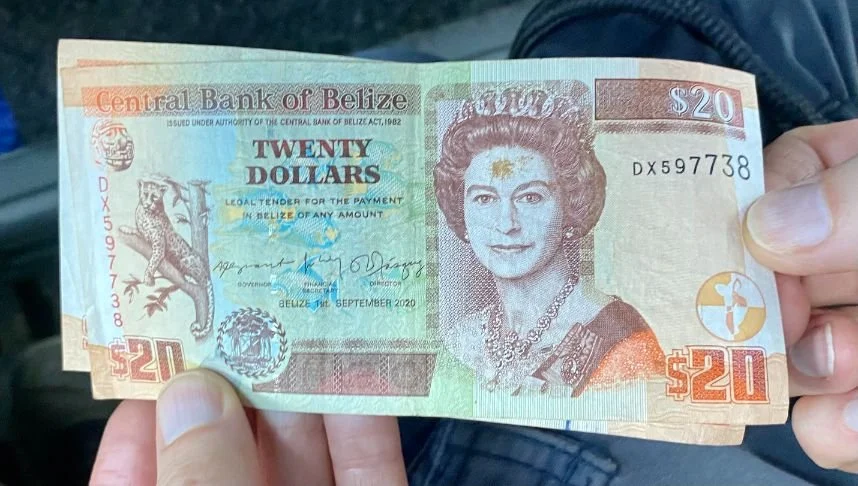
We all get back on the coach and drive six minutes through no man’s land, across a river that creates a natural border, to Belizean immigration where big bright blue entry permits are stamped into our passports, bags are randomly searched and we all pile out of the immigration huts. Aquilino points out the local ‘money exchange bureau’, which is just a random guy in a baseball cap on the other side of a chain link fence with a bundle of notes. I hand over our remaining 500 Mexican pesos and get 50 Belize dollars in return, the notes bearing a picture of a much younger Queen Elizabeth II on them.
The nation now called Belize was formed in 1981 after gaining its independence from Britain and is the youngest country in Central America, and second smallest after El Salvador. It is also the only country where English is the official language, although Creole, Spanish and various Mayan dialects and languages are frequently spoken in different parts of the country.
Once our group have all made it through immigration and changed our money we all board a waiting minibus and start our journey through the country. Rain starts to fall as we drive through Corazol, the first town after the border, which is on the edge of the Caribbean, and dark clouds briefly threaten storms overhead but within minutes the sun blazes back down again over fields of sugar cane and palm trees.
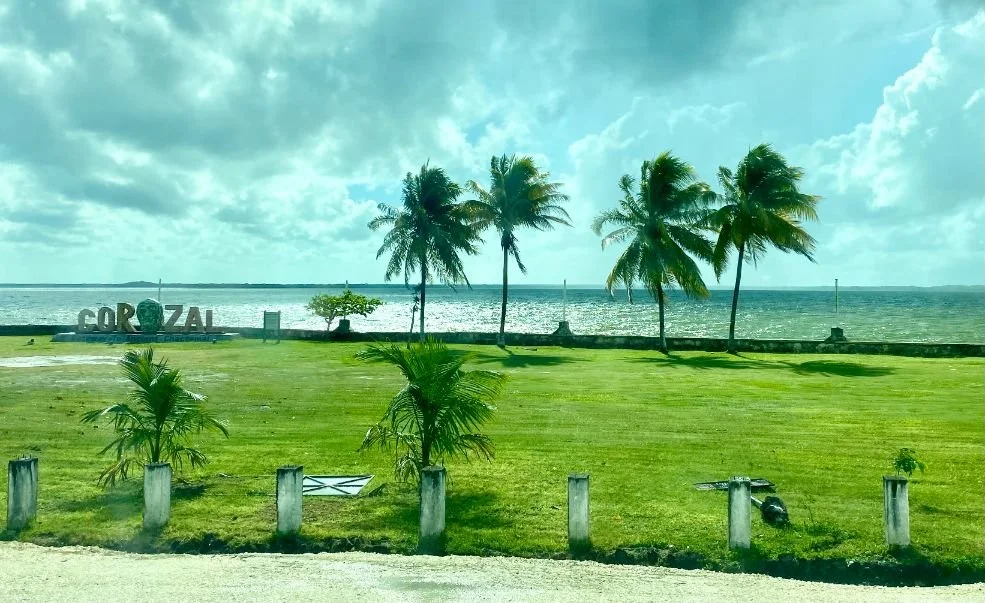
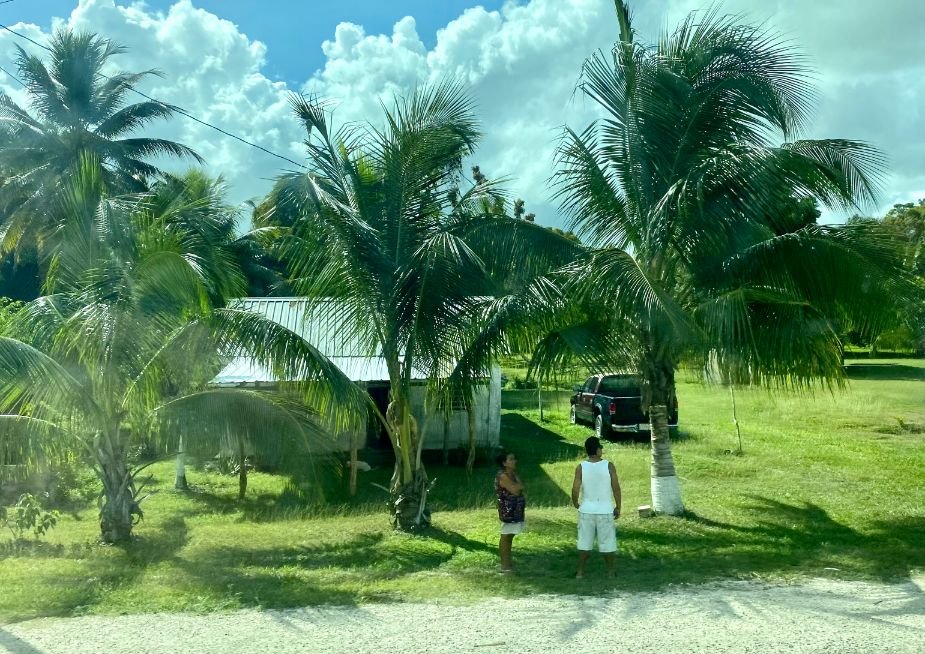
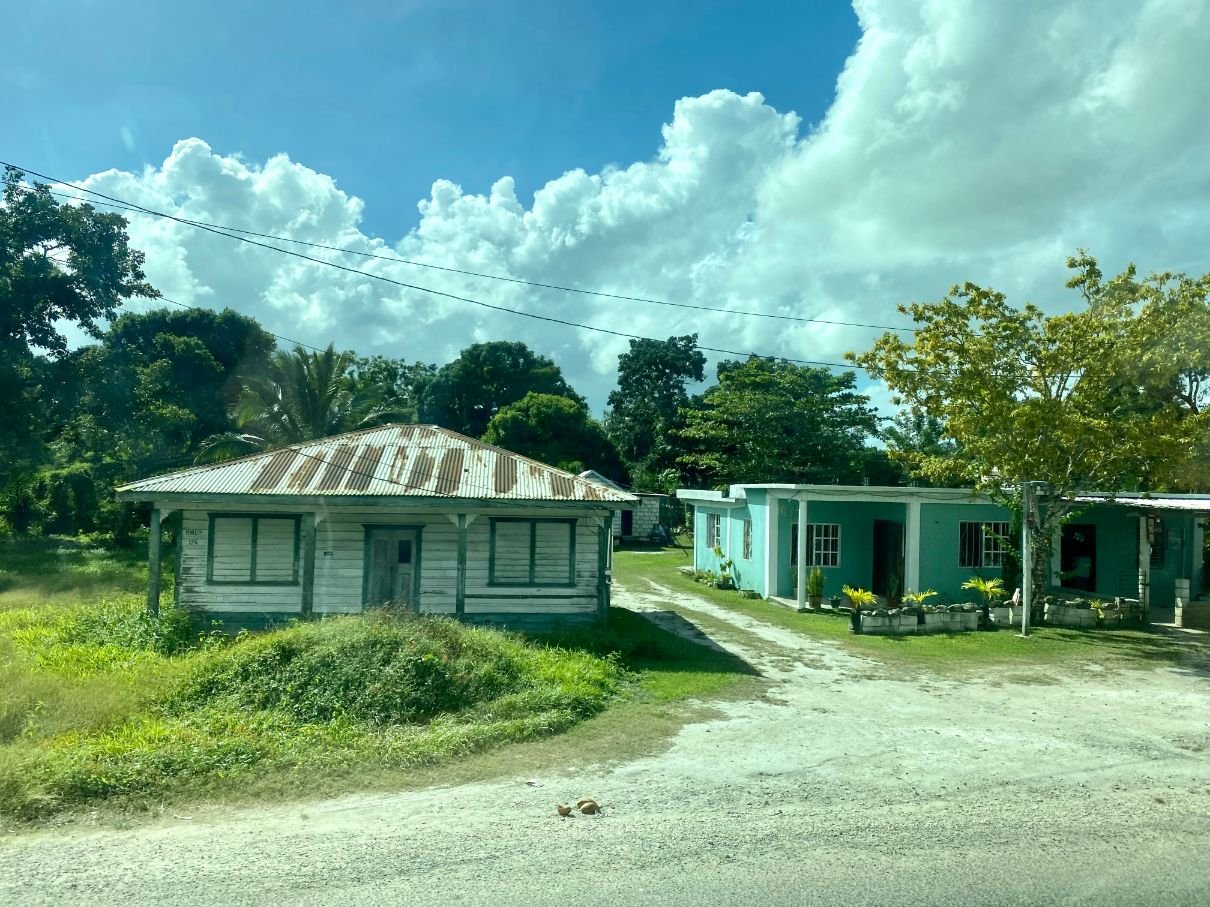
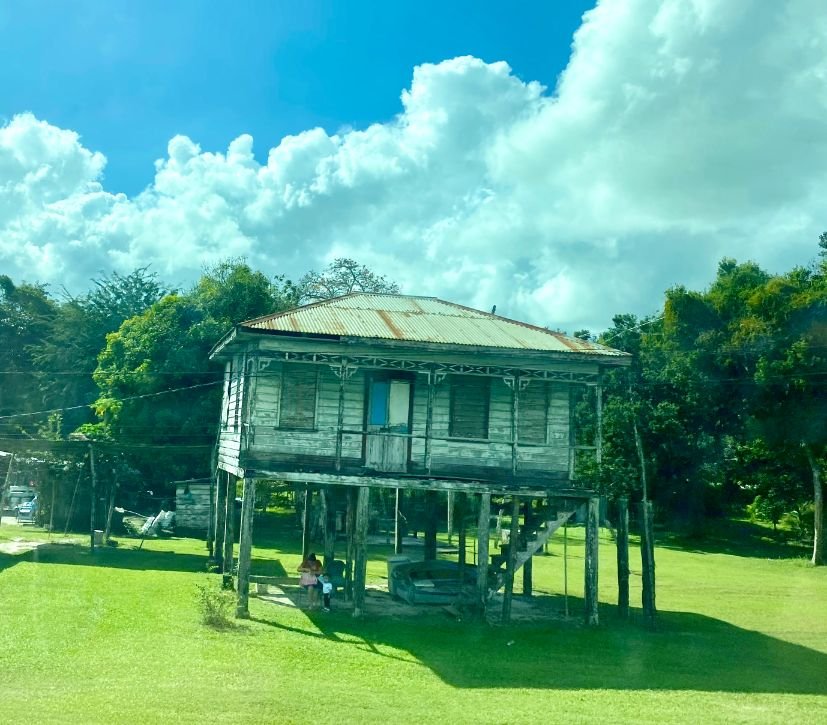
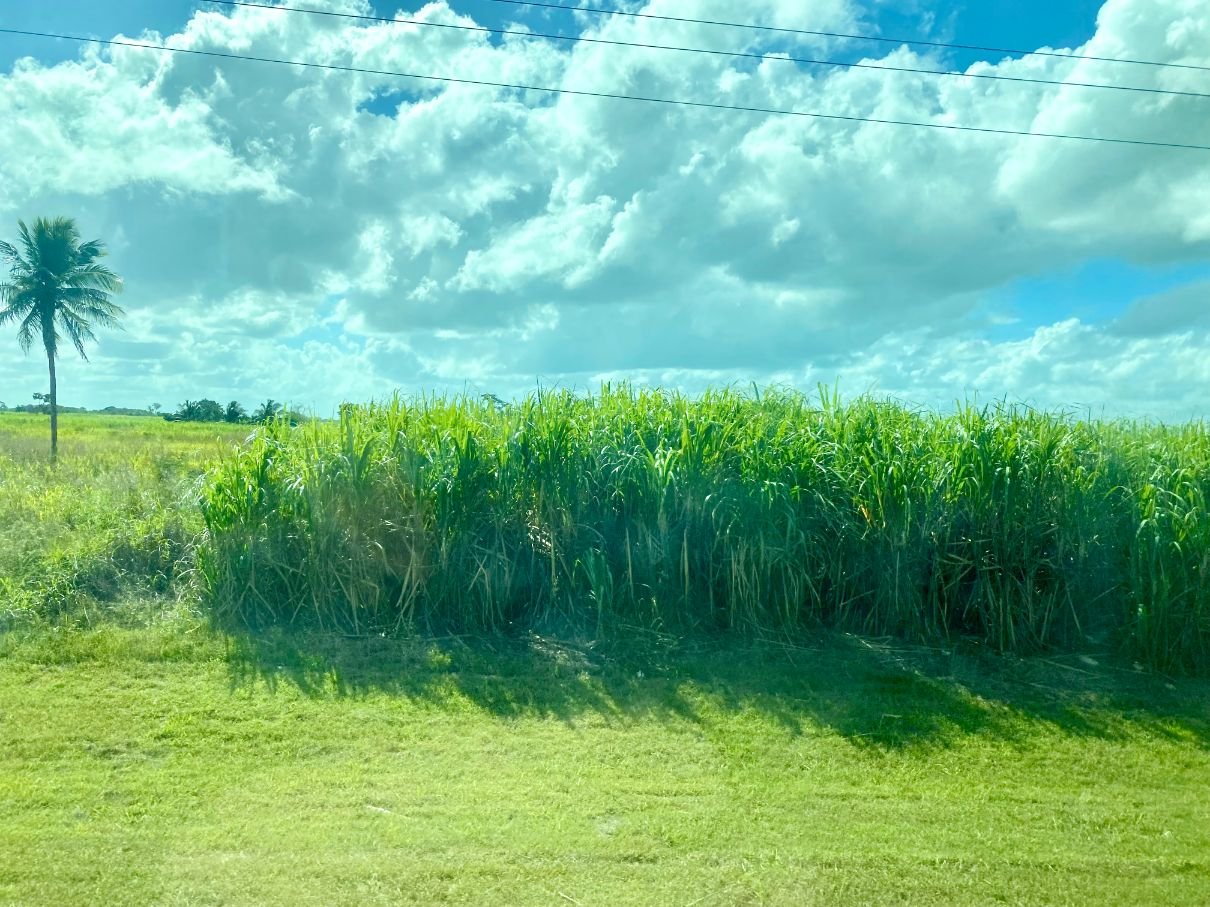
As we continue we pass run down shacks and ragged little communities which line the road from the border to the coast. Every now and again a larger urban setting such as Orange Walk Town, which bills itself as Sugar City, appears but the rural poverty of the country is evident all around.
Belize was originally part of Guatemala but they lost control when Mexico handed it over to the British as part of the treaty of the Guerra de la Castas. Guatemala still claims it as their own territory, a dispute legally working its way through international courts of law to this day.
In fact in 1976 the President of Guatemala, in a crazed attempt to distract the population from his own corruption and the ongoing civil war, decided that he was going to invade Belize, which was still known as British Honduras at the time, and take it back by force. However on the very day his massed Guatemalan forces were due to cross the border a huge earthquake hit Guatemala resulting in thousands of deaths and the army had to be recalled to deal with the catastrophe. Most Guatemalans took it as a sign from God that the invasion would be a disaster, so it never subsequently happened, and the president eventually lost power.
Despite this history, Belize was considered the safest and most stable country of Central America for a long time and many Nicaraguans, Guatemalans, Hondurans and Salvadorans all fled there for safety, joining the three different Maya tribes, Europeans, Afro-Caribbeans and mestizos who were there already. Over the years lots of Taiwanese and Hong Kong exiles have arrived as well as a large population of the Mennonite religious sect who originally came from Germany, and share similar beliefs to the Amish. The Mennonites now control the majority of the agricultural industry in Belize.
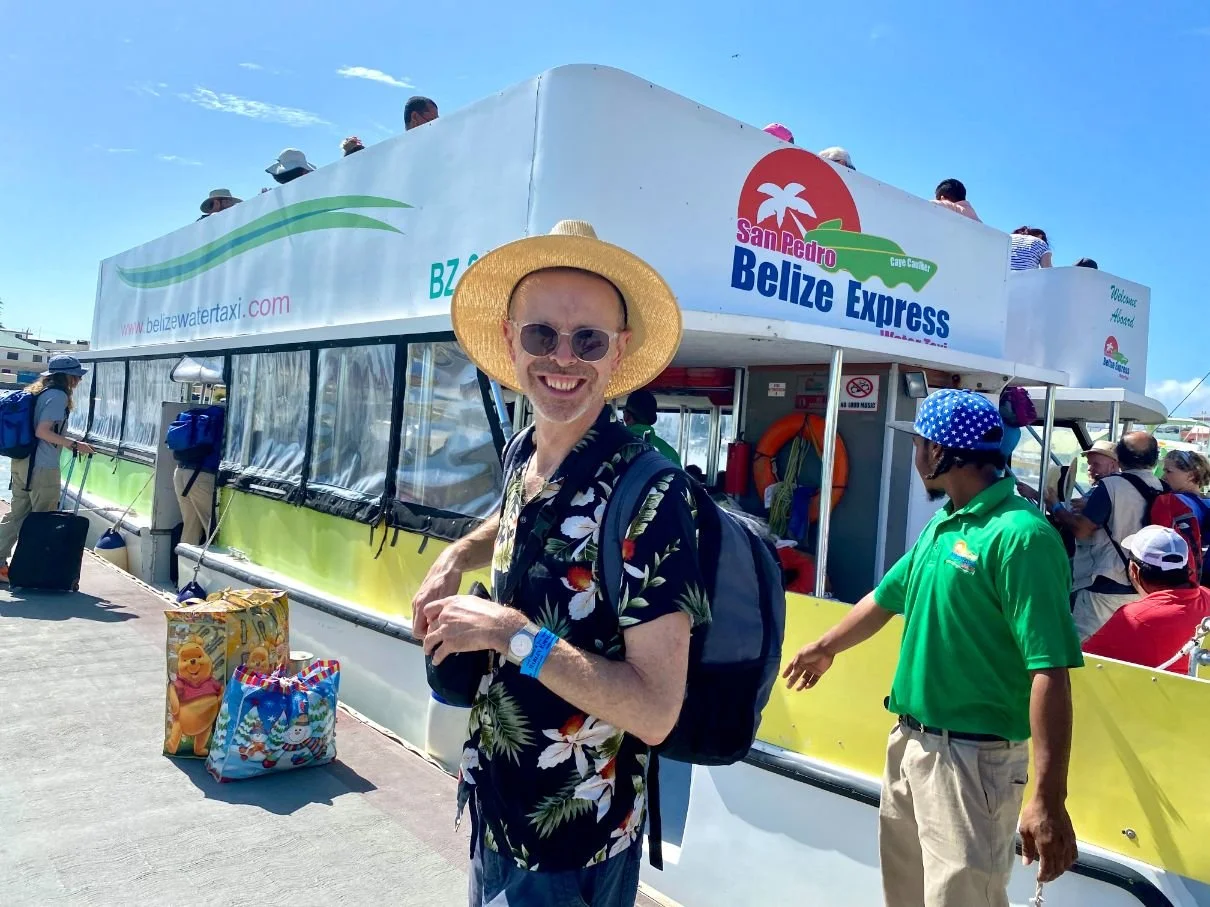
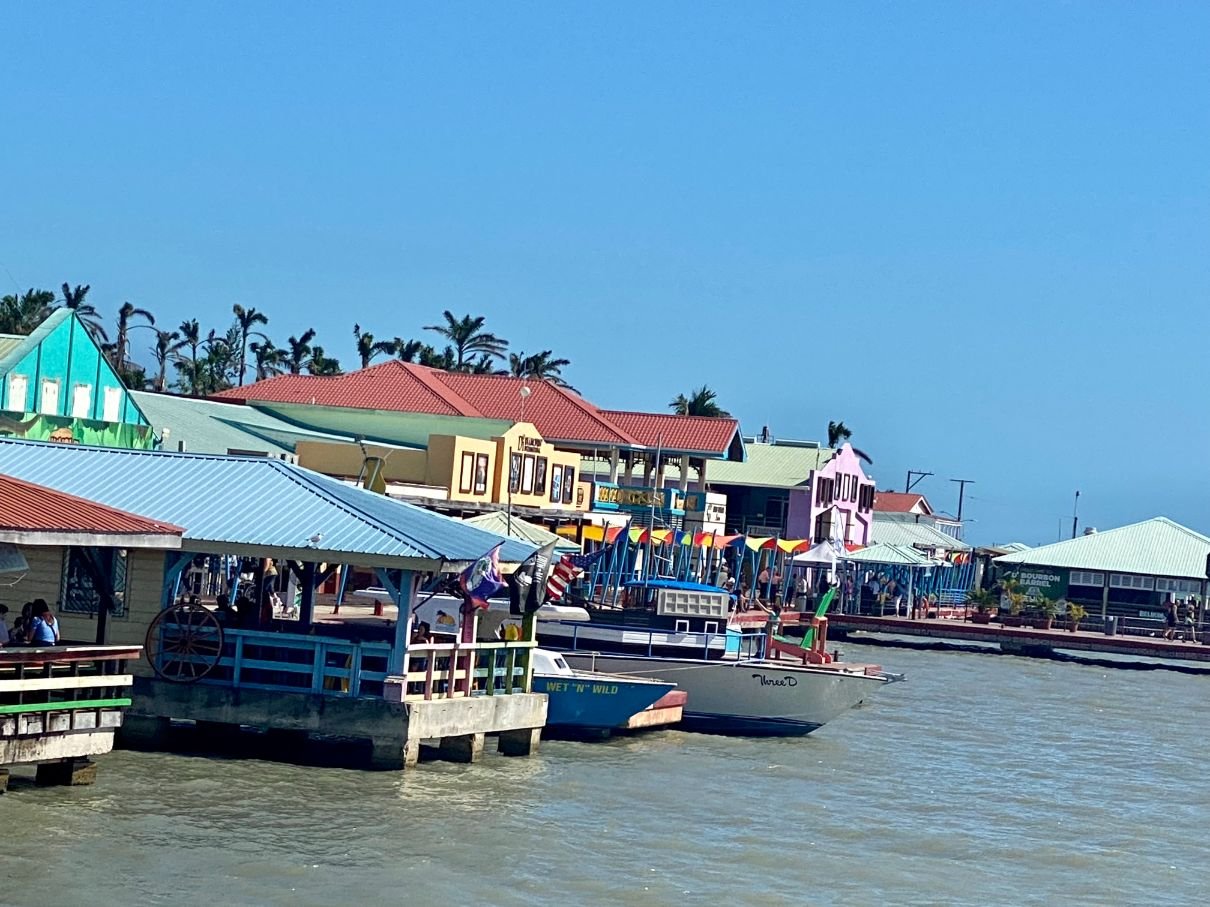
It’s lunchtime when we arrive into the largest town, Belize City, which is on the coast and we head straight to its ferry terminal, with a ticket to leave. Once the capital of the country, and home to 80,000 people, Belize City is now notorious for its crime rate and is currently considered one of the most dangerous towns in Central America.
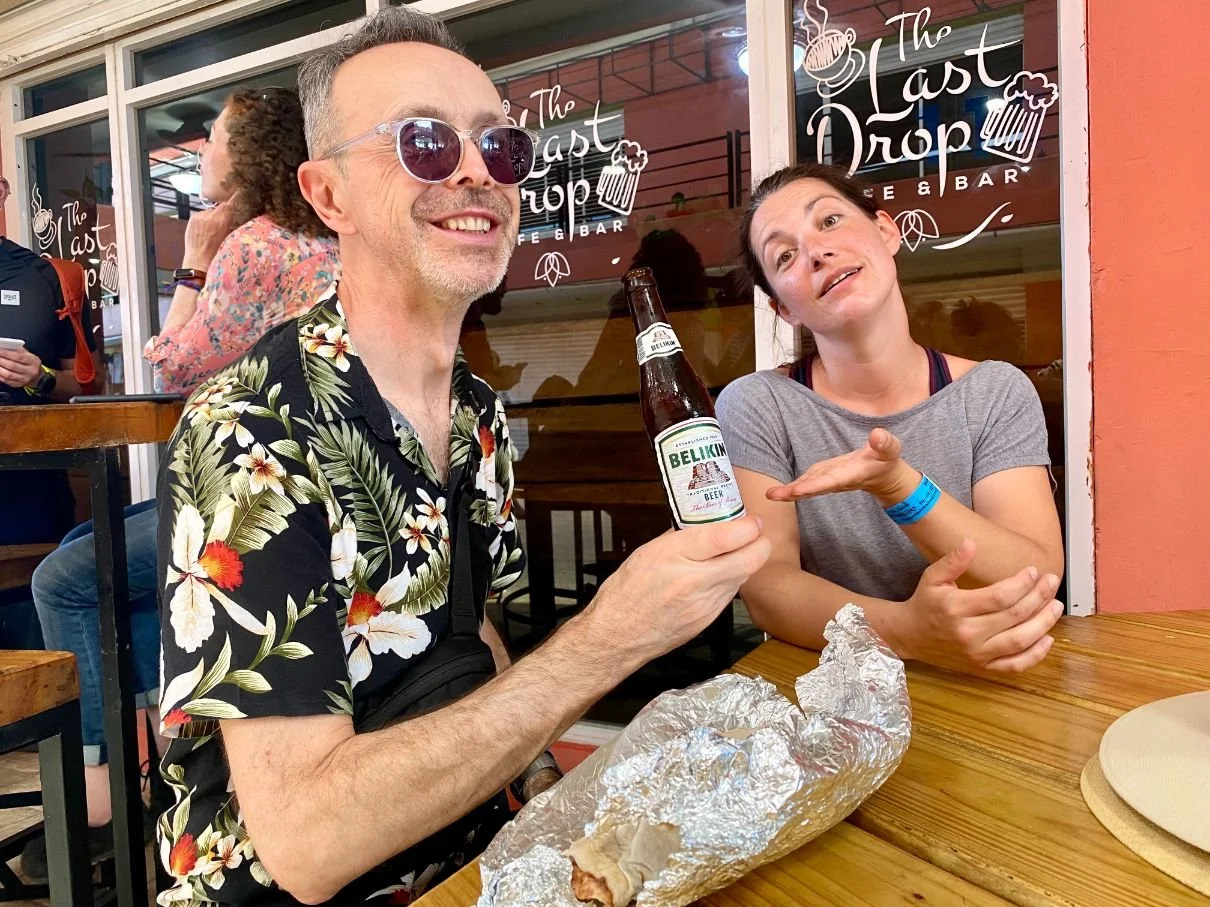
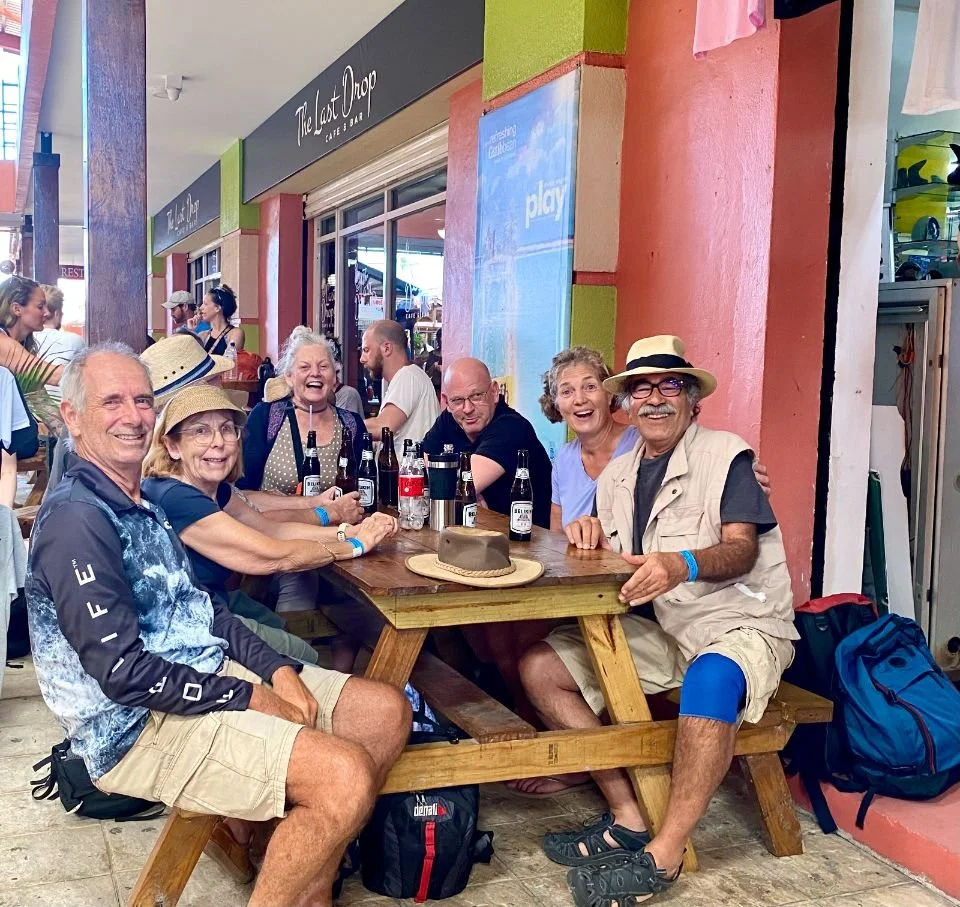
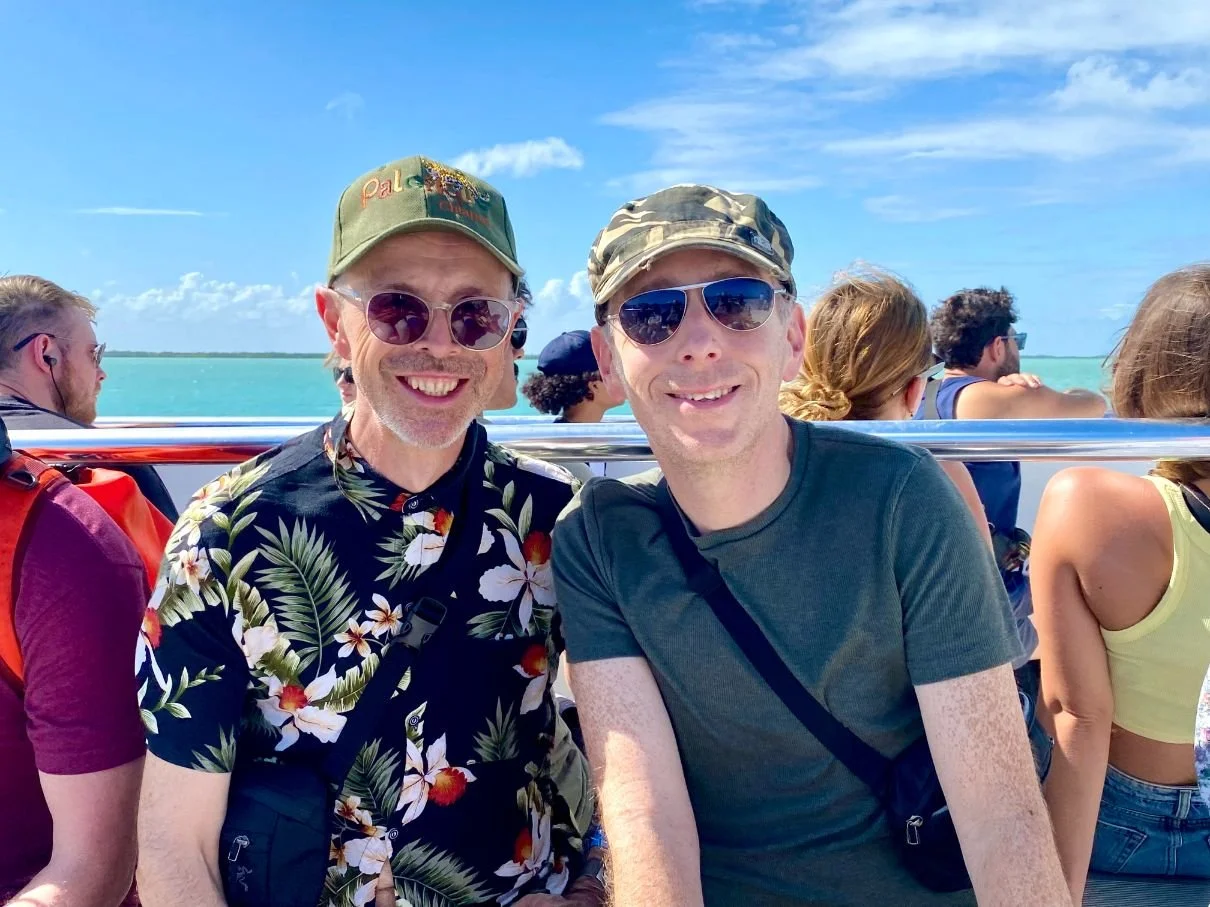
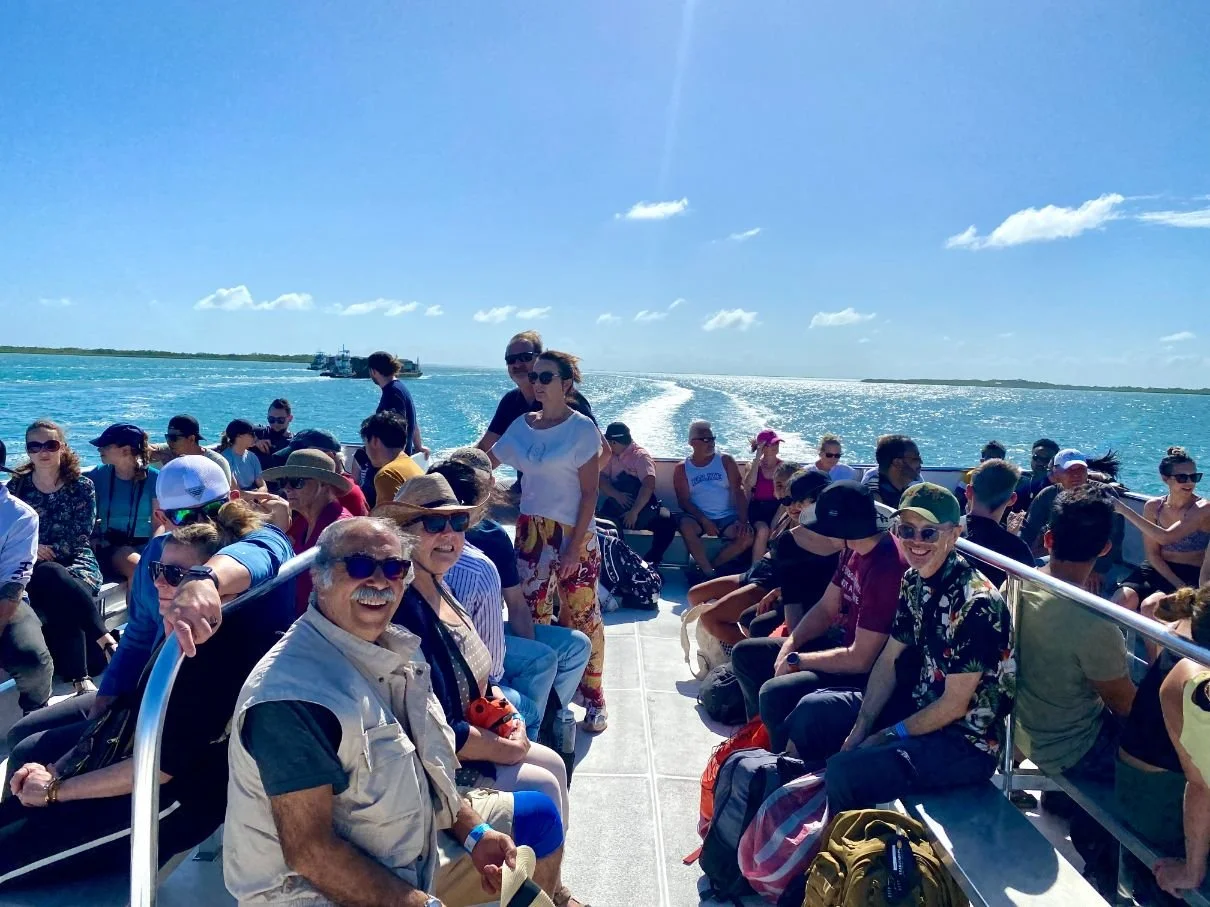
Taking our bags from the minibus we walk in quick file from the parking lot into the terminal and all wait at The Last Drop Café, drinking Belikin, the national beer, and eating burritos until our Belize Express boat is ready to depart. It serves San Pedro, a large town on Ambergris Caye but stops first at our destination, the smaller and quieter Caye Caulker. We take a seat on top of the water taxi, smothered in factor 50 against the burning sun, and in just over an hour we dock at the jetty of the idyllic island.
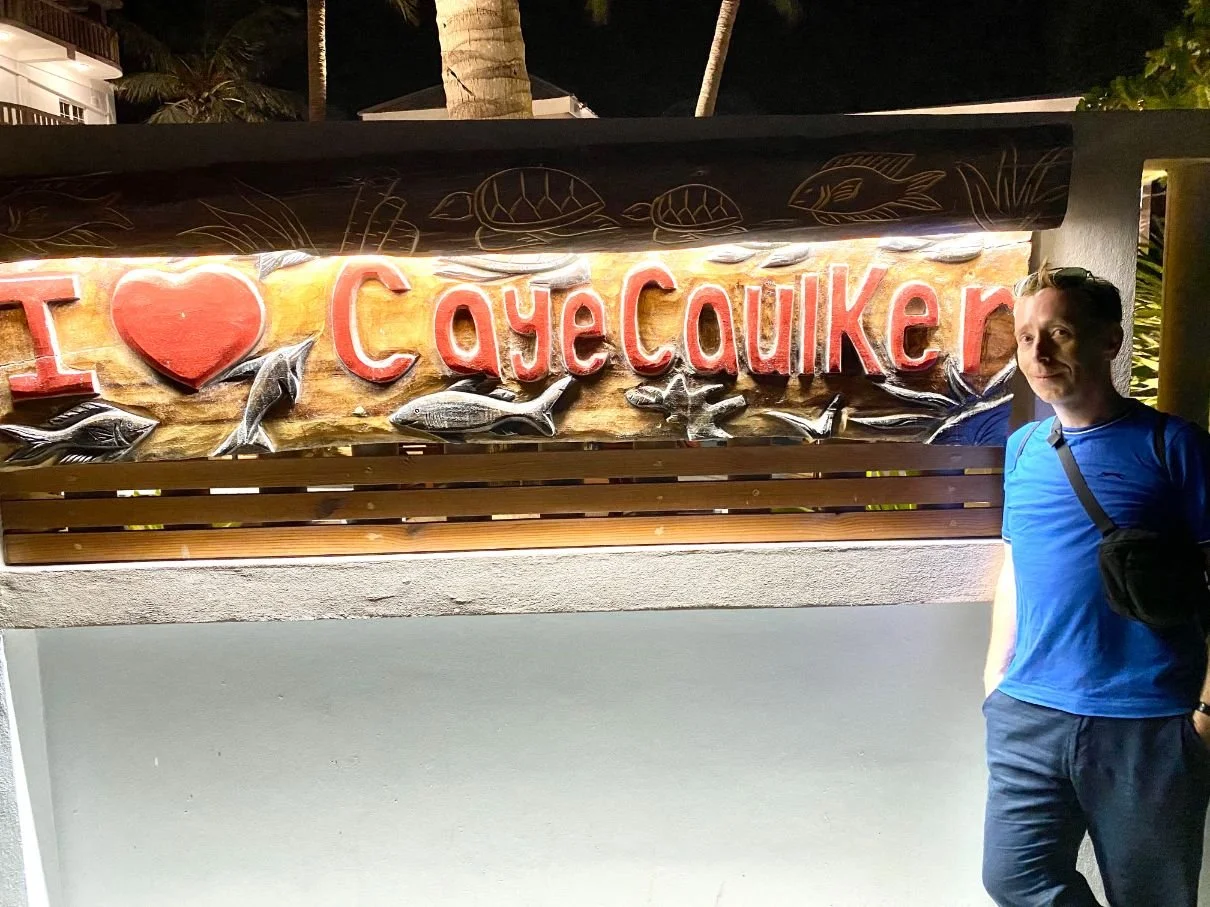
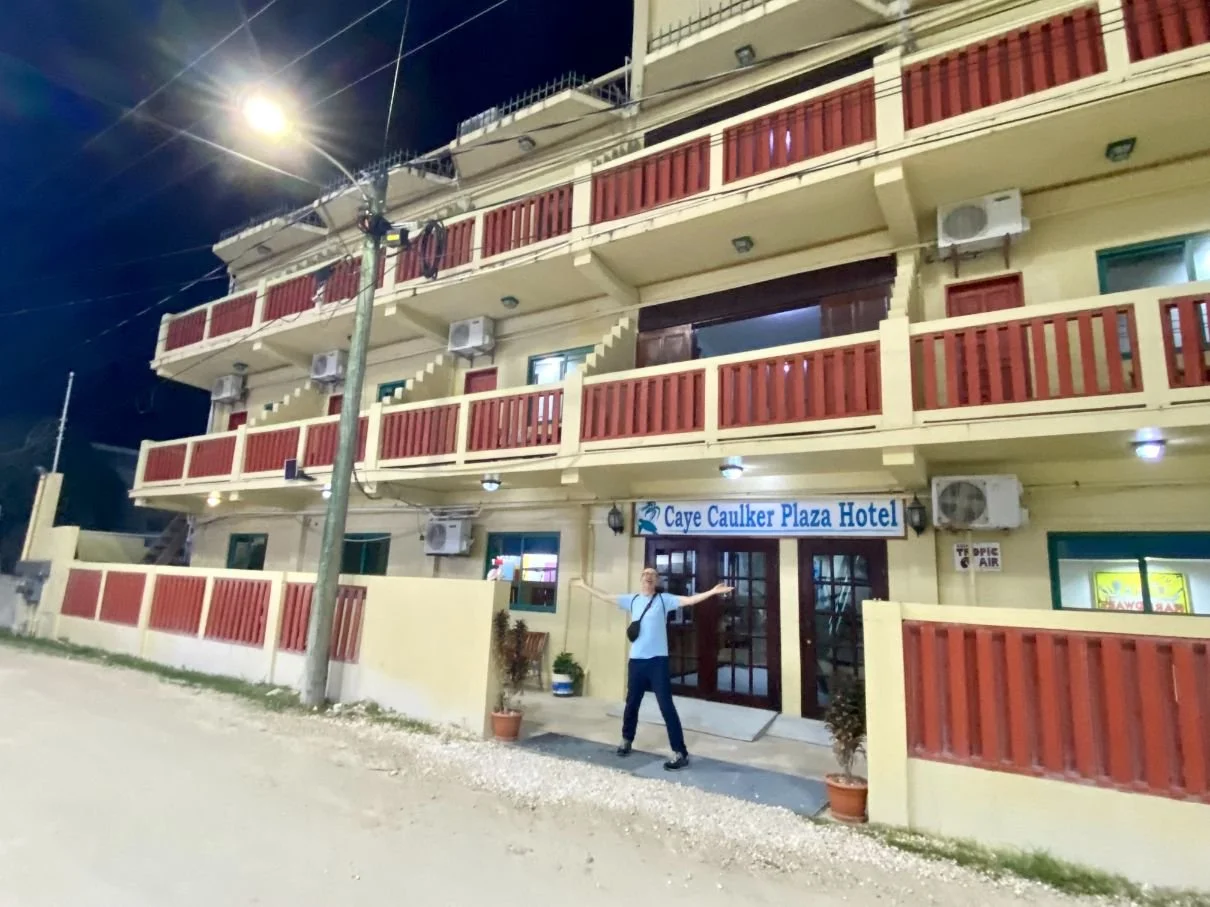
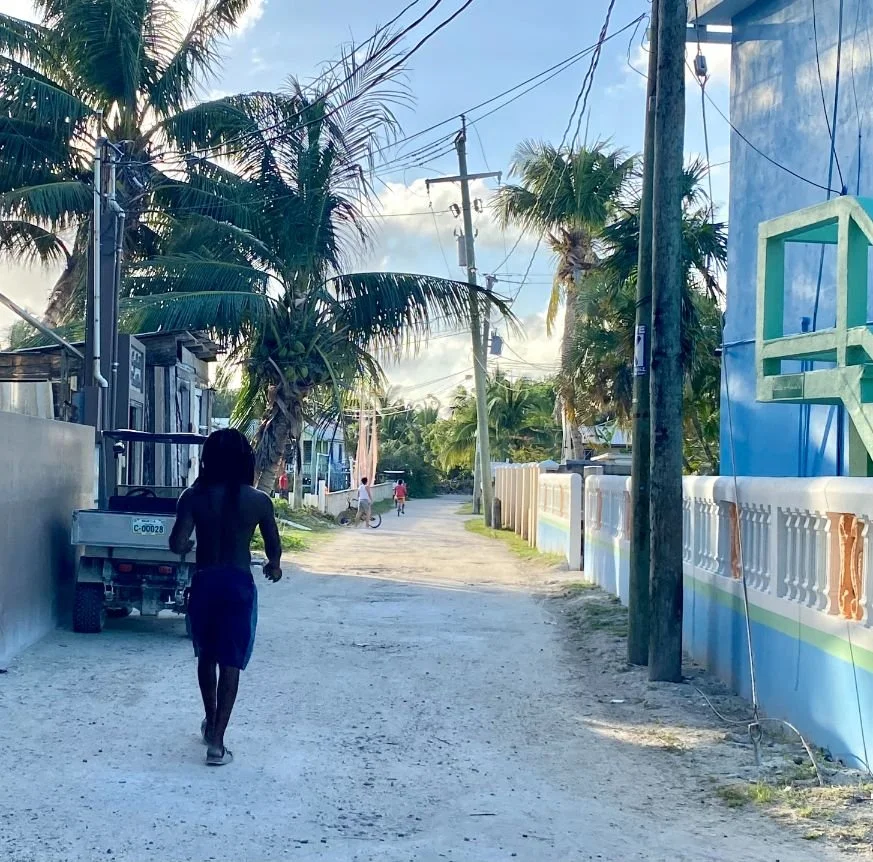
Once the chaos of collecting our various bags at the little hut by the disembarkation point is done, we strap our rucksacks back on and walk a couple of sandy blocks to the Caye Caulker Plaza Hotel, our base for the next three nights. It’s basic but clean, our room has a little balcony to hang wet clothes out to dry and reception has free tea and coffee in the mornings, and very smiley staff.
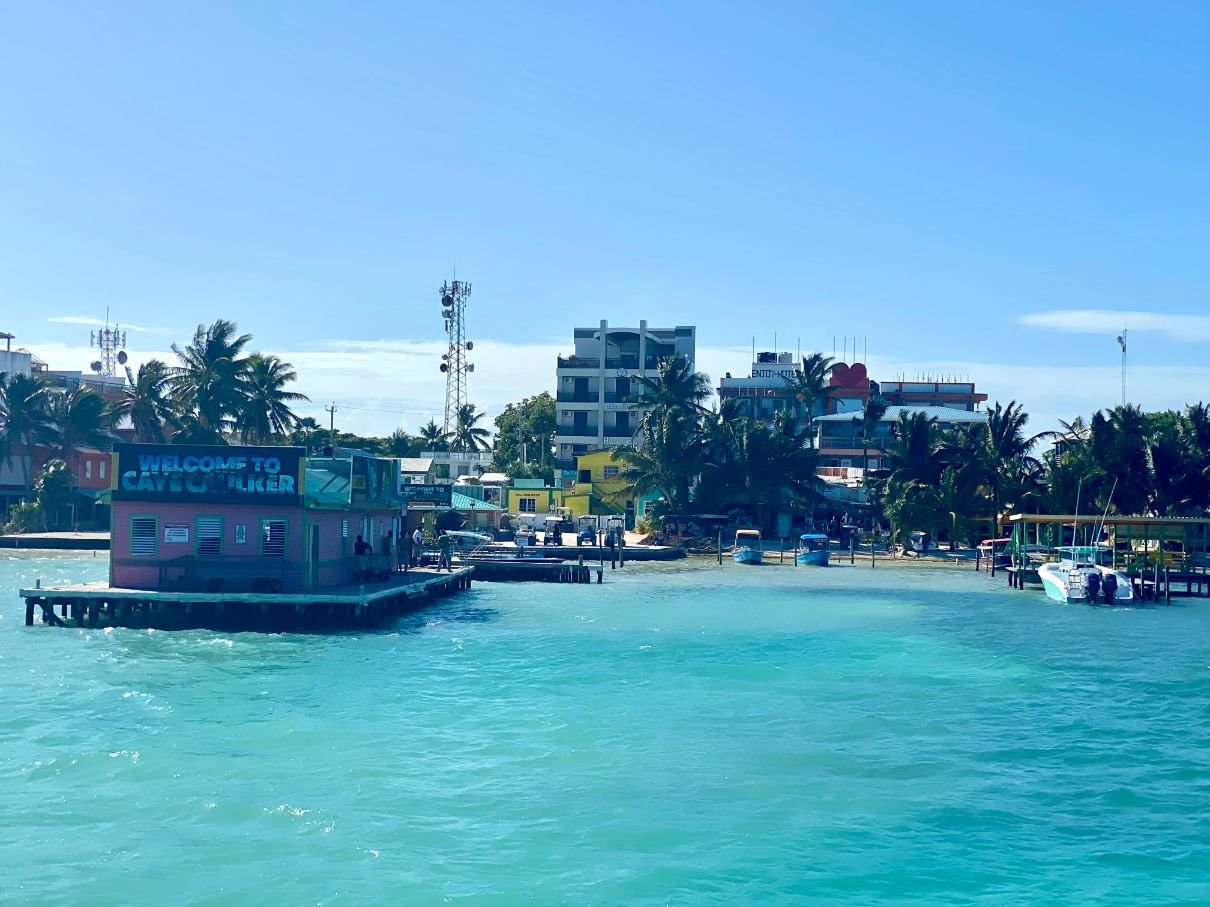
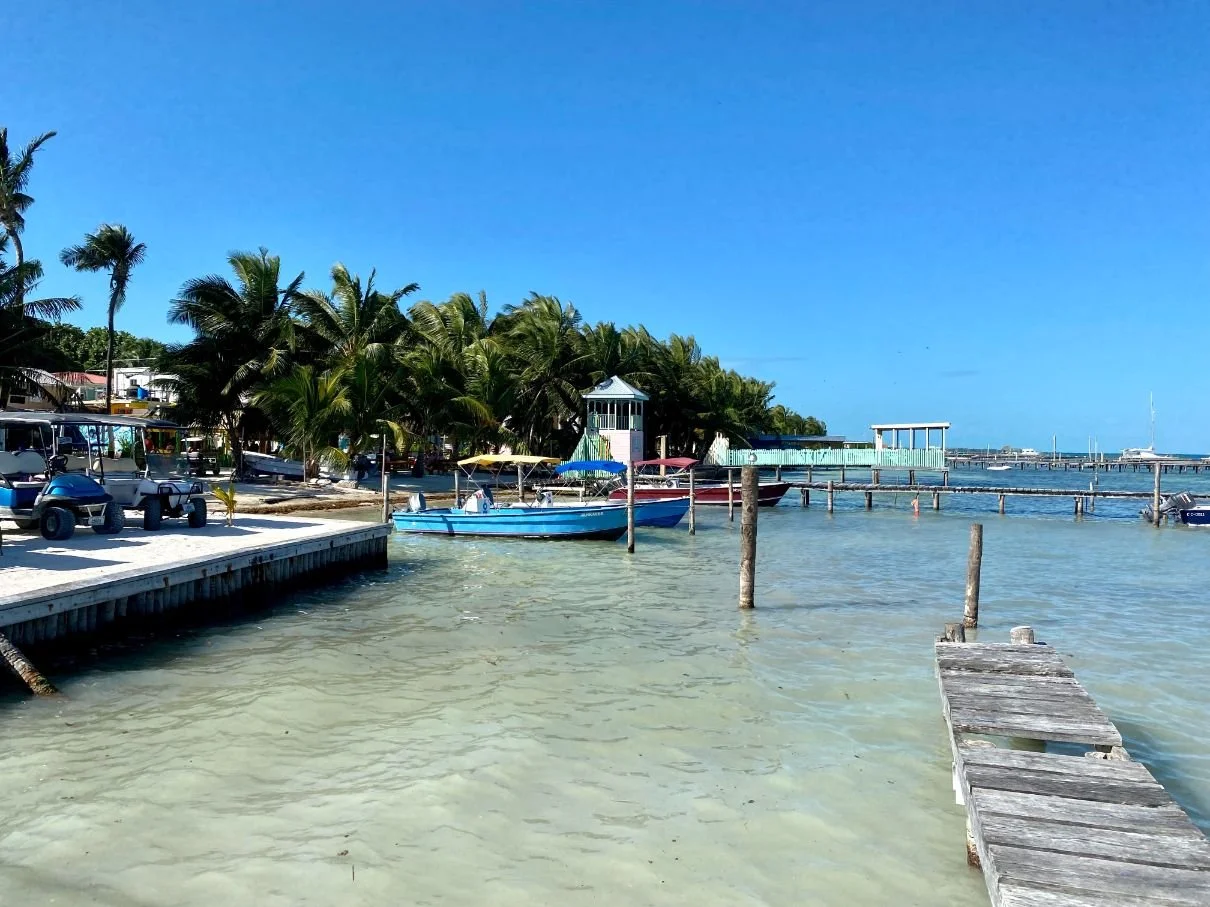
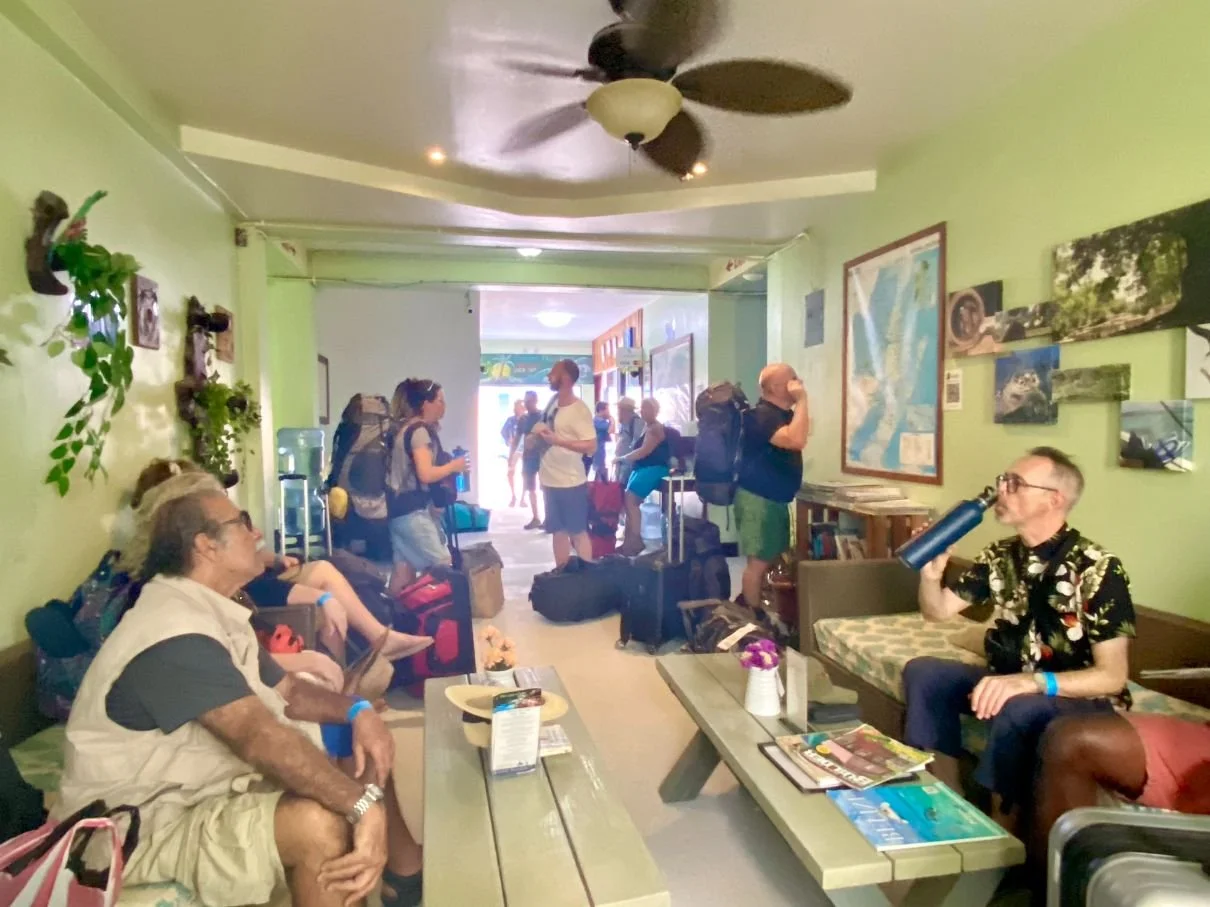
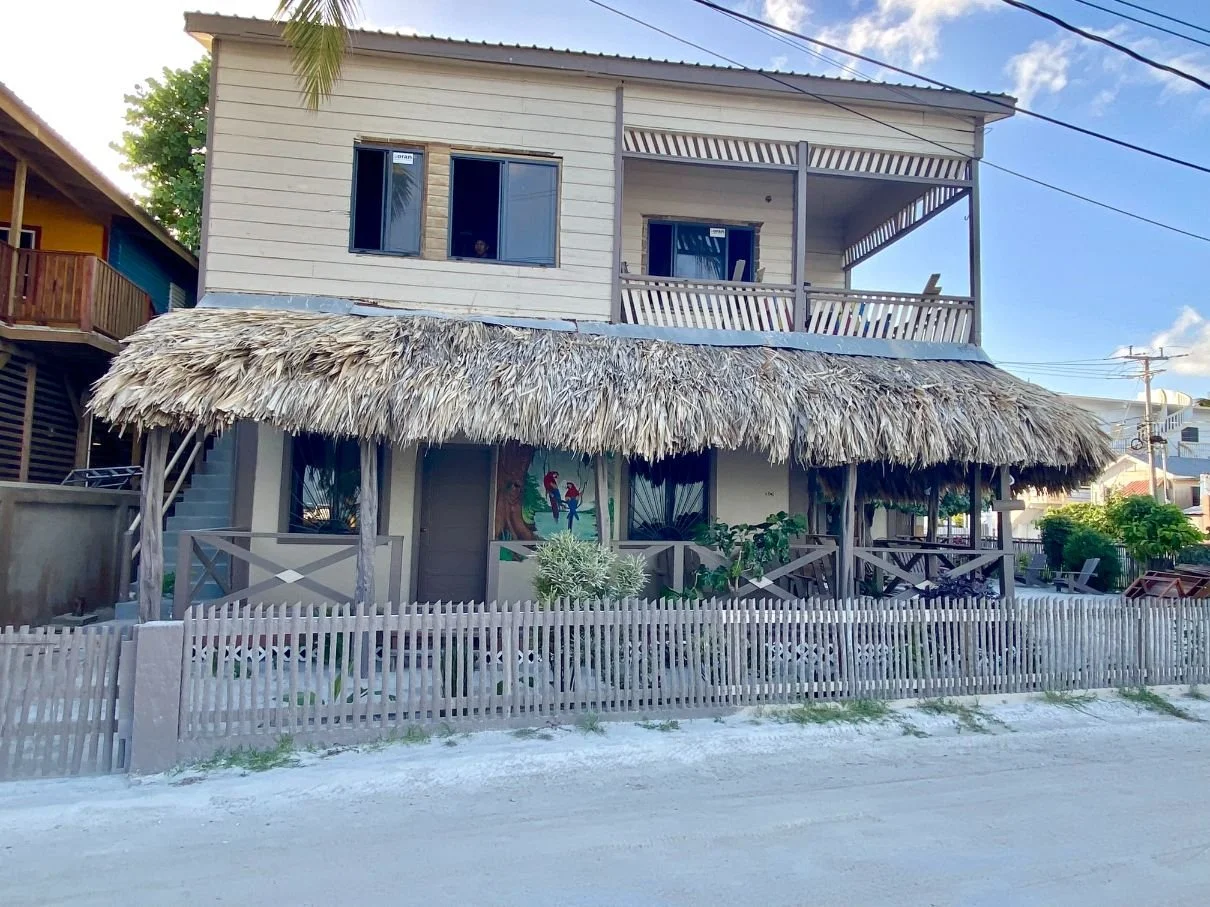
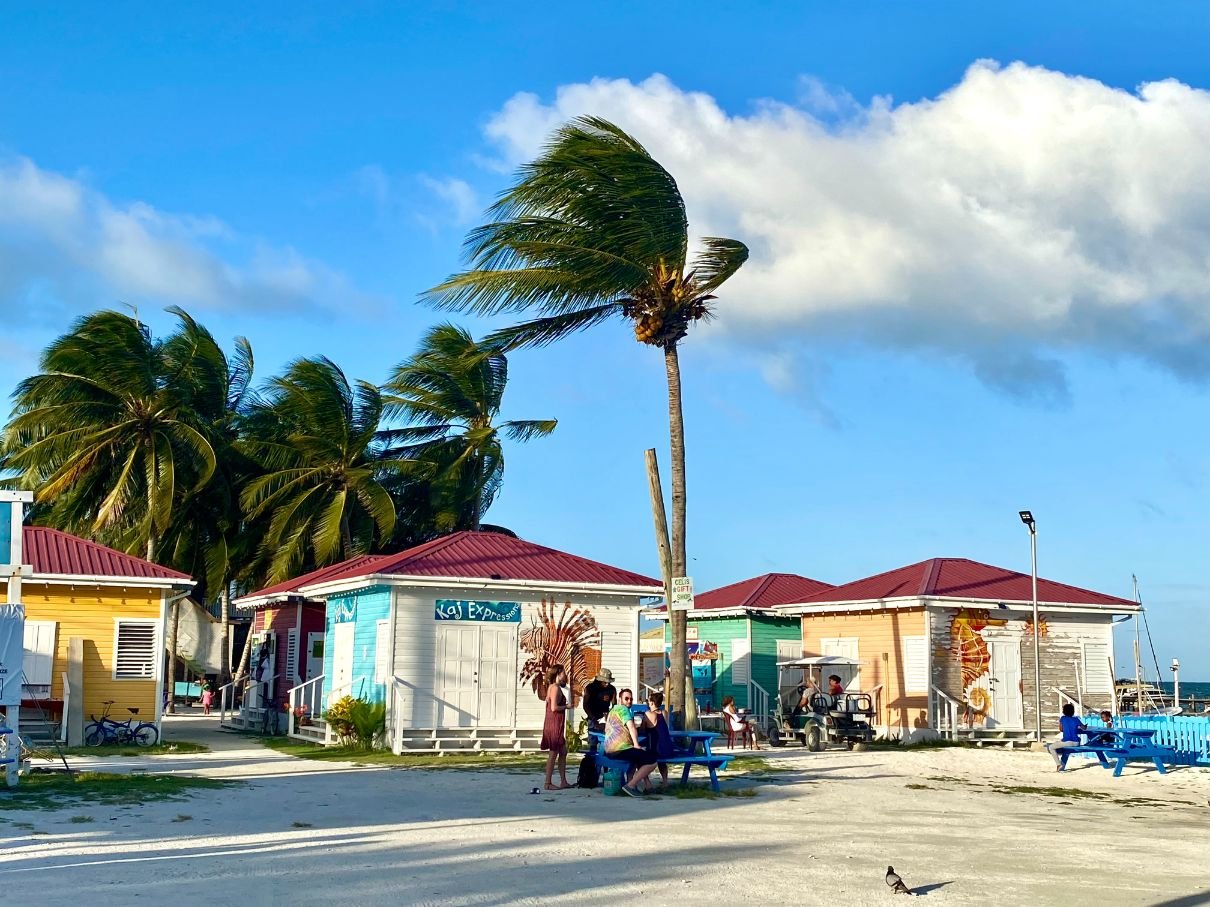
Across the road is Ruby’s Laundry so we take our bag of washing over and find out it costs four times what it did in San Cristóbal de las Casas to have our clothes laundered. In fact Belize is the second most expensive country after Costa Rica, where we’re also heading. So with that in mind we decide to tighten our belts a little.
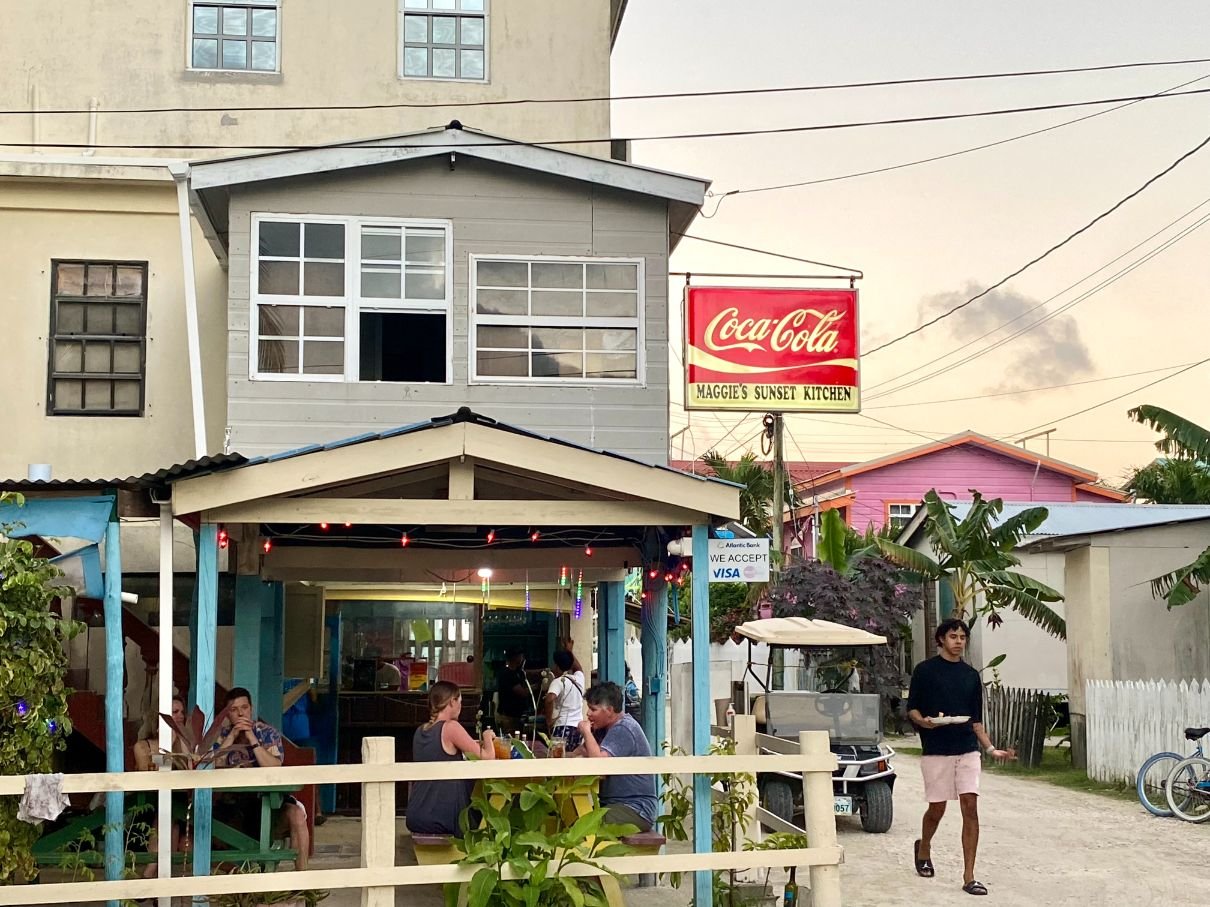
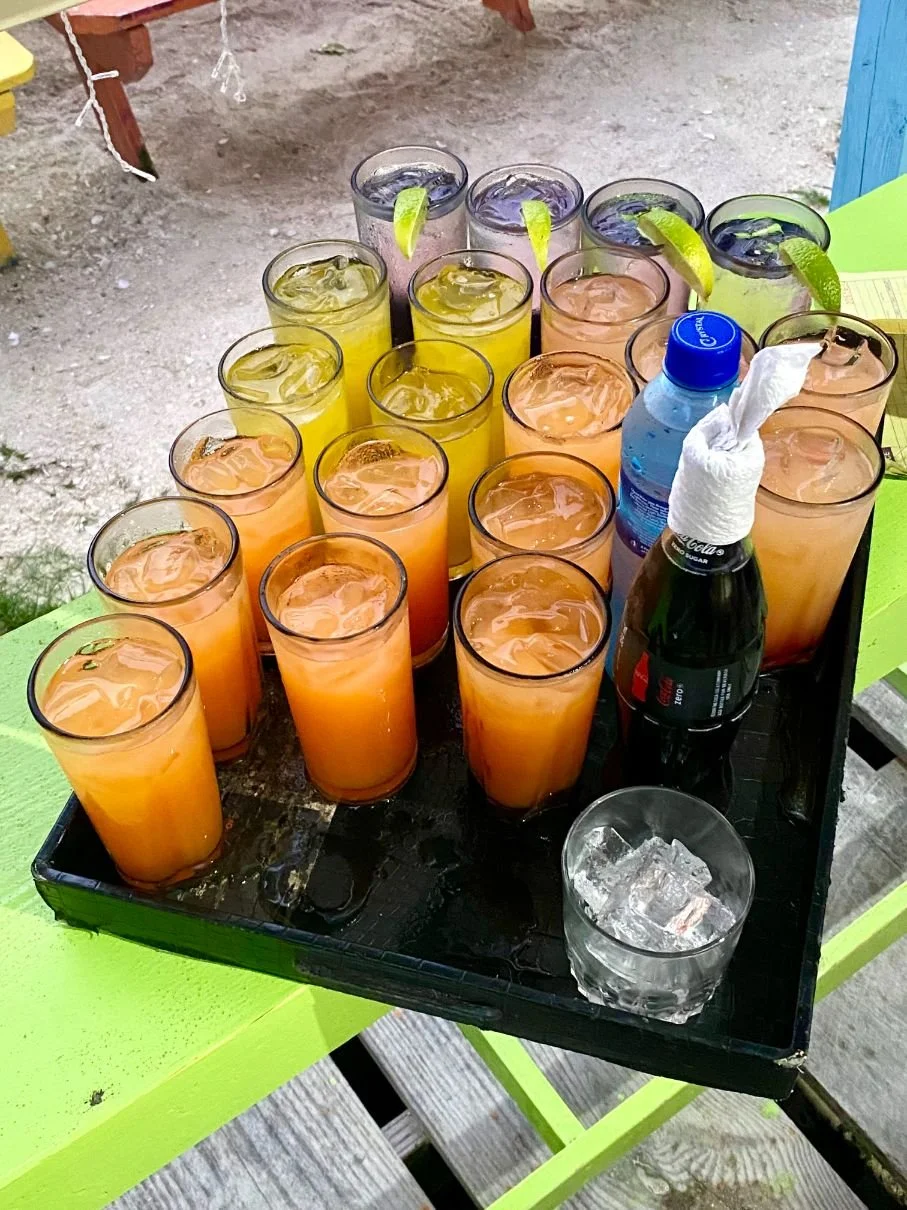
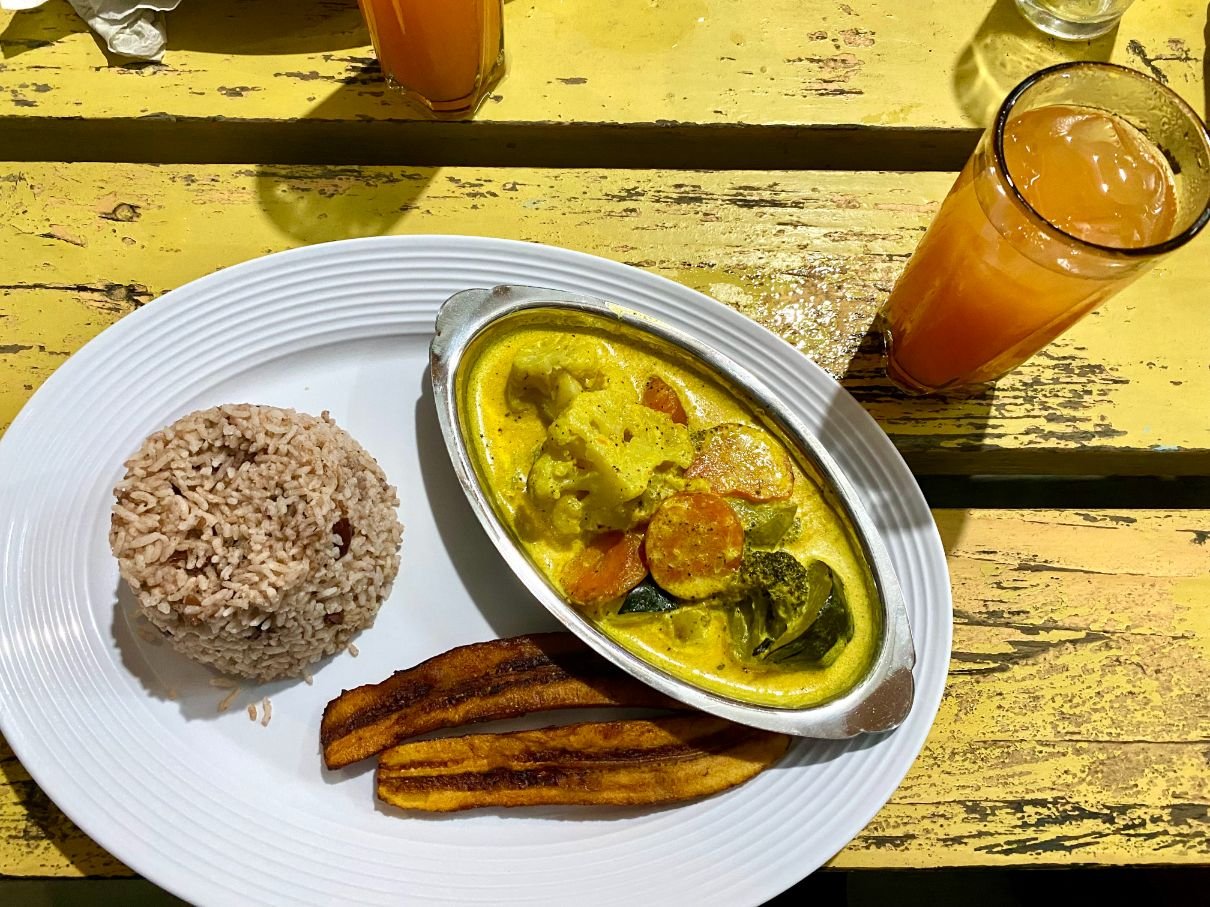
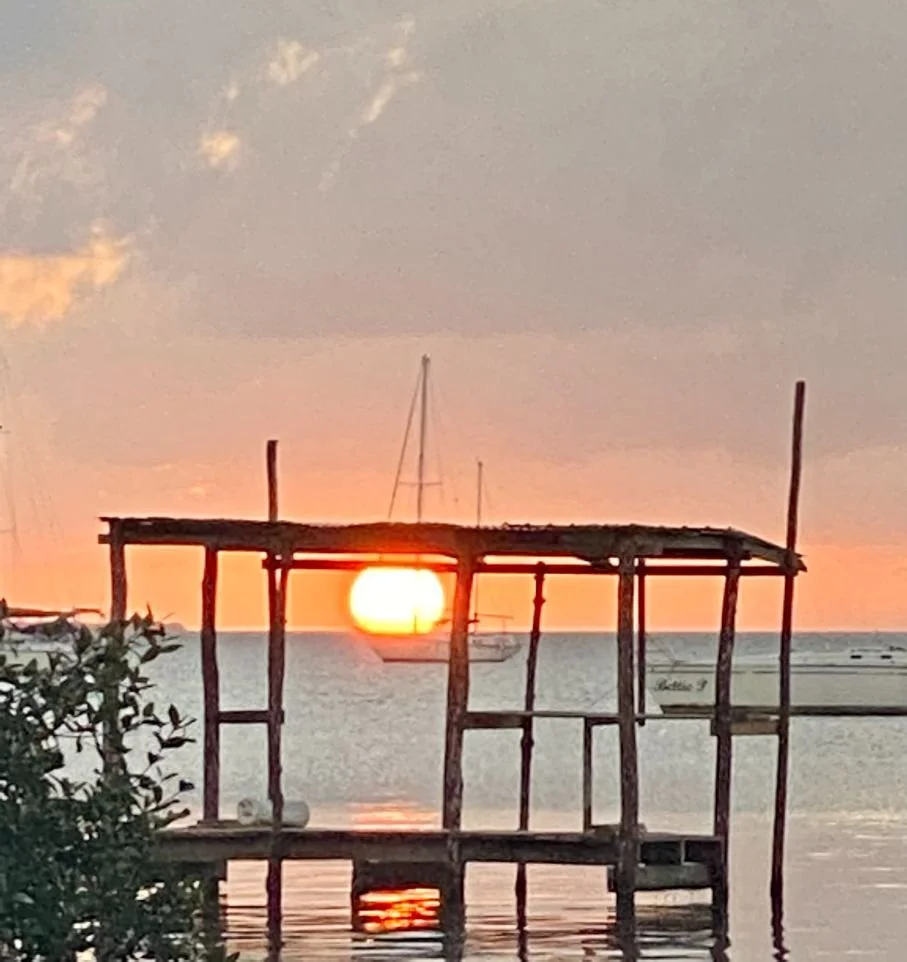
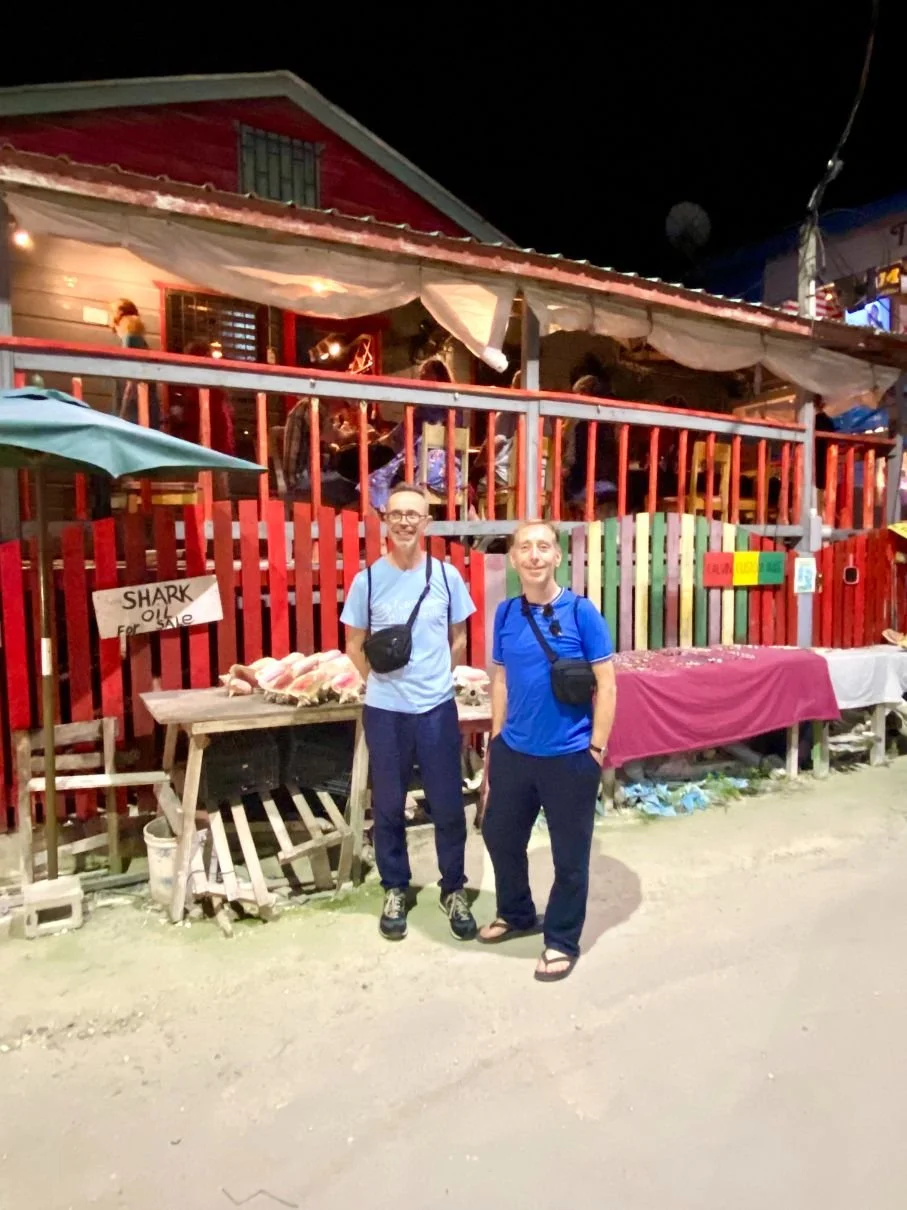
Nevertheless after a walk around the main streets with Aquilino and the group we join everyone for dinner at Maggie’s Sunset Kitchen where we watch the sun sink into the sea. Our fellow travellers order jerk chicken and grilled lobster, and we enjoy a coconut curry and veggie kebabs. Thankfully it’s happy hour on rum punch so everyone tucks into the two-for-one deal and a fine evening is had by all.
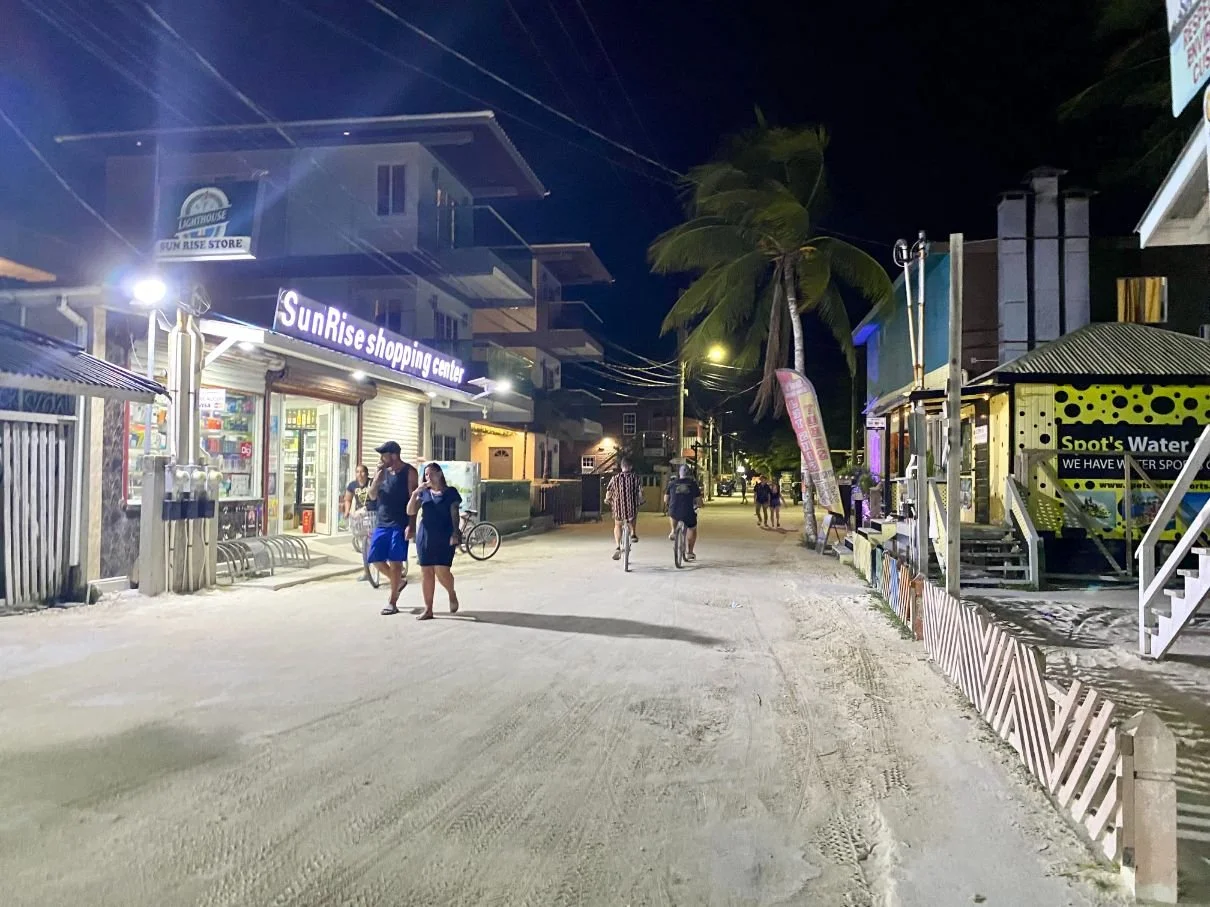
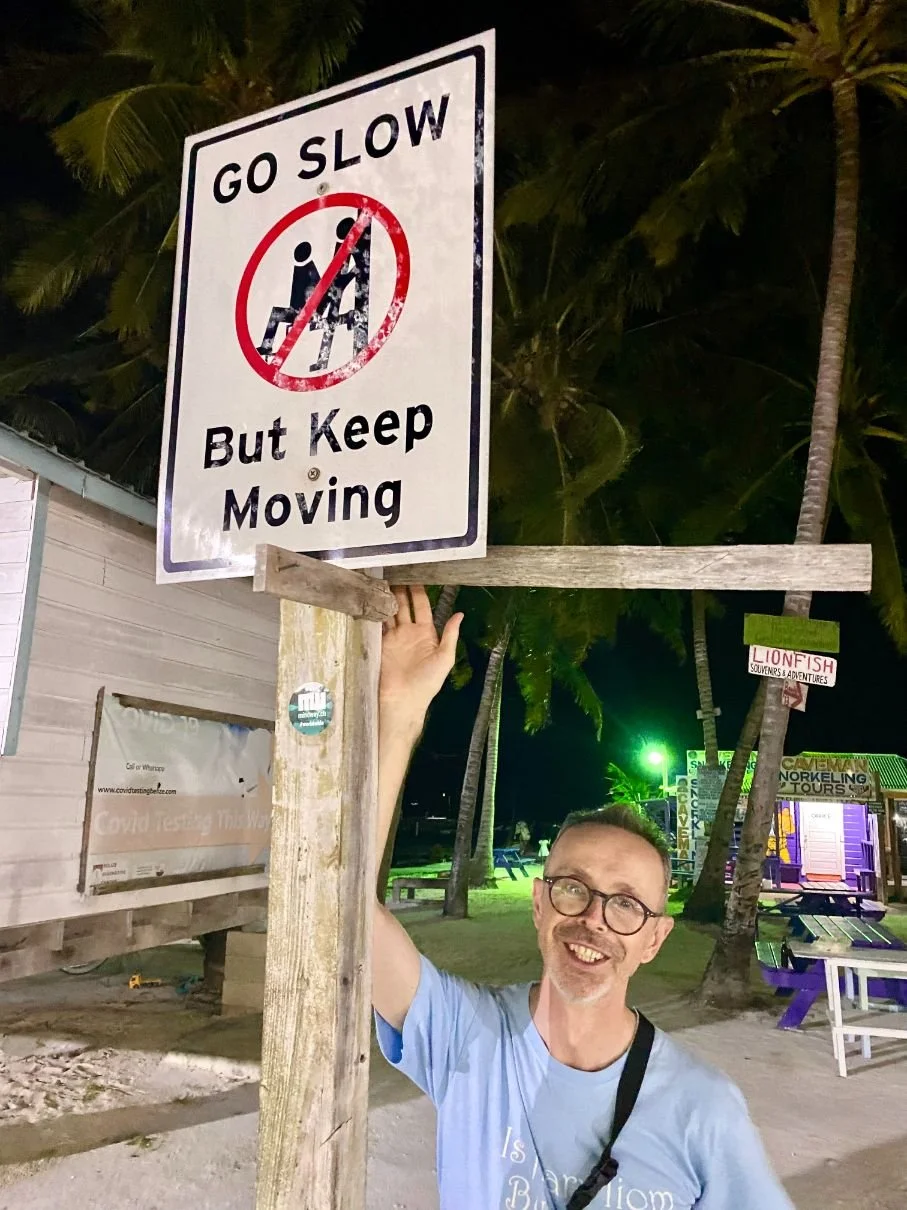
We leave them to it and head back to our room to properly unpack, picking our way between the golf carts and bicycles that weave their way around the trails that count as roads on the island. No cars are allowed and the motto of Caye Caulker is “go slow”, so we start to relax into the Caribbean vibe and enjoy the palm trees and tropical evening air.
Our Mayan encounters will be put on hold for the next couple of days.